
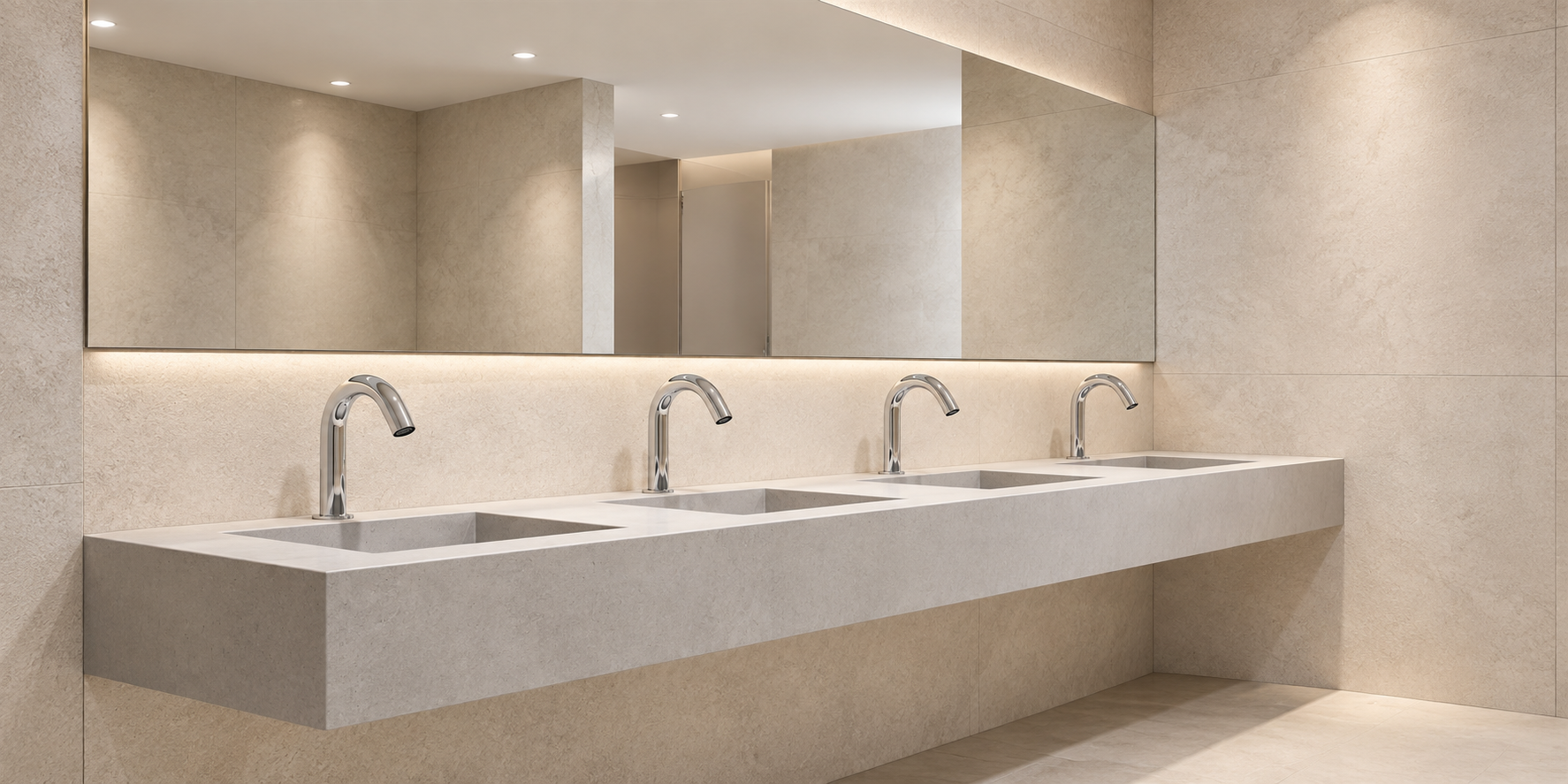
Plan Touchless Faucets
Compare sensing, mounting, flow, power and service access before you place a faucet on the fixture schedule.
Start Comparing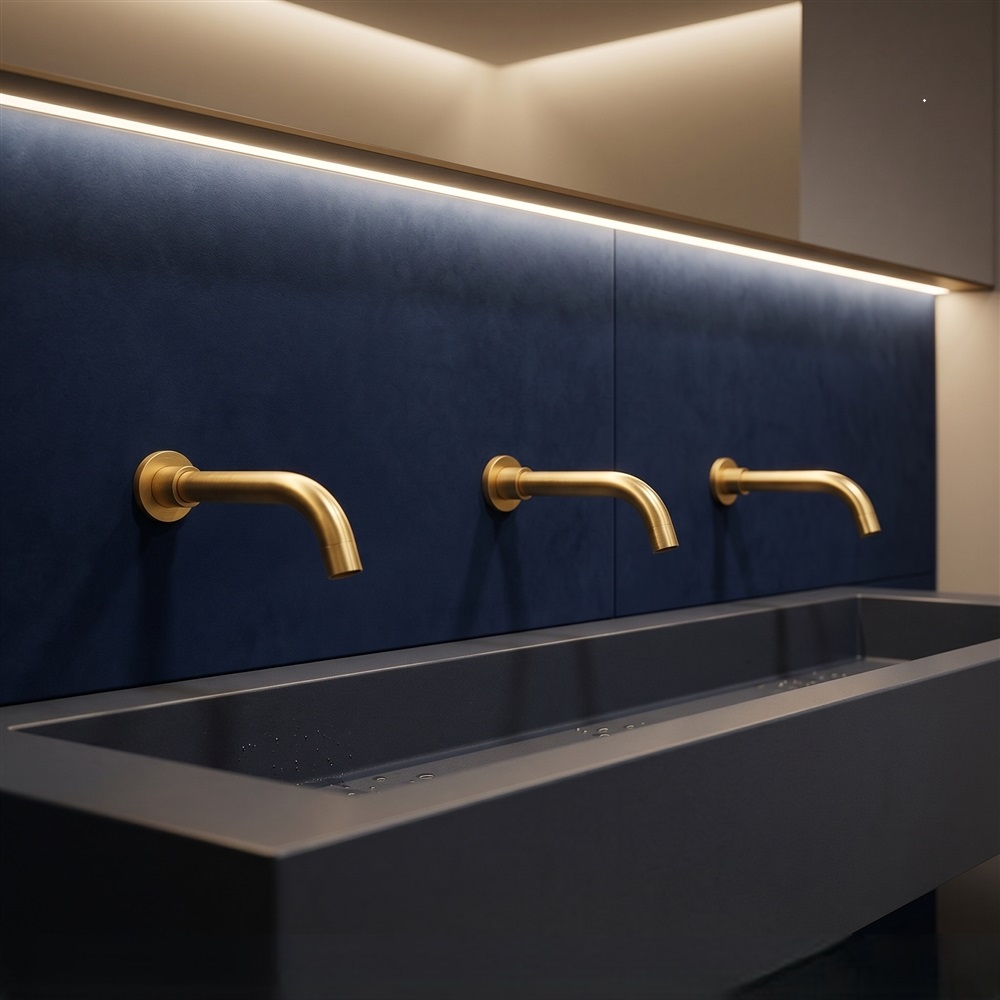
Check Sensor Reliability
Check how the sensor responds to real hand positions, basin geometry, reflective surfaces and shutoff timing.
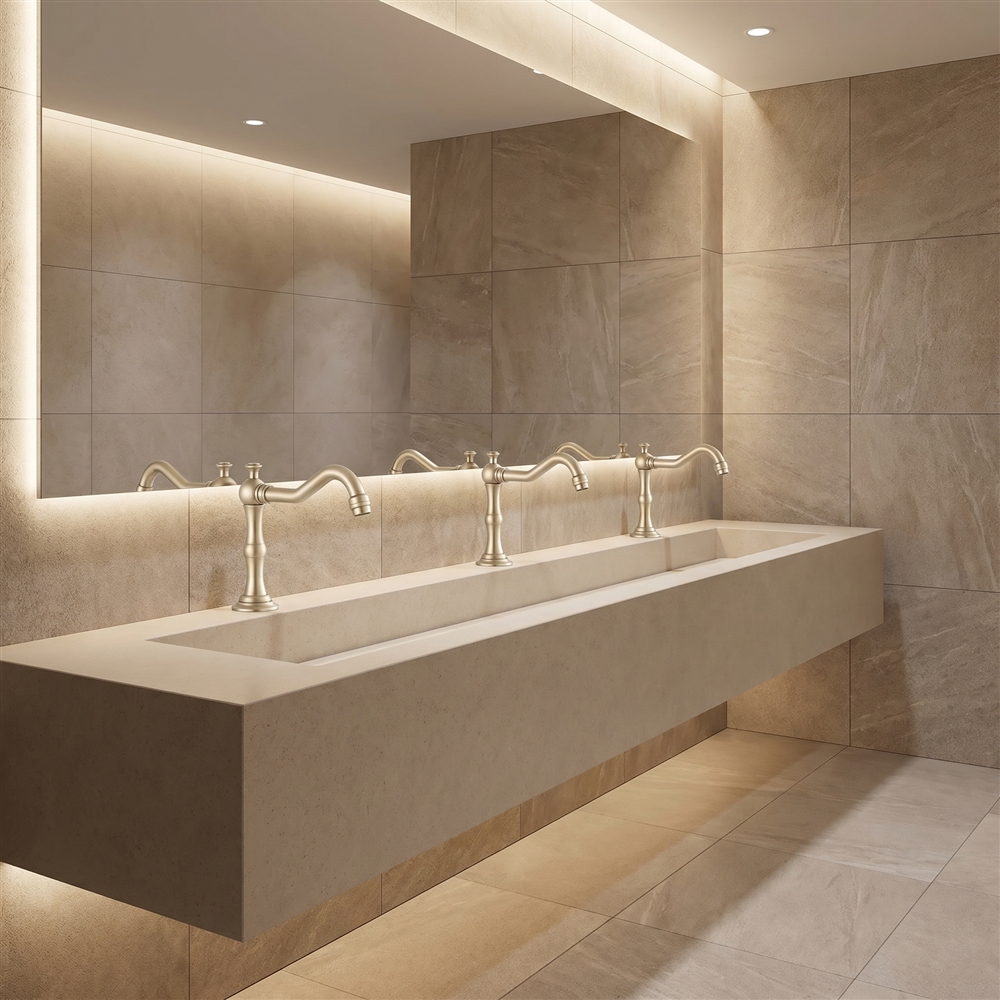
Coordinate the Wash Zone
Match projection, stream landing, splash control and sensor field so the faucet and basin work as one assembly.
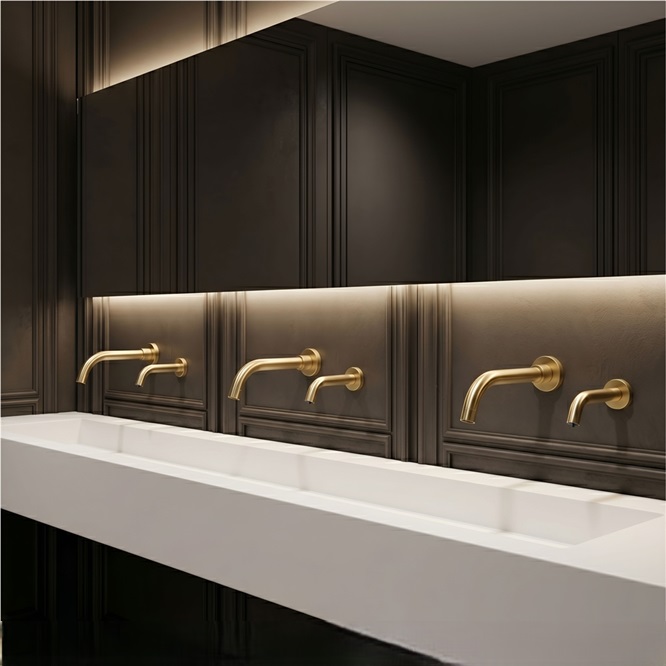
Look Beyond Appearance
Compare finish appearance with cleaning demands, wear, replacement continuity and long-term maintenance.
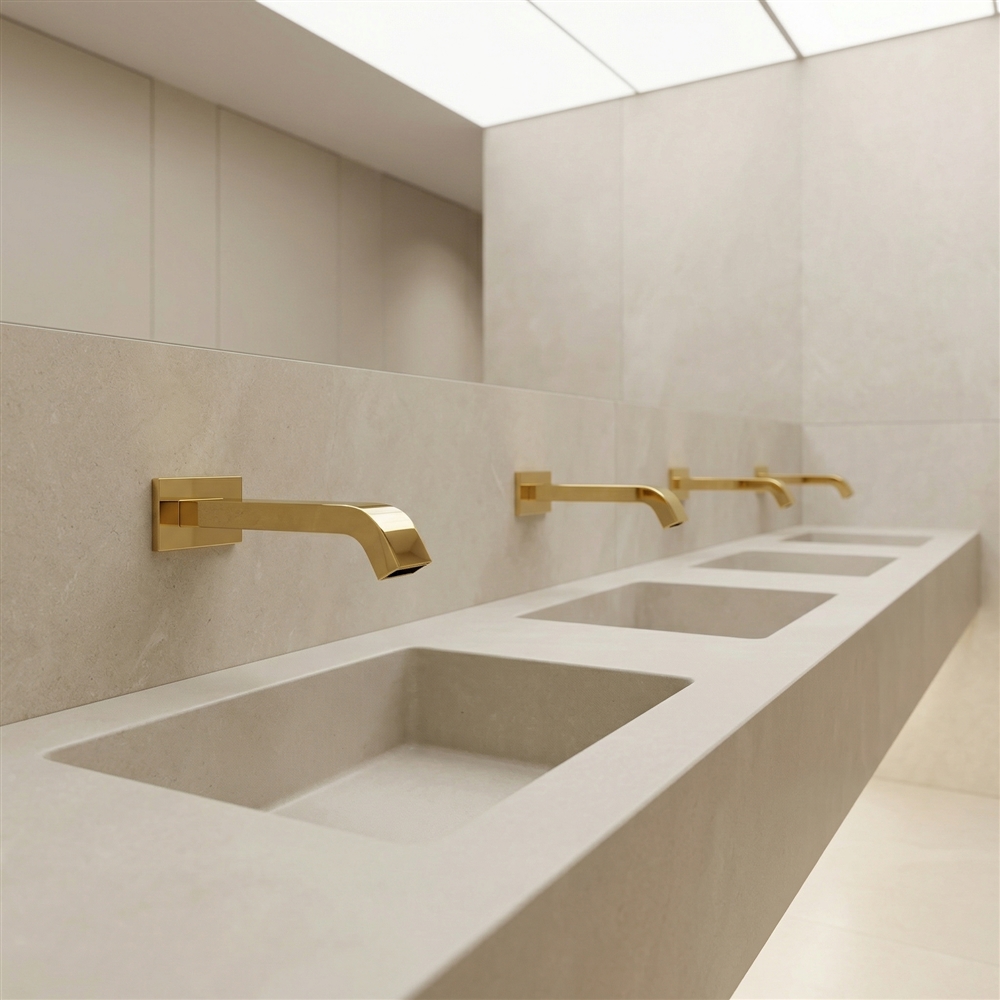
Verify Before Handover
Test sensing, shutoff, flow, temperature, leaks and maintenance access before the restroom is handed over.

Plan for Reliable Uptime
For busy facilities, prioritize stable sensing, durable finishes, accessible parts and straightforward service routines.
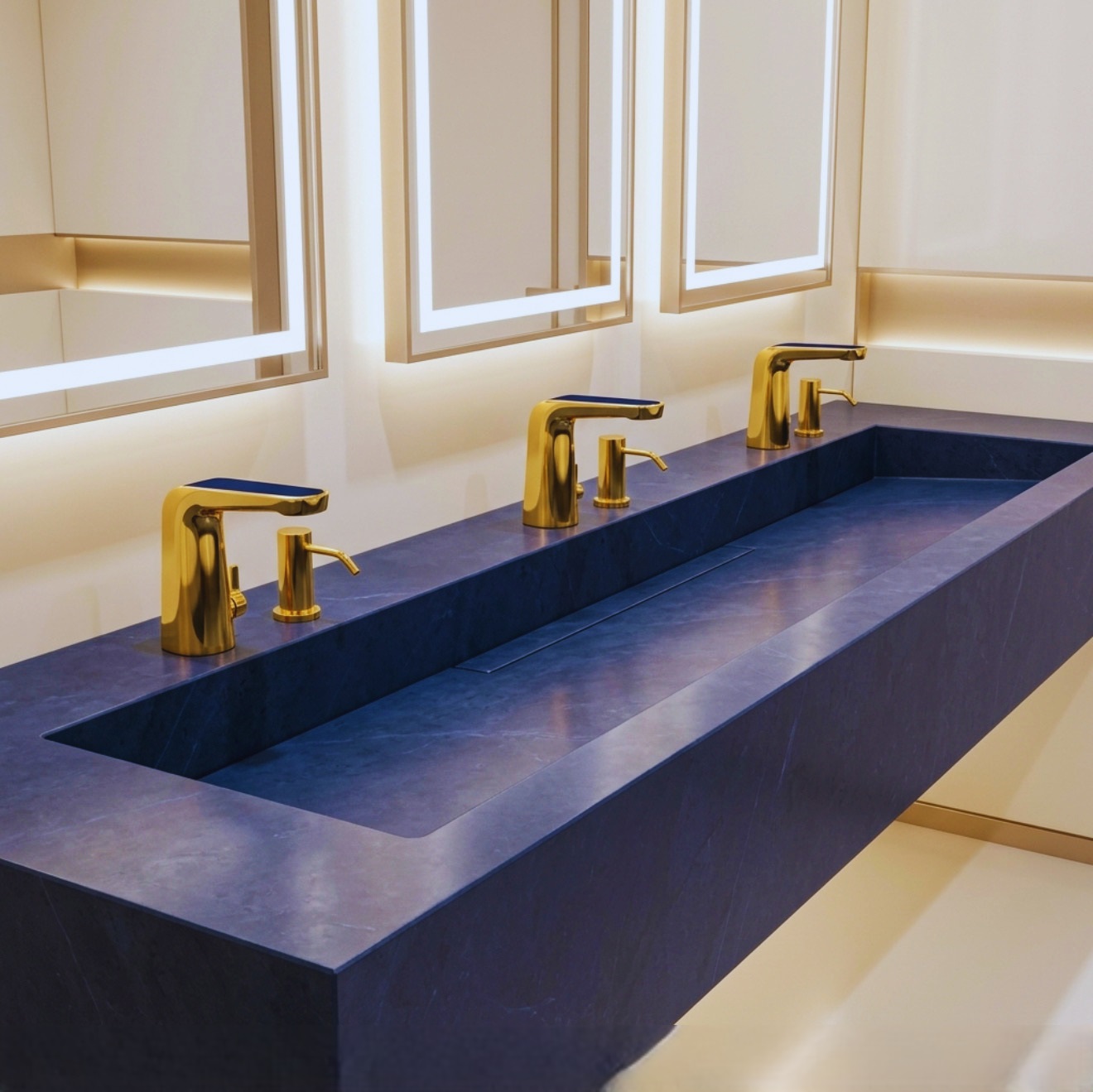
Balance Use and Service
Balance visual consistency and quiet operation with water control and practical maintenance access.

Reduce Contact Points
Use hands-free operation alongside accessible layouts, dependable cleaning routines and reliable water delivery.

Make Maintenance Easier
Leave usable access to batteries, transformers, filters, solenoids and shutoffs before casework is closed.

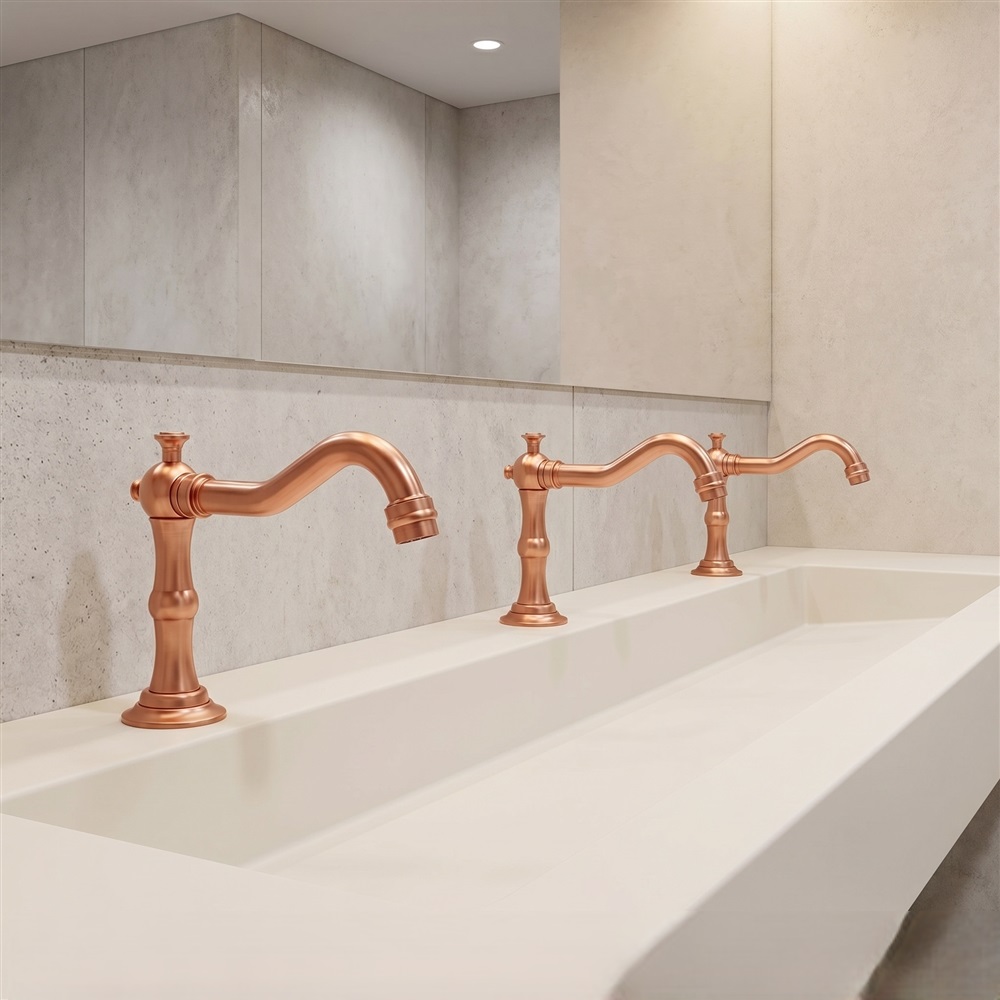
Choose Finishes Carefully
Compare coating wear, cleaning chemistry, replacement continuity and your project finish standards together.
 Specification
 Sensor Performance
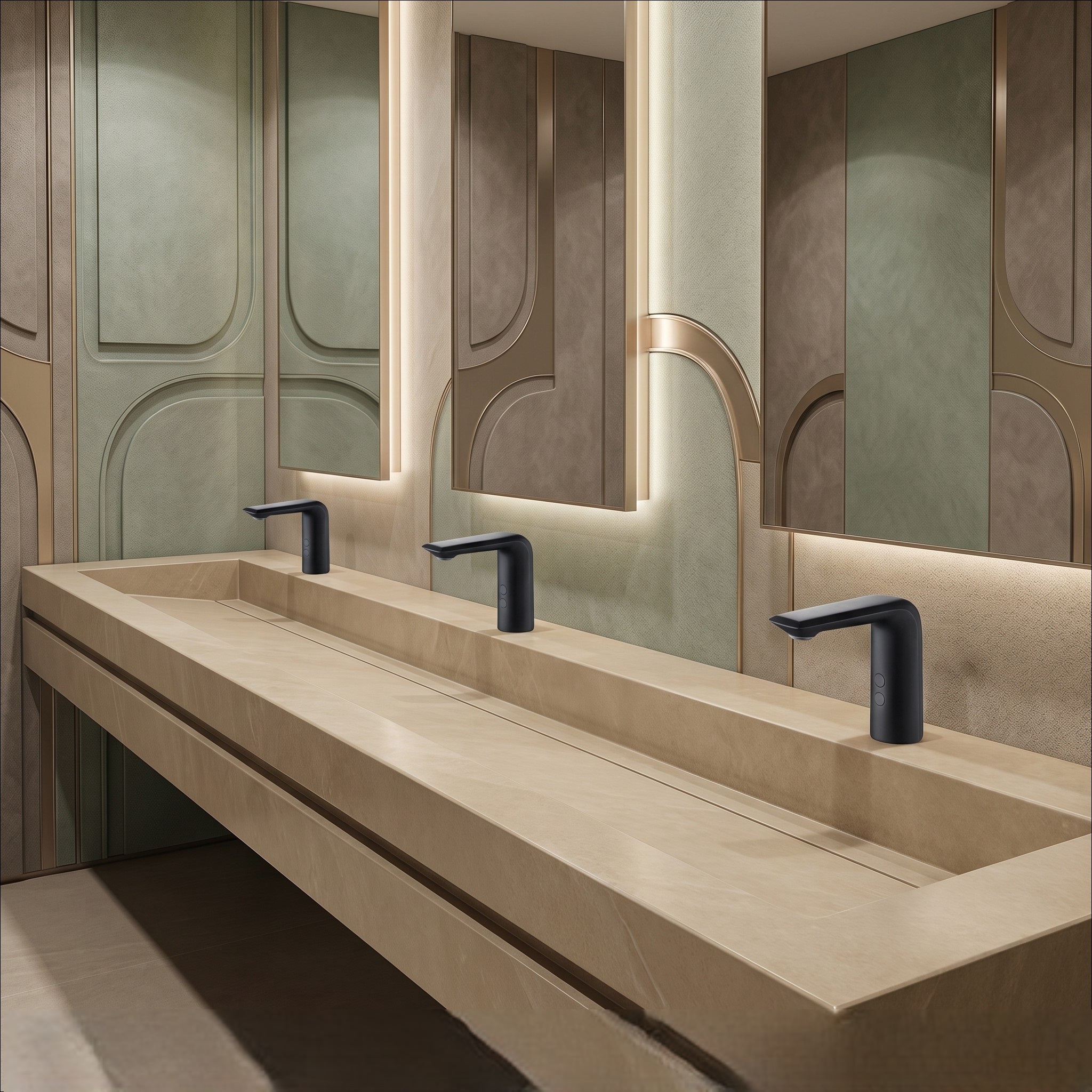 High-Traffic Use
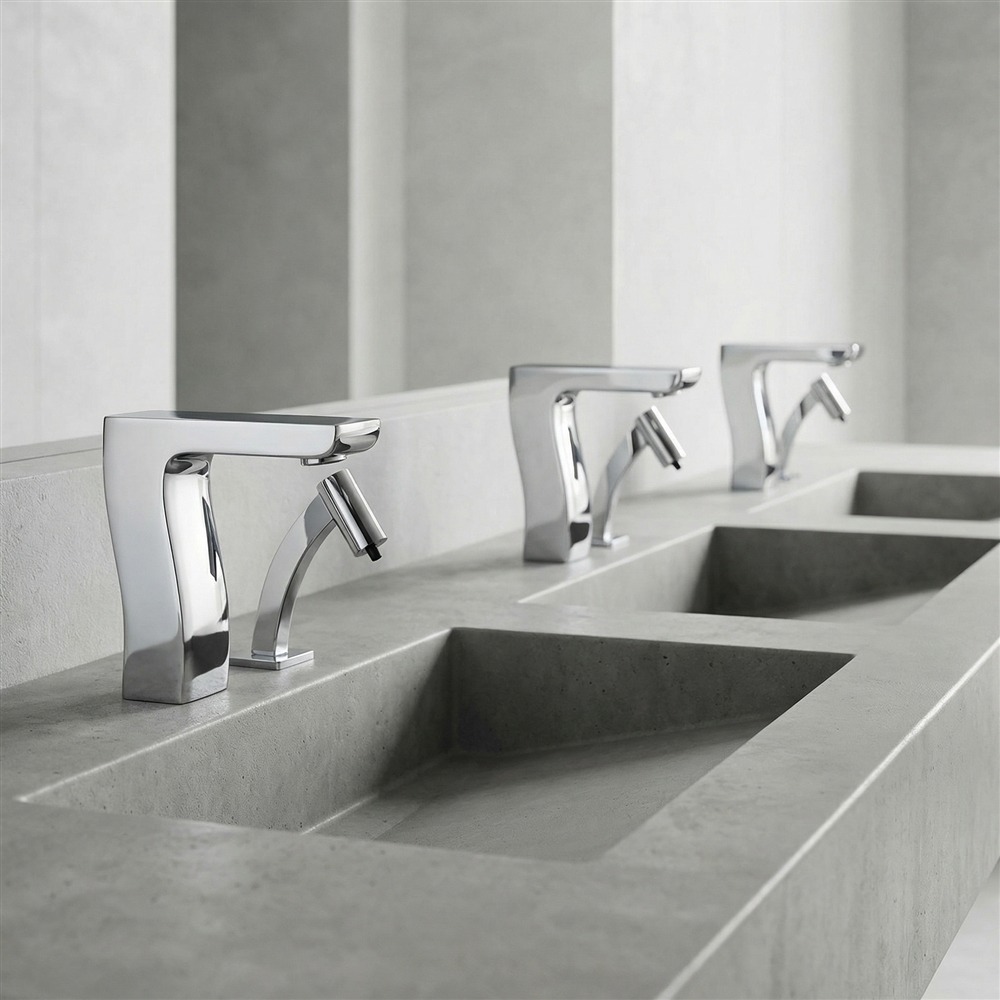 Healthcare
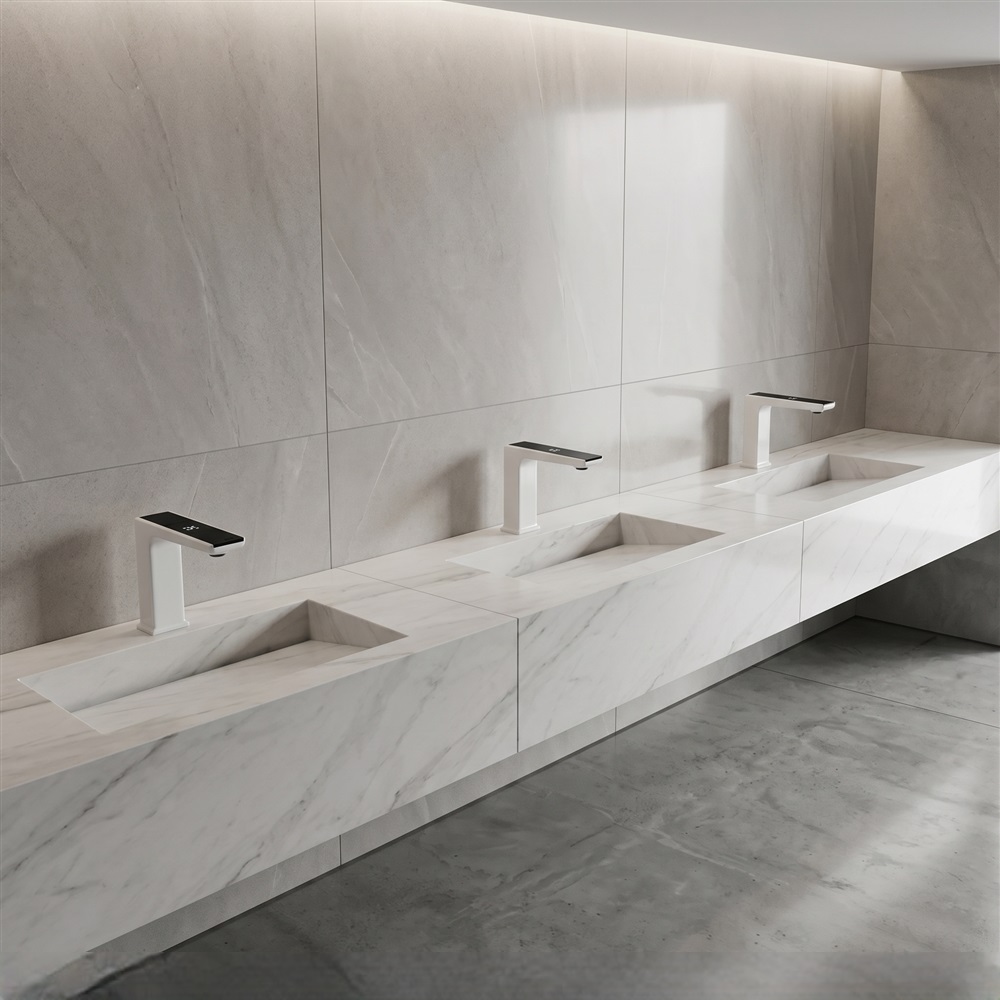 Hospitality
Specification Research
Compare Before You Specify
Use measurable project criteria to compare the faucets that fit your facility, operating conditions and maintenance plan.
What You Should Check
Check sensor behavior, water delivery, power, accessibility and serviceability before you approve a fixture.
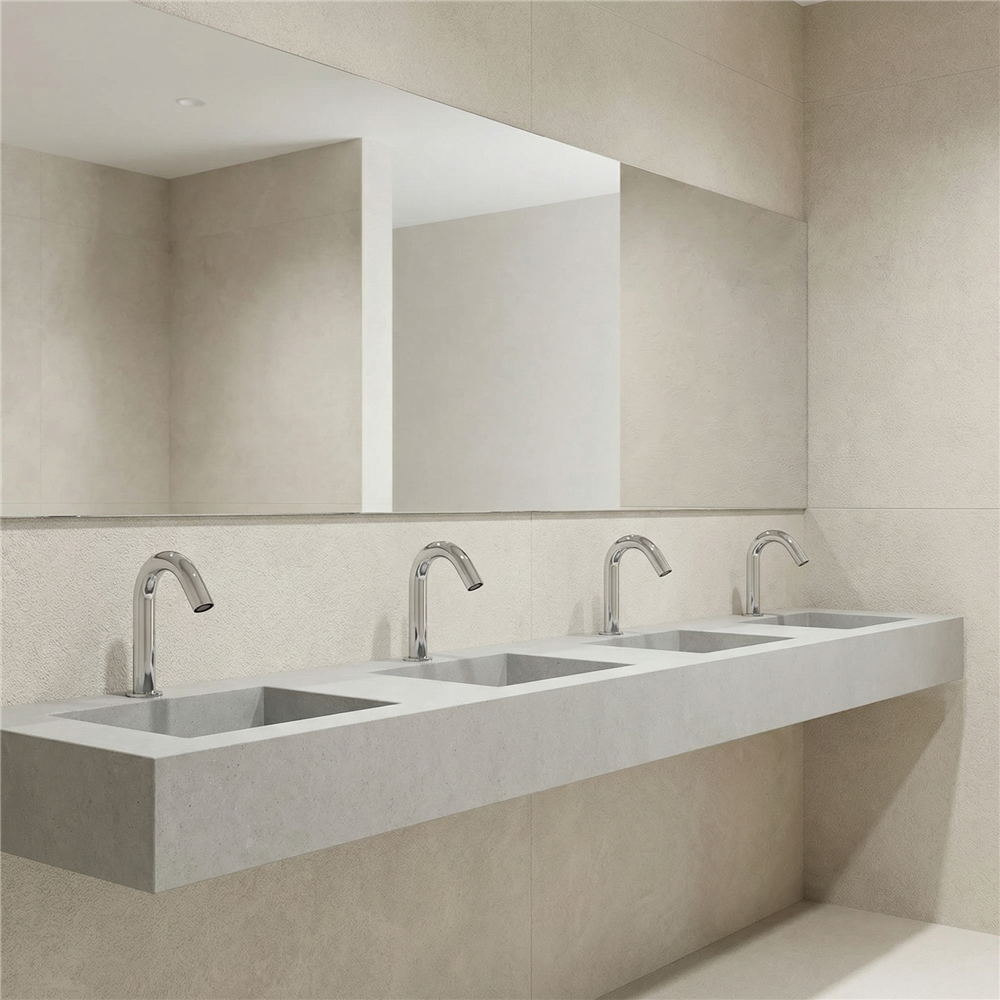 Deck-Mount Faucets
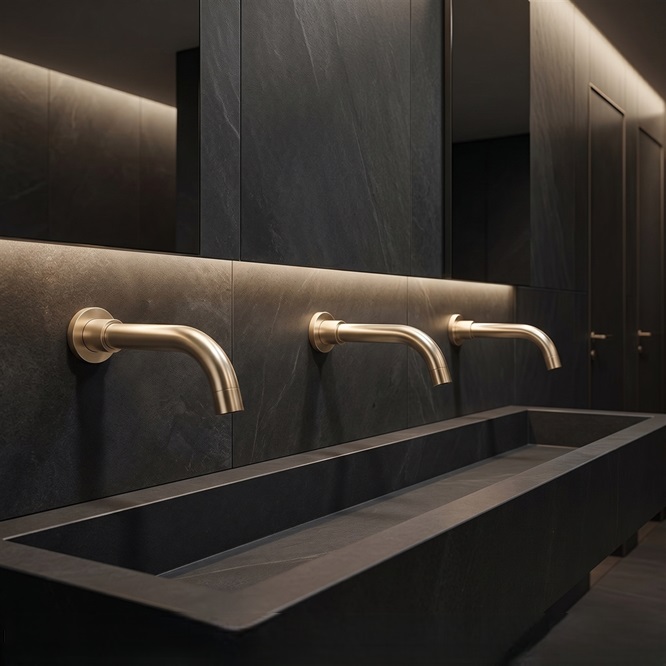 Wall-Mount Systems
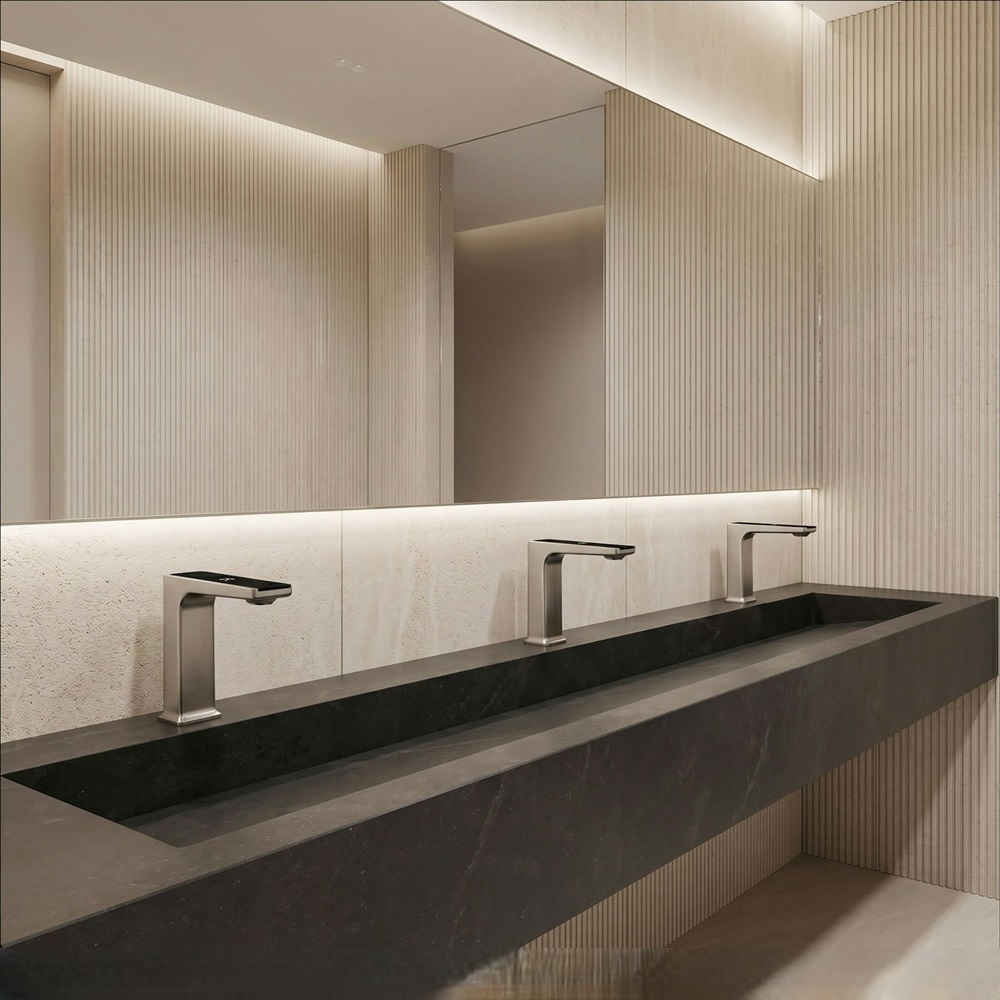 High-Traffic Fixtures
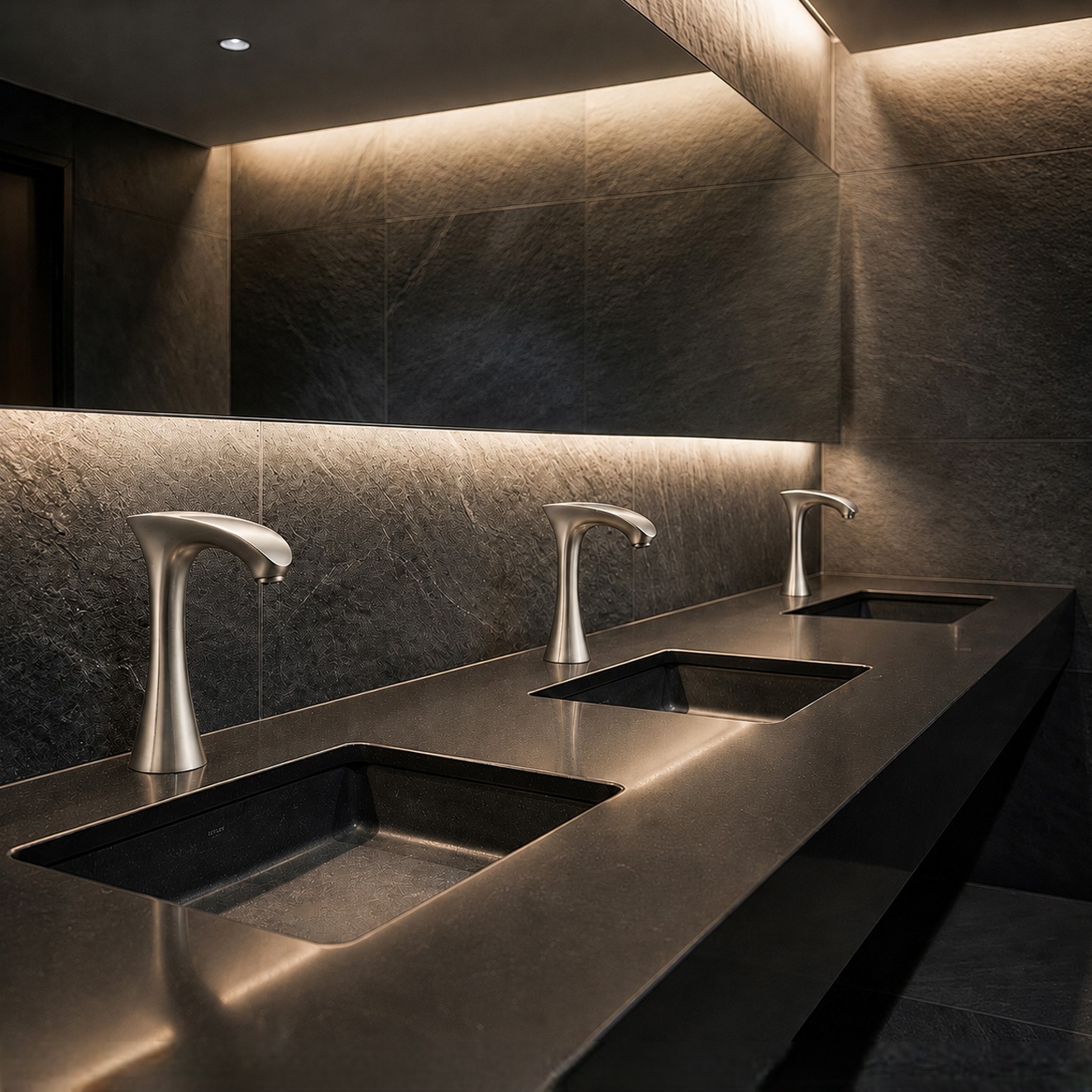 Finish Coordination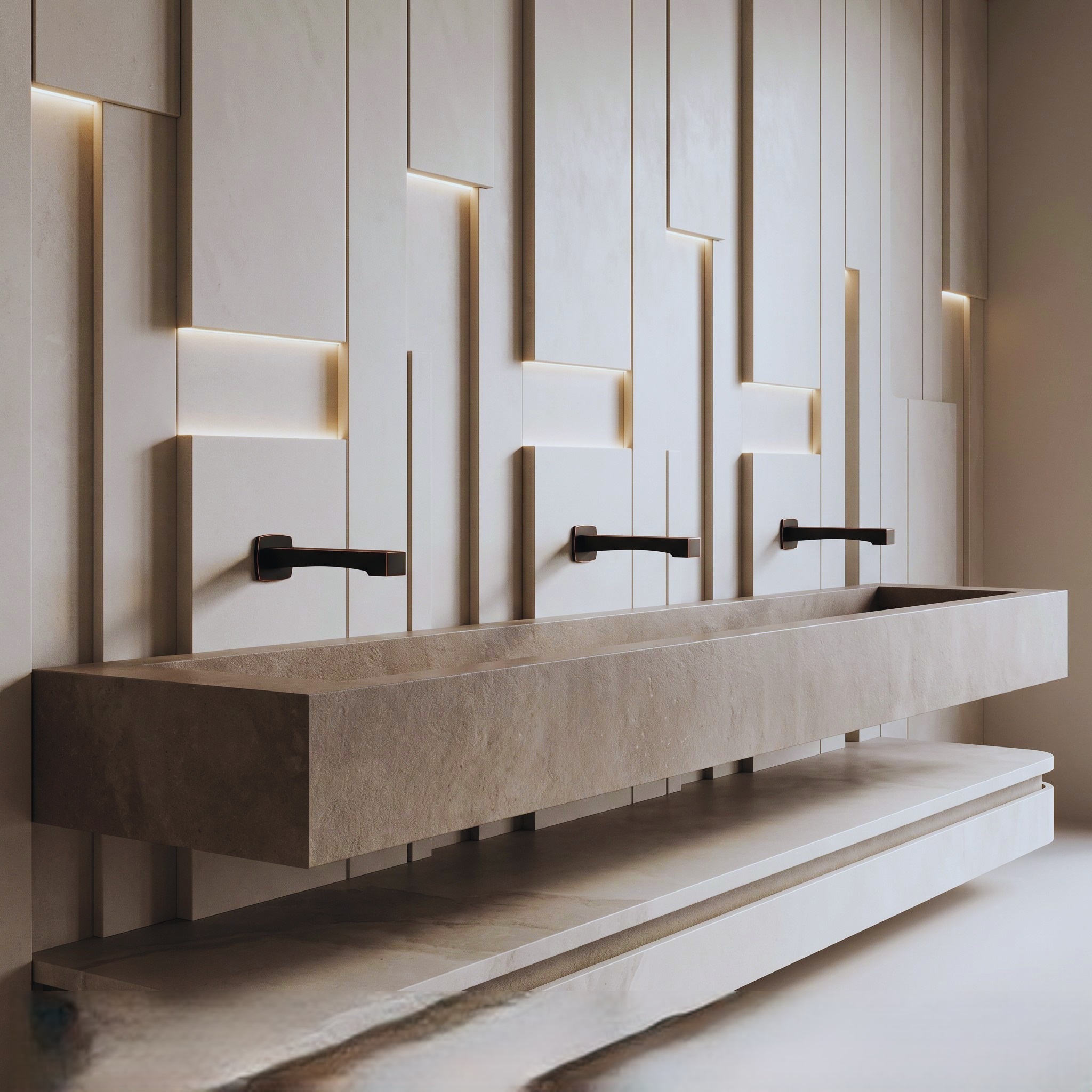
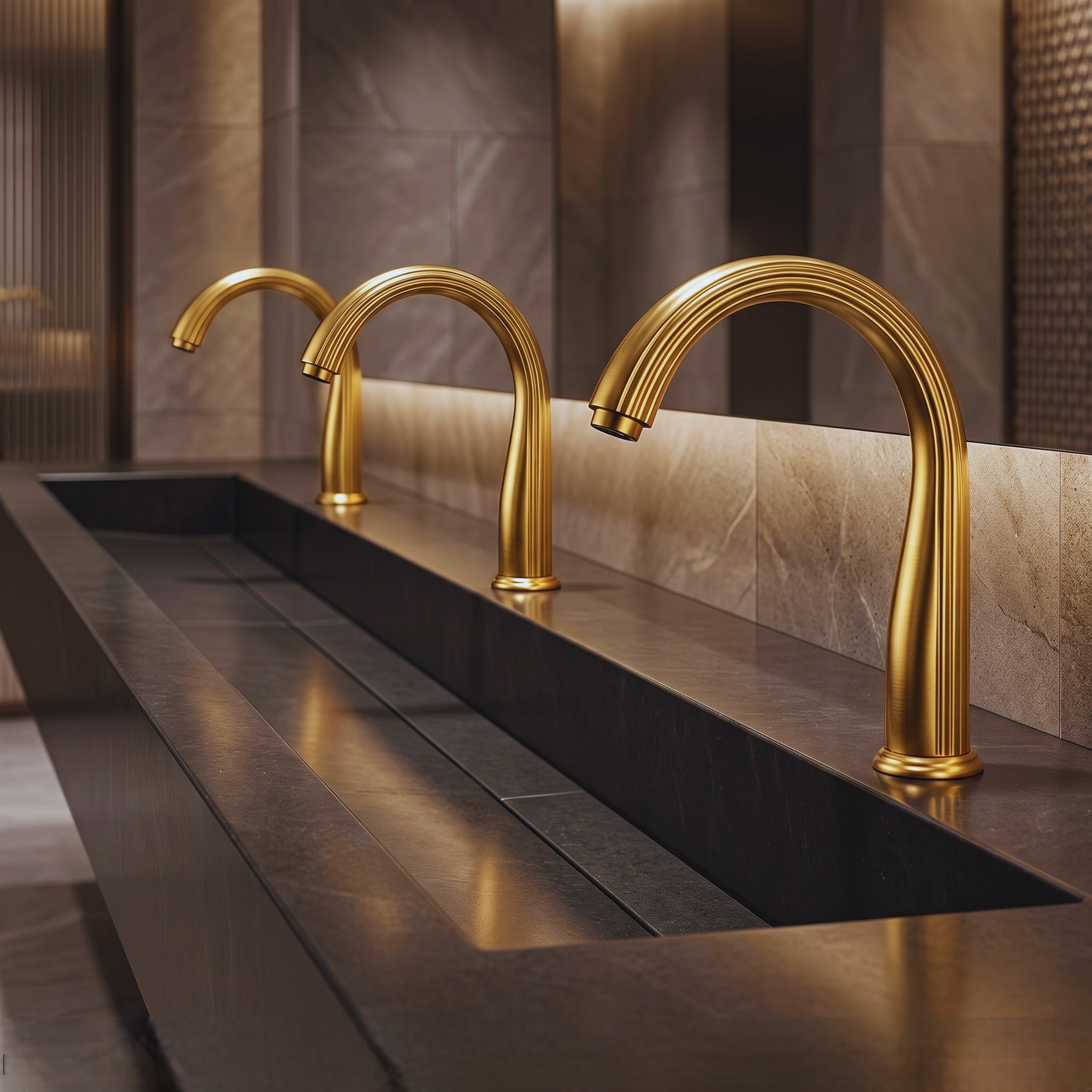
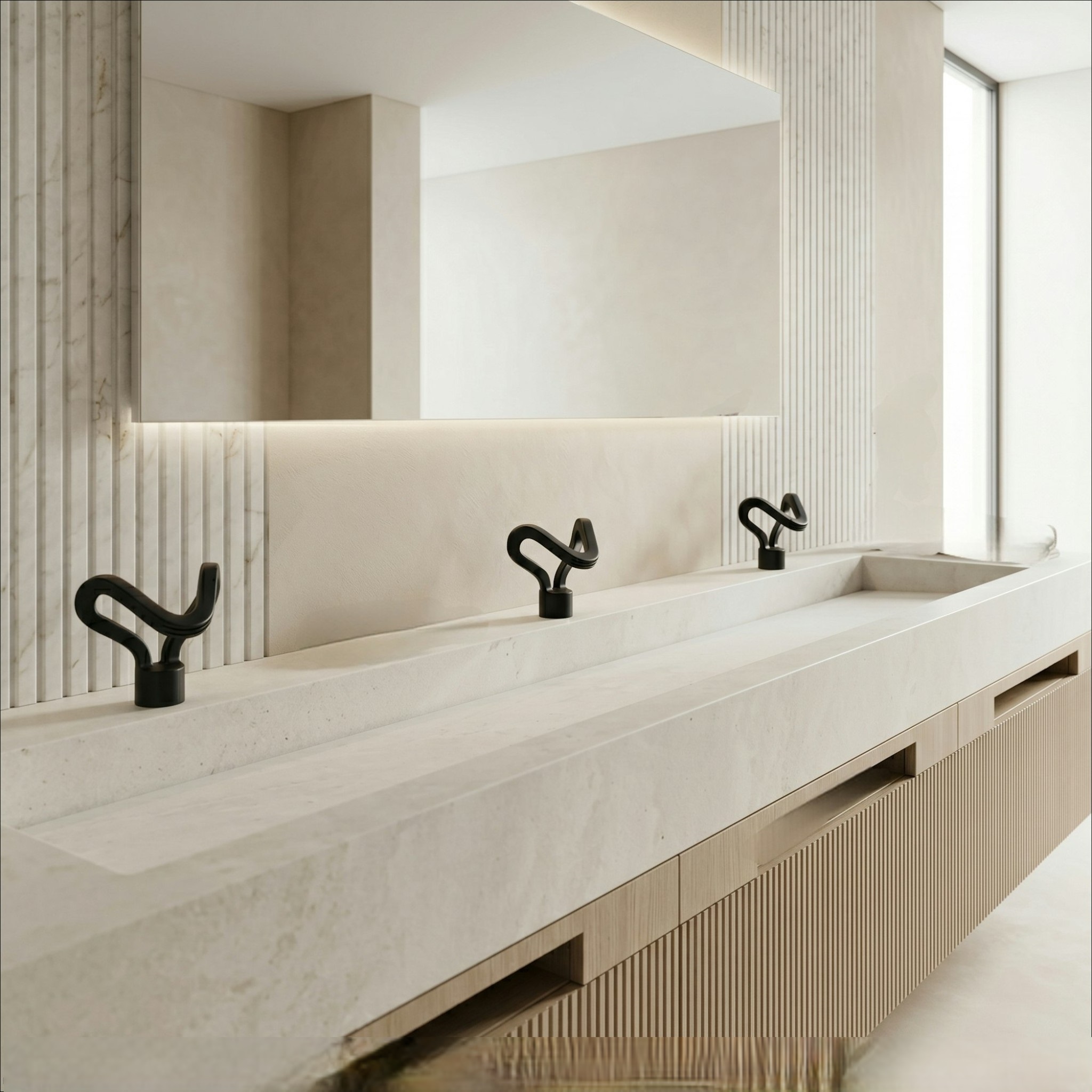
Start With Your Criteria
Define your mounting, flow, power, accessibility and maintenance requirements before comparing models.
Start the ChecklistCoordinate Installation
Check rough-in, access, power, basin alignment and commissioning requirements before installation is complete.
Use Installation GuidesResolve Common Questions
Find practical answers for sensing, flow, power, installation and maintenance questions.
Find AnswersDesign + Application
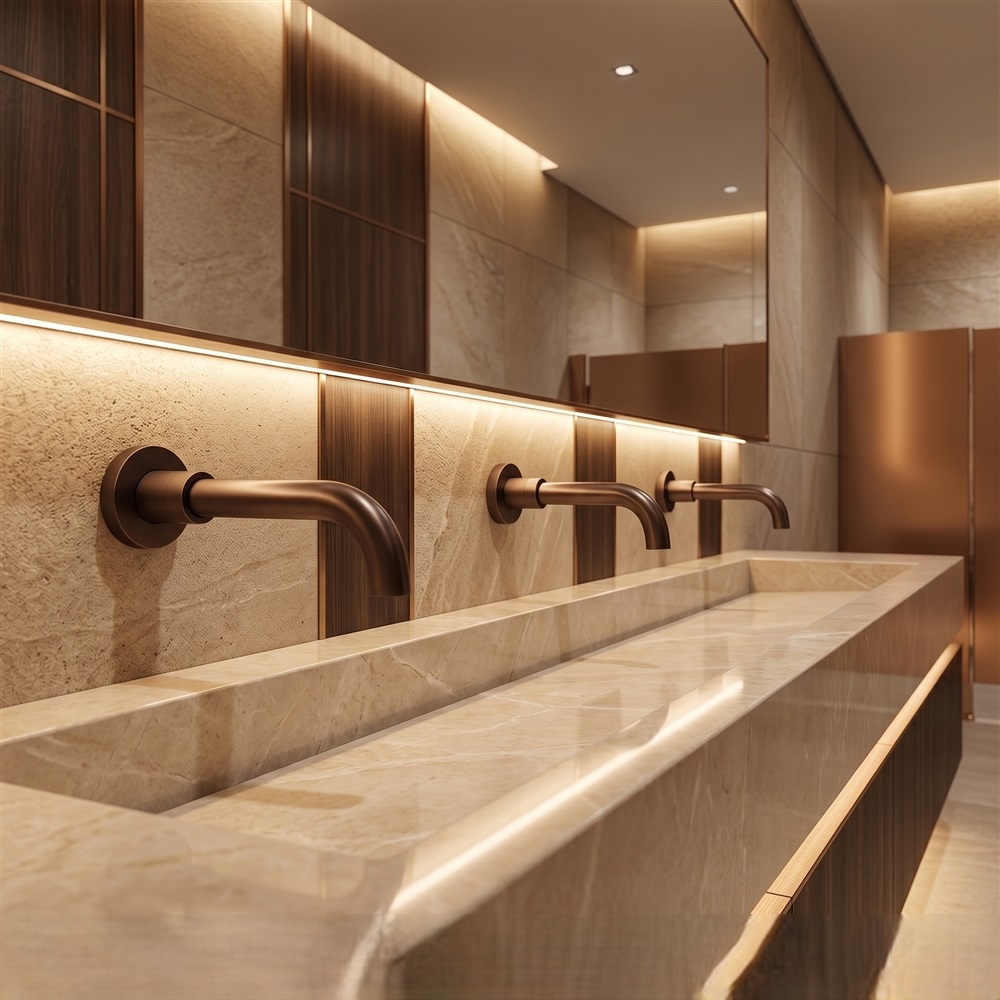
Wall-Mount Systems for Premium Commercial Restrooms
Coordinate projection, basin depth, finish continuity and maintenance access before rough-in is fixed.
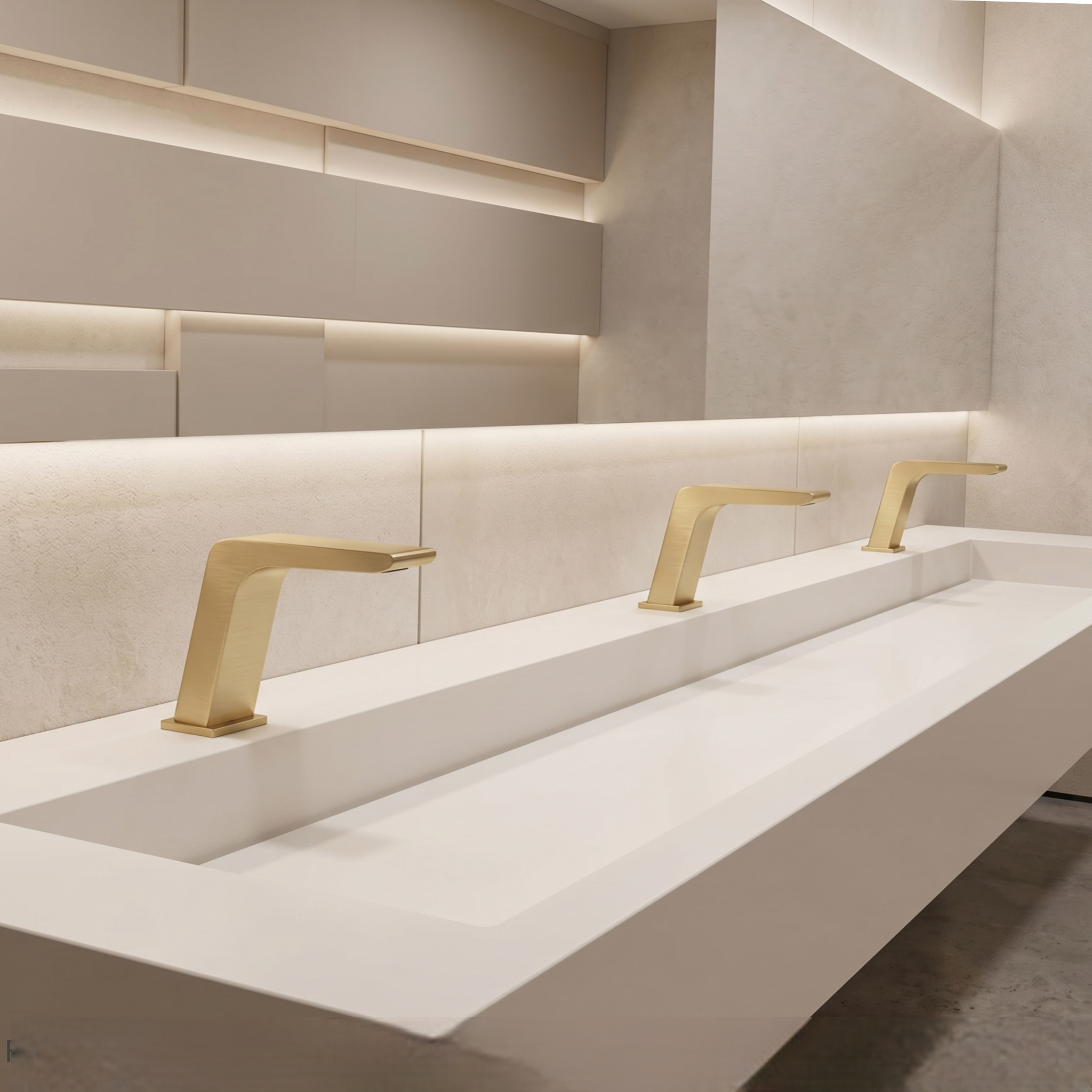
High-Contrast Finishes in Modern Public Spaces
Balance visual impact with cleaning routines, finish durability and replacement continuity.
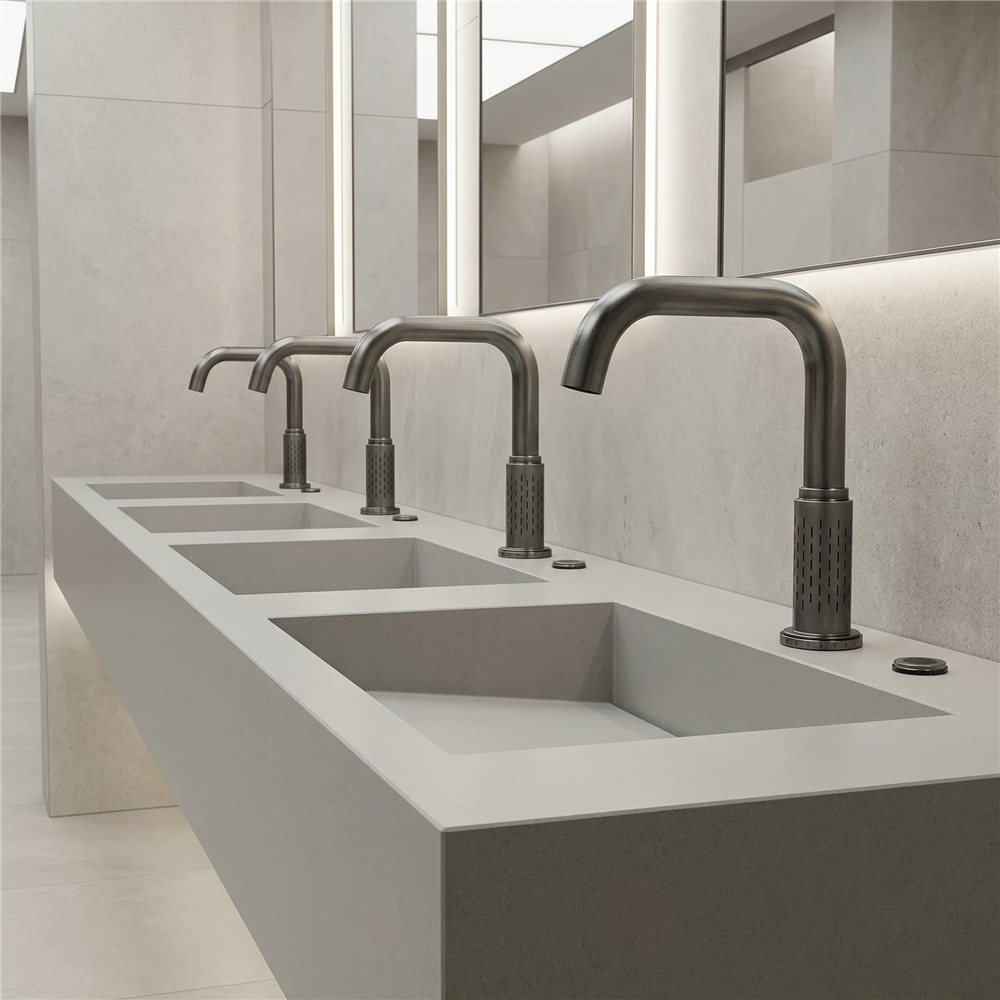
Touchless Planning for Hygiene-Sensitive Environments
Review cleanability, accessible use, sensor stability and reliable water delivery together.
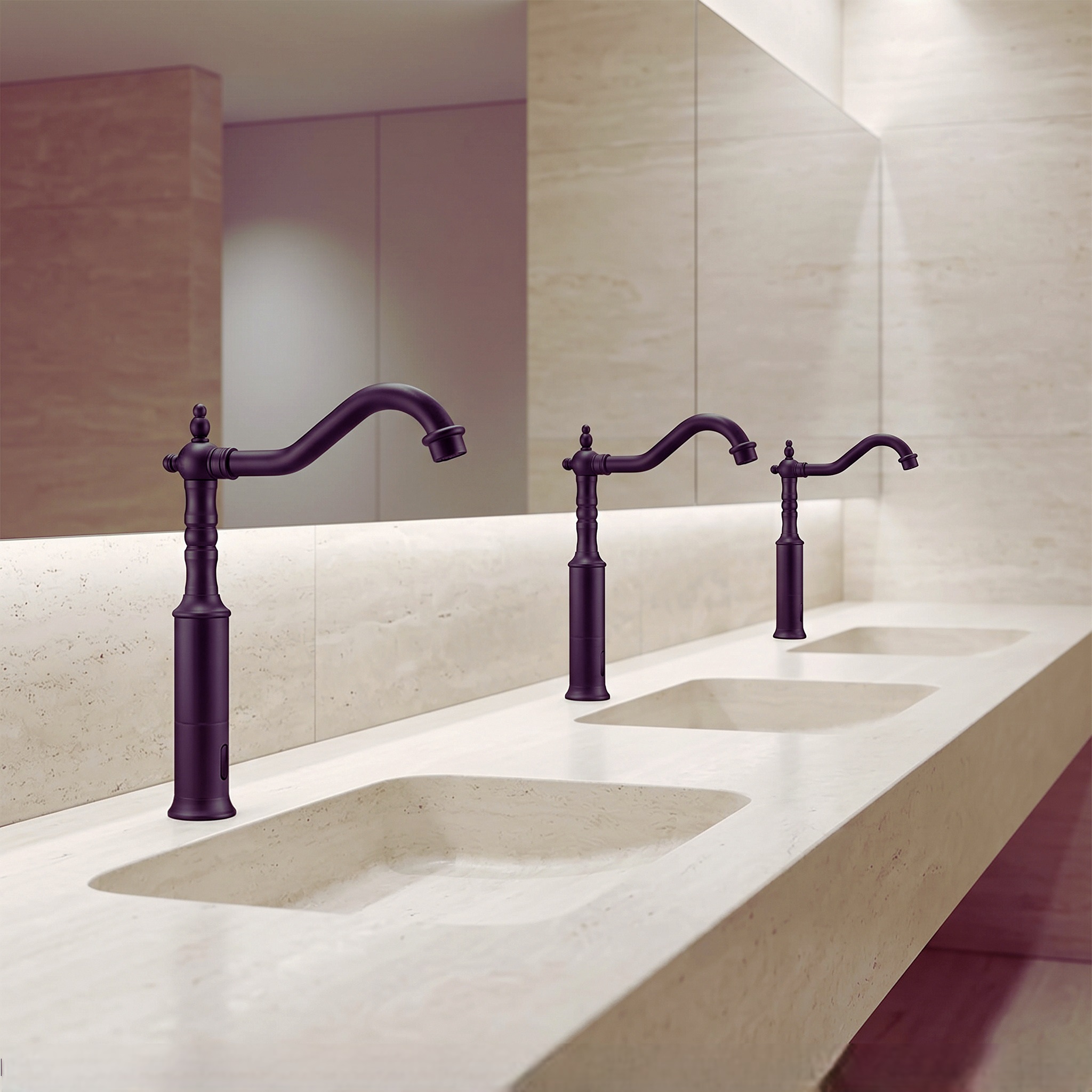
Know What Changes Performance
Check stream landing, sensor field, counter reflection, finish, access and user behavior because each can change installed performance.
Learn More →Choose a Power Strategy
Choose battery, AC or transformer power with installation access, service frequency and long-term maintenance in mind.
Discover Power Planning →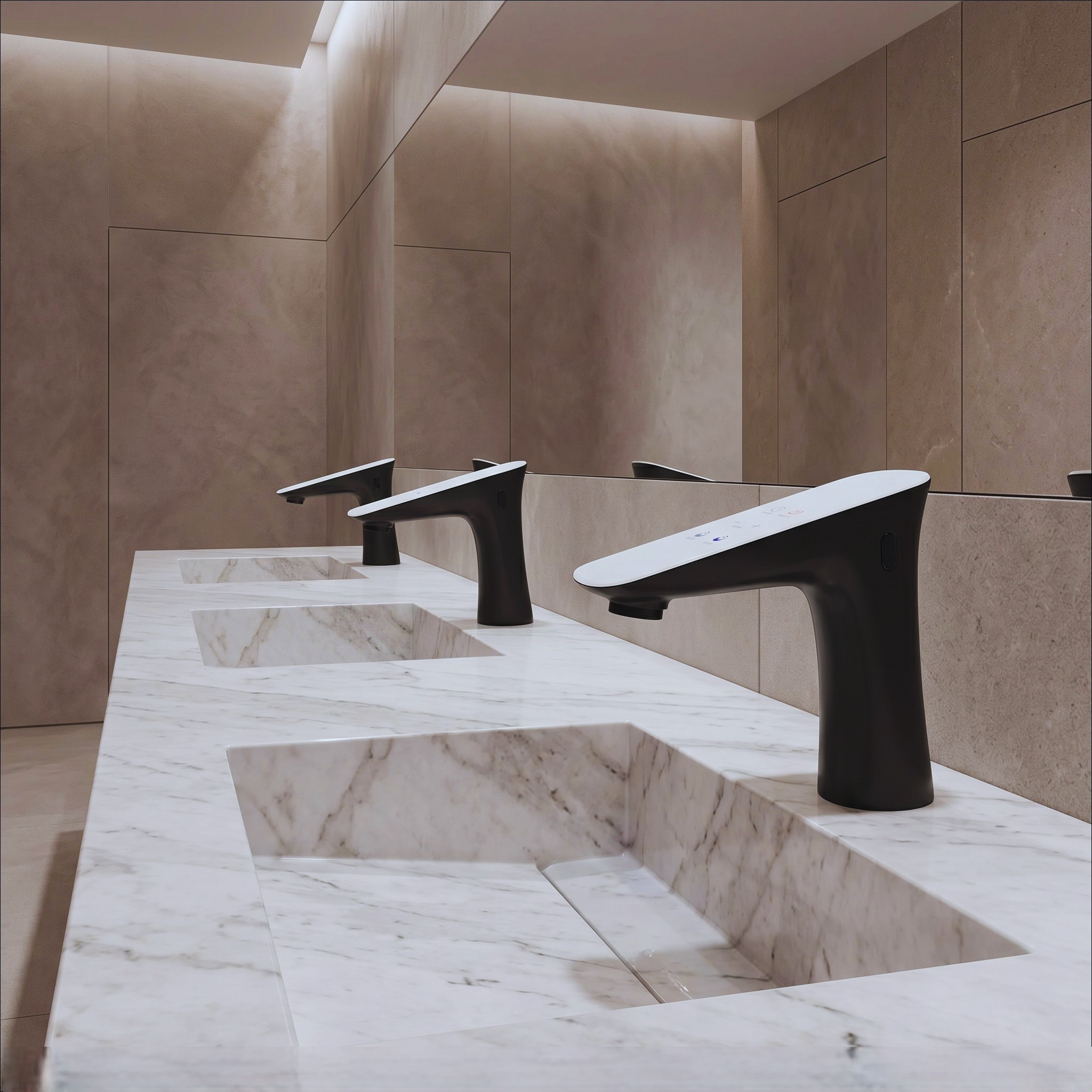
Choose Your Next Guide
SelectionBest Commercial Touchless Faucet Brands
Compare documentation, sensing, mounting, flow, power and serviceability.
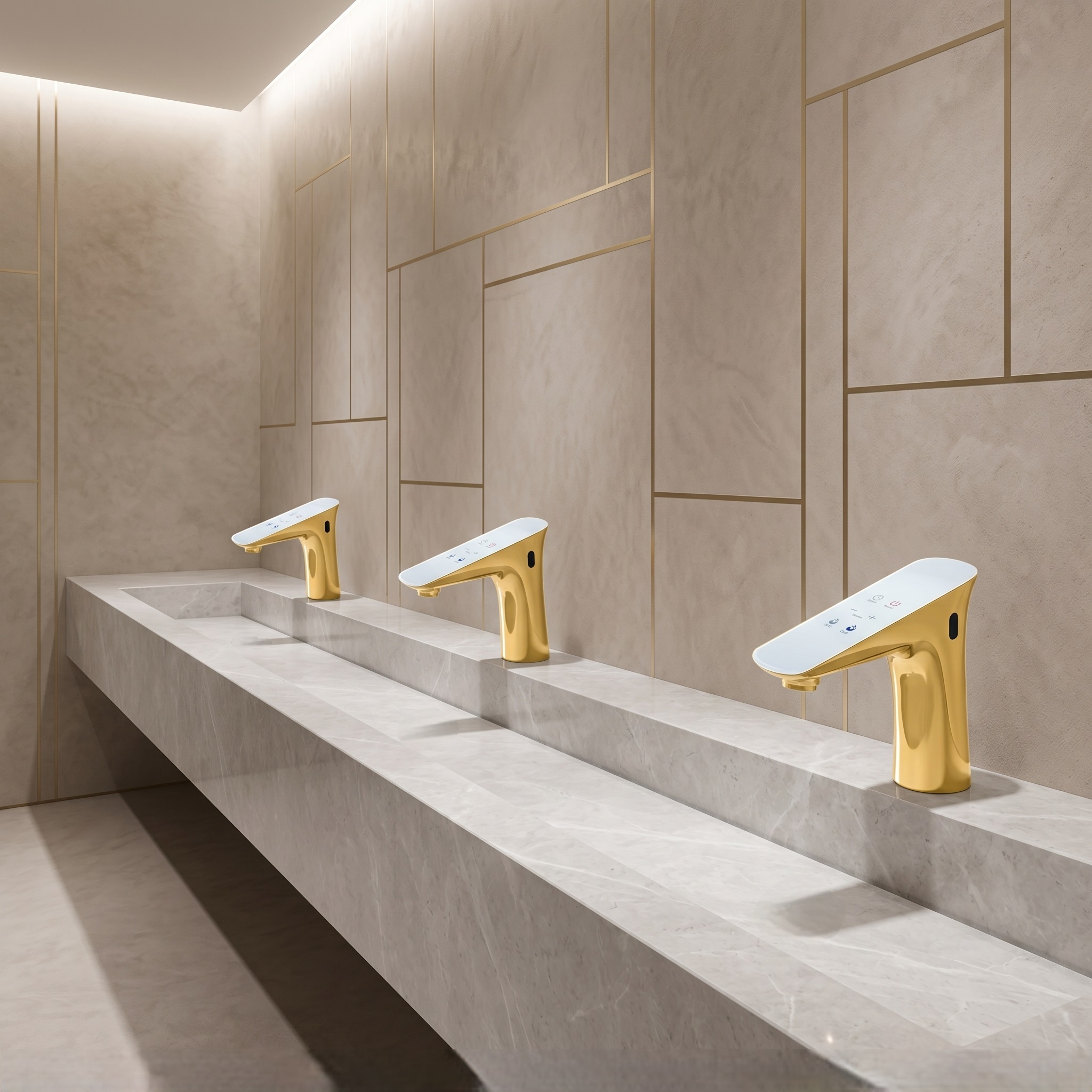
CoordinationWall-Mount Faucet Planning
Review projection, wall rough-in, basin geometry and access before installation.
 Operations
Sensor Accuracy in High-Traffic Restrooms
Understand how sensing behavior affects uptime and user experience.
 Finish Strategy
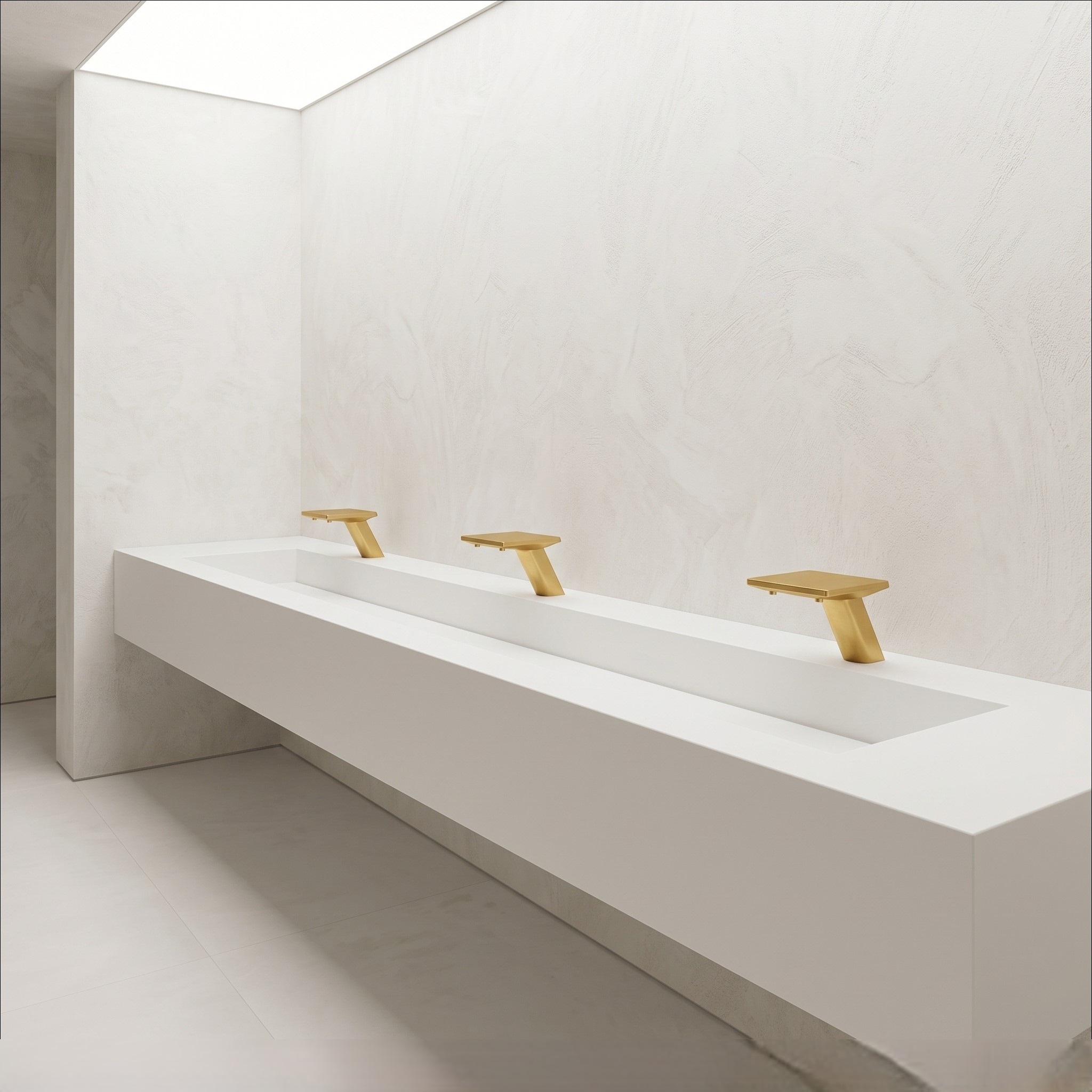
Finish Selection for Commercial Restrooms
Balance appearance, cleaning, wear and replacement expectations.