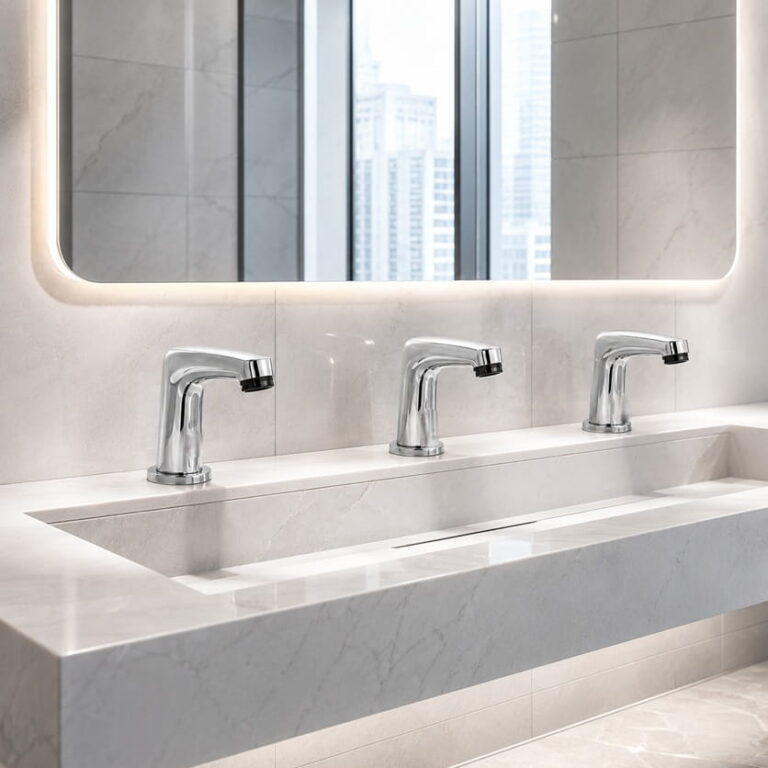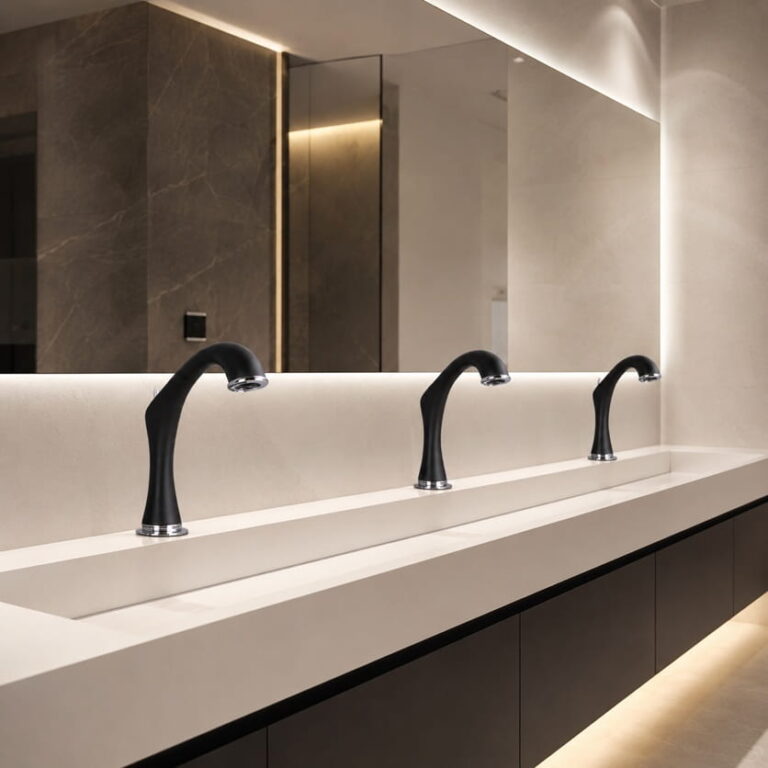
For businesses considering upgrading their restroom equipment, this article provides useful insights on why automatic soap dispensers are a smart investment for modern facilities.
Automatic vs Manual Soap Dispensers: Which Is Better for Commercial Restrooms?
This article was updated on March 13, 2026 to reflect current hand-hygiene guidance, commercial maintenance considerations, and a more detailed decision framework for architects, facility managers, and procurement teams evaluating soap dispensing systems in high-traffic environments.
Quick answer
In most commercial, high-traffic, shared-use restrooms, automatic soap dispensers are usually the better long-term choice because they reduce shared touchpoints, improve dosing consistency, and align more closely with modern hygiene expectations. Manual dispensers can still be the right fit in low-traffic spaces, budget-sensitive retrofits, or locations where battery/service planning is limited.
Choose automatic
When hygiene optics, consistent soap output, and lower surface contact matter most.
Choose manual
When simplicity, low upfront cost, and mechanical familiarity are the main priorities.
Choose carefully
In heavy-use facilities, poor-quality automatic units can underperform if sensor tuning and refill systems are weak.
Why this topic matters now
Hand hygiene remains a foundational public-health measure in shared spaces. That does not mean every facility needs the same dispenser type, but it does mean procurement decisions should be based on real operating conditions rather than only first-cost comparisons.
Automatic vs manual soap dispensers: decision table
| Factor | Automatic Dispensers | Manual Dispensers | Best Fit |
|---|---|---|---|
| Shared-touch hygiene | No hand contact during soap dispensing | Requires pressing a lever or pump | Automatic |
| Soap output control | More consistent dosing when properly calibrated | Output varies by user pressure and pump condition | Automatic |
| Upfront cost | Higher initial cost | Lower initial cost | Manual |
| Maintenance complexity | May require batteries, sensors, or power planning | Simpler mechanical servicing | Manual |
| User perception | Often seen as more modern and hygienic | Can feel dated in premium or healthcare-oriented spaces | Automatic |
| Waste control | Usually better dosing discipline in high-use restrooms | Can lead to over-pumping or inconsistent soap volume | Automatic |
| Failure mode | Sensor/power/service issues can disrupt use | Pump wear, clogging, vandalism, or breakage | Depends on product quality |
| Retrofit simplicity | May need power or better mounting coordination | Easier in simple retrofit projects | Manual |
Editorial verdict: for airports, healthcare buildings, office towers, schools, hospitality projects, and other high-traffic shared-use spaces, automatic soap dispensers usually deliver the stronger hygiene and user-experience case. For low-traffic, cost-sensitive, or service-limited spaces, well-built manual units can still be practical.
Illustrated comparison
Best use cases by facility type
Healthcare & clinics
Automatic usually makes more sense because touchpoint reduction and user confidence are major priorities.
Airports & transit hubs
Automatic is typically stronger due to volume, consistency, and premium user expectations.
Schools & universities
Either can work, but automatic often wins in renovated or flagship facilities; manual may remain viable in budget-led retrofits.
Corporate offices
Automatic is usually the better fit because it supports a more modern, higher-trust restroom experience.
Hospitality
Automatic better supports guest perception, cleaner aesthetics, and upscale restroom presentation.
Low-traffic back-of-house
Manual can still be a cost-effective choice where simplicity matters more than premium presentation.
Frequently asked questions
Are automatic soap dispensers more hygienic than manual ones?
In shared commercial restrooms, automatic dispensers usually reduce shared-touch exposure because users do not need to press a lever or pump to receive soap.
Are manual soap dispensers still worth buying?
Yes. Manual dispensers can still be a good choice in low-traffic, budget-led, or mechanically simple environments where advanced features are not necessary.
Do automatic soap dispensers save soap?
Often yes. Well-designed automatic systems typically provide more consistent soap doses, which can reduce over-dispensing compared with manual pumping.
What is the biggest downside of automatic dispensers?
The main downside is not the concept itself but poor execution: weak sensors, bad battery planning, difficult refills, or cheap housings can lead to user frustration.
Which is better for airports, hospitals, and office towers?
In most high-traffic, high-visibility commercial spaces, automatic dispensers are usually the better long-term fit.
References
Did you know that failing to compare sensor activation latency, pump dosing precision, and mechanical wear cycles can lead to inaccurate conclusions when evaluating automatic vs manual soap dispensers? Many comparisons focus on cost alone, while neglecting hygiene compliance, touchpoint reduction, refill efficiency, and long-term maintenance intervals that ultimately determine performance in commercial and high-usage environments.
(Content technically updated for 2026 to reflect comparative performance metrics, hygiene optimization standards, and lifecycle cost analysis frameworks.)

Brushed Nickel Commercial Soap Dispensers
Brushed nickel commercial soap dispensers provide a clean architectural appearance while supporting hands-free hygiene in public washrooms. These sensor-operated solutions are commonly specified for airports, office towers, healthcare facilities, educational campuses, and hospitality developments where durability, easy maintenance, and coordinated restroom aesthetics are important.
Stern Boreal Soap and Water Duo
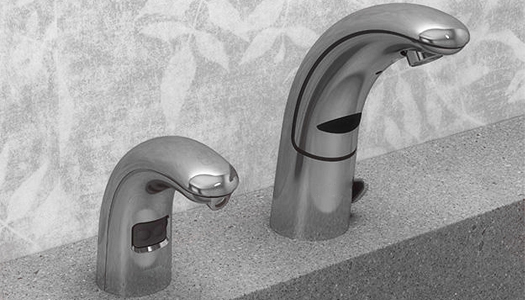
Integrated soap and water dispensing systems help streamline handwashing while minimizing countertop clutter. The Boreal Duo concept combines touchless soap dispensing and faucet activation into a coordinated user experience that supports efficient restroom operation and improved hygiene outcomes in commercial facilities.
Commercial Soap Dispensers for Restrooms
High-capacity commercial soap dispensers help facility managers maintain restroom hygiene while reducing maintenance frequency. Designed for demanding environments, these systems support hands-free operation, cleaner user interactions, and efficient soap management across public and private facilities.
Improving Restroom Efficiency Through Sensor Coordination
Better coordination between automatic soap dispensers and touchless fixtures can improve restroom traffic flow, reduce user frustration, and support more effective hygiene practices. Integrated sensor technology helps create a smoother handwashing experience while reducing unnecessary maintenance interventions.
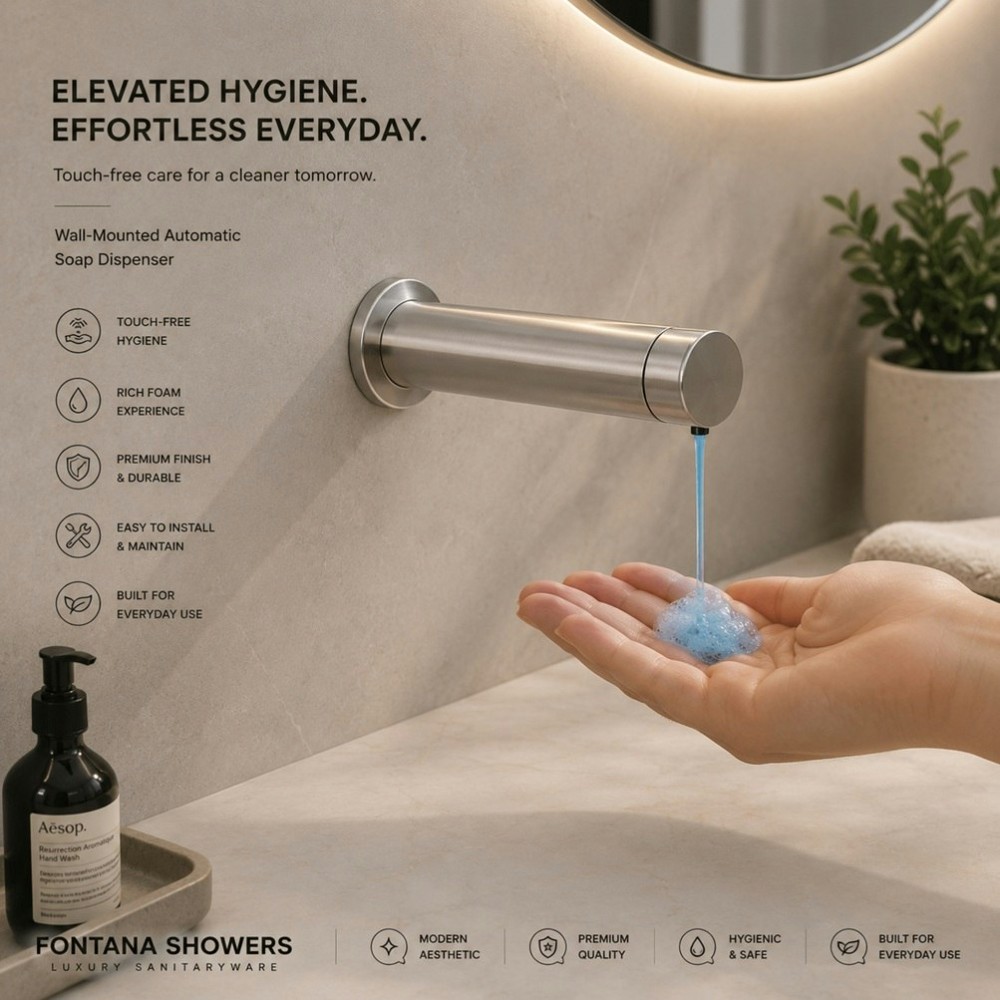

Fontana Commercial Soap Dispenser Collection
Fontana commercial soap dispensers are engineered for high-traffic restroom environments where reliability, hands-free hygiene, and long-term durability are essential. Available in multiple finishes and configurations, these systems help create a coordinated restroom experience while supporting modern infection-control objectives.
Fontana Milan Touch-Free Soap Dispenser
The Fontana Milan touch-free hand sanitizer and soap dispenser combines advanced sensor technology with commercial-grade construction to support public restroom hygiene. Ideal for healthcare, transportation, hospitality, and office environments, the system delivers reliable dispensing while maintaining a modern architectural appearance.