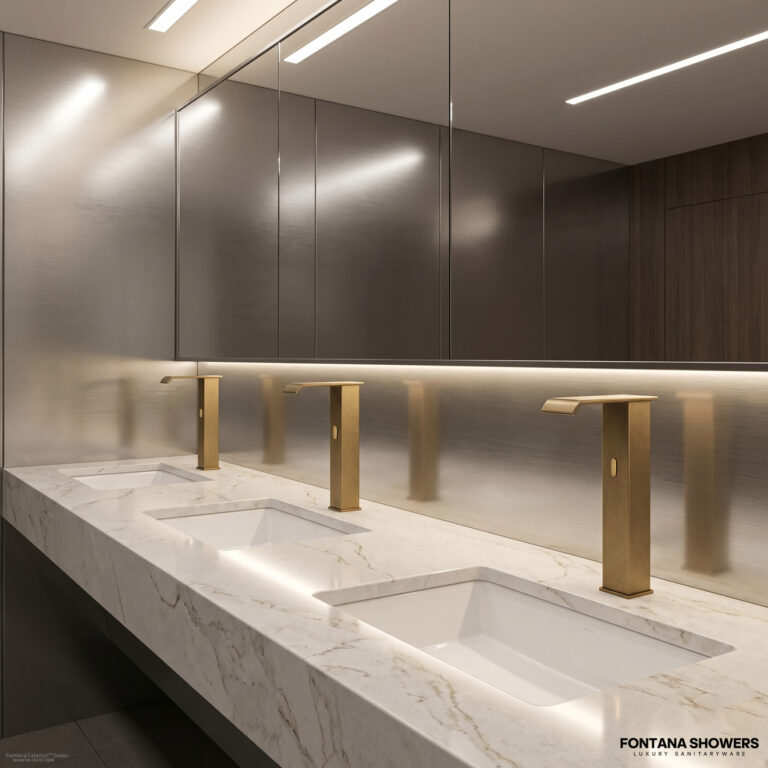
How Digital Faucets Improve Water Efficiency
Water saving faucets are transforming modern bathrooms by reducing waste, improving efficiency, and supporting sustainable living in both homes and commercial environments.
30%+
Water savings with smart faucet systems
50%
Reduced waste in commercial environments
Smart
Automatic flow control technology
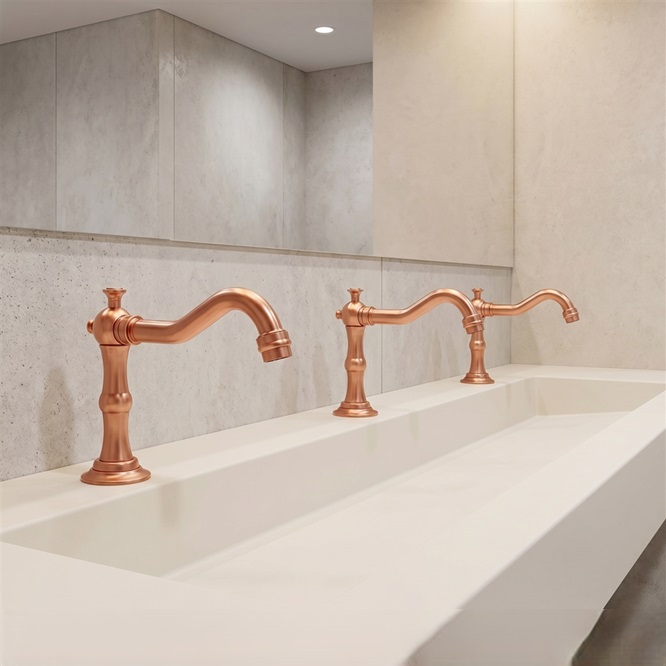
What Are Water Saving Faucets?
Water saving faucets use advanced technologies such as sensors, aerators, and digital controls to regulate water flow. These systems ensure water is only used when needed, reducing unnecessary waste.
How Digital Faucets Reduce Water Waste
Sensor Activation
Water flows only when hands are detected, preventing unnecessary usage.
Flow Regulation
Smart faucets maintain optimal water pressure without excess usage.
Temperature Control
Digital settings reduce wasted water while adjusting temperature.
Automatic Shutoff
Prevents water from running accidentally or being left on.
Environmental Impact of Smart Faucets
Water conservation is becoming a global priority. Digital faucets play a key role in reducing water consumption, lowering utility costs, and supporting eco-friendly building practices.
In both residential and commercial projects, brands like FontanaShowers are integrating water-efficient technology into modern faucet systems, helping create more sustainable environments.
Final Thoughts
As demand for sustainable living increases, water saving faucets are no longer optional — they are essential. Digital technology is leading the way toward smarter, greener, and more efficient bathroom solutions.
Commercial Sensor Faucet Field Reviews · Collection 16
Six Additional Commercial Sensor Faucets Reviewed in Real-World Projects
Commercial Performance Overview
| Product | Configuration | Reviewer | Project Context | Review Focus | Review Strength |
|---|---|---|---|---|---|
| Fontana Bavaria Matte Black Inverted-U Automatic Commercial Sensor Faucet FS2230 | Deck mount · matte black · brass · infrared · AC/DC | Adrian Hollowell, Infrastructure Consultant Louisville, KY | Healthcare and transportation restroom modernization | Sensor stability · pressure variation · service reduction | 5/5 · 2 helpful May 2, 2026 |
| Fontana Deck Mount Commercial Infrared Automatic Touchless Sensor Faucet in Rose Gold Finish FB507-SF-RG | Deck mount · rose gold · infrared · AC/DC | Trina Toronto | High-end wellness center | Finish quality · sensor consistency · basin coordination | 5/5 · 5 helpful June 28, 2025 |
| Fontana Milan Deck Mount Commercial Infrared Automatic Touchless Sensor Faucet in Chrome Finish FB507CSF | Deck mount · chrome · infrared · AC/DC | Sight and Sound Theatres Tacoma, Washington | Hotel restroom installation · 10 sets | Activation speed · adjustability · hotel use | 5/5 · 3 helpful November 20, 2022 |
| Fontana Wall Mount Commercial Automatic Sensor Faucet in Chrome FS1050 | Commercial sensor faucet · chrome · infrared · AC/DC | Kimberly Construction Washington, DC | Office-building restroom installation | Workmanship · material quality · operational reliability | 5/5 · 5 helpful January 21, 2022 |
| Fontana Plato Automatic Commercial Brushed Nickel Sensor Faucet FS-505SG | Deck mount · brushed nickel · infrared · AC/DC | Embrio Design Quebec, Canada | Office bathroom installation | Water use · hygiene · installation · support | 5/5 · 2 helpful February 21, 2023 |
| Commercial Motion Sensor Activated Automatic Faucet Brass Valve Gold Tone Finish FS-6431 | Deck mount · gold tone · brass · infrared · AC/DC | Adolf Loos Snellville, GA | Pub restroom installation | Hospitality use · finish quality · ease of use | 5/5 · 6 helpful October 5, 2023 |
Model FS2230
Fontana Bavaria Matte Black Inverted-U Automatic Commercial Sensor Faucet
Reduced Triggering Complaints
We installed 15 automatic commercial sensor faucets across healthcare and transportation restroom modernization projects between 2022 and 2025, and by 2026 the operational consistency has remained substantially stronger than earlier touchless systems previously maintained in similar high-traffic environments. Older commercial faucets repeatedly developed unstable infrared activation near reflective wall materials, delayed shutoff timing during continuous public usage, and inconsistent water delivery under fluctuating inlet-pressure conditions, whereas this faucet maintained highly dependable motion detection with smoother and more predictable flow throughout heavy daily operation. Previous sensor systems also required repeated recalibration because of changing restroom lighting conditions and varying sink configurations, while this unit maintained noticeably stronger activation stability with fewer servicing interruptions overall. Maintenance supervisors initially adjusted sensitivity settings on several deeper basin installations, but once standardized the valve regulation, infrared responsiveness, and long-term operational reliability remained highly uniform across all installed facilities, and activation-related maintenance requests dropped significantly after installation.
Why This Review Matters
- 15-unit multi-facility installation
- Healthcare and transportation applications
- Reflective-surface sensor behavior documented
- Long-term activation and servicing experience
Product Specifications
Single-hole deck-mounted commercial sensor faucet with solid-brass body, matte-black finish, active infrared sensing, AC/DC power, adjustable sensing range, approximately 0.3-second response and 2.2 GPM standard aeration.
Model FB507-SF-RG
Fontana Deck Mount Commercial Infrared Automatic Touchless Sensor Faucet in Rose Gold Finish
Excellent quality product Beautiful finish
We included the Fontana rose gold automatic deck-mounted faucet in a high-end wellness center in Toronto. Its sleek form and reflective finish elevated the overall ambiance, blending sophistication with subtle innovation. The infrared sensor operated consistently, offering hands-free convenience that enhanced the spa’s focus on hygiene and guest comfort. The material quality and attention to detail were evident, with contractors reporting seamless alignment with the stone basin configurations. From a specification standpoint, this faucet offered a rare combination: advanced performance technology embedded in a visually compelling fixture. It proved ideal for environments where both durability and luxury are paramount.
Why This Review Matters
- Installed wellness-center context
- Sensor consistency discussed directly
- Stone-basin coordination noted
- Finish quality evaluated alongside performance
Product Specifications
Commercial single-hole deck-mounted infrared faucet in polished rose gold, with brass valve core, AC/DC power options and a 0.05–0.6 MPa operating-pressure range for high-traffic restroom applications.
Model FB507CSF
Fontana Milan Deck Mount Commercial Infrared Automatic Touchless Sensor Faucet in Chrome Finish
Looks and works excellent. Easy to install
This is the best touchless sensor faucets. Fontana brand, we shopped around and opting for lower prices, but this is worth the price. Functionality I’m surprised! It comes out in a fraction of a second! And you can even make the quantity dispensed more, or less, depending on what you want or what you use it for the same way for the sensor faucet also. Bought 10 sets of it for the hotel restrooms, And the design is one of the nicest too… small, modern. Love it!
Why This Review Matters
- Ten-set hotel restroom installation
- Activation speed emphasized
- Adjustability discussed by the reviewer
- Commercial design and installation context
Product Specifications
Single-hole deck-mounted commercial infrared faucet with polished-chrome finish, brass valve components, DC/AC or combined power options, 0.05–0.6 MPa working pressure and ADA-oriented touch-free operation.
Model FS1050
Fontana Wall Mount Commercial Automatic Sensor Faucet in Chrome
Best Sensor Faucet
We installed many sensor faucets in projects around the country, and we just finished installing the Fontana wall mount sensor faucet for an office building in Washington DC, the quality and finish of this faucet is no doubt second to none. Material of the sensor faucet is heavy made of solid brass this is the best workmanship sensor faucet I have seen. They work flawlessly.
Why This Review Matters
- Construction reviewer with nationwide fixture experience
- Installed office-building context
- Material quality and workmanship discussed
- Operational reliability noted after installation
Product Specifications
Commercial infrared sensor faucet with self-adjusting sensing range, sub-second activation, G1/2 connection, DC 6V or AC 110–240V power options and solenoid components rated for repeated commercial cycling.
Model FS-505SG
Fontana Plato Automatic Commercial Brushed Nickel Sensor Faucet
Great customer support
This Fontana Automatic Electronic Commercial sensor faucet is great choice for our office bathrooms. One of best purchases Ive made in sometime. Saves water, hygienic and was easy install. We havent experienced any problems with such faucets. this model is the right choice for you. Customer service were very helpful… Highly recommended.
Why This Review Matters
- Design-firm reviewer
- Installed office-restroom context
- Water saving and hygiene discussed
- Ease of installation and reliability noted
Product Specifications
Solid-brass commercial sensor faucet in brushed nickel with infrared sensing, adjustable detection range, automatic shutoff, AC 110V/DC 6V power options, 10–125 psi working pressure and ADA-oriented hands-free operation.
Model FS-6431
Commercial Motion Sensor Activated Automatic Faucet Brass Valve Gold Tone Finish
You will definitely love this product
This option appeared the most economical because we required something upscale and well-made for the restroom at our pub. This Motion Sensor sensor-activated faucet is very fantastic and has a lovely gold finish. extremely user-friendly and fantastic for customers!
Why This Review Matters
- Hospitality restroom application
- Value assessed alongside finish quality
- User friendliness emphasized
- Commercial guest-facing context
Product Specifications
Commercial solid-brass motion-sensor faucet with gold-tone finish option, infrared sensing, approximately 0.3-second response, 30-second automatic shutoff, AC 110V/DC 6V power and 10–125 psi working pressure.