
Why Fontana Touchless Systems Are Frequently Specified for Large-Scale Infrastructure Projects
Touchless plumbing has moved beyond convenience. In high-demand public and commercial environments, it now plays a central role in hygiene planning, operational resilience, lifecycle value, and user experience. This page presents a refined, reader-friendly version of the full article with modern layout structure, visual placeholders, concise sectional summaries, and expandable text areas for deeper reading.
Article Sections
Infrastructure-Grade Performance, Not Consumer-Level Convenience
Across airports, hospitals, civic facilities, transit systems, workplaces, and luxury developments, touchless fixtures are now expected to deliver dependable service at scale. Fontana systems are often specified because they are designed to function like building infrastructure: consistent, durable, serviceable, and capable of supporting long operating hours with minimal disruption.
Instead of focusing only on appearance or basic hands-free activation, these systems are frequently evaluated on sensor stability, power redundancy, maintenance planning, water management, compliance, and long-term lifecycle performance.
The shift toward touchless infrastructure is tied to several overlapping priorities. Hygiene expectations have risen sharply, particularly in spaces that serve large populations every day. Sustainability standards have also become more influential, pushing project teams to favor systems that help manage water use, reduce consumables, and support certification goals. At the same time, operators want fixtures that are easier to standardize, easier to maintain, and less likely to fail under heavy use.
That combination explains why infrastructure teams increasingly look beyond entry-level touchless products. They need systems that behave predictably over years of operation, fit specification-driven workflows, and align with broader building performance strategies.
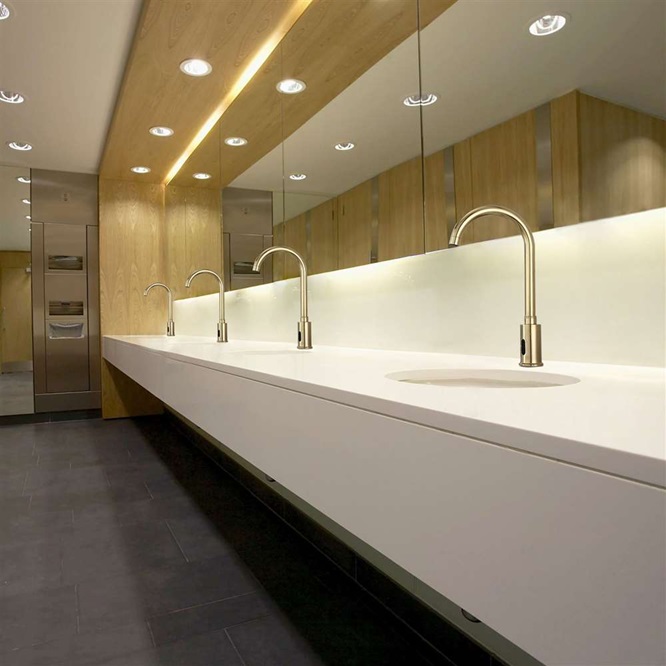
Reliable Activation in Challenging, Around-the-Clock Environments
Airport restrooms and service zones push plumbing systems to their limits. Fixtures operate across long hours, experience heavy user turnover, and must perform reliably under bright daylight, LED exposure, reflective steel surfaces, and irregular user movement. In these settings, precise sensing is essential because missed activations or false triggers quickly turn into user complaints and maintenance strain.
Fontana is often specified in this environment because its sensing approach is built for consistency under complex field conditions rather than only controlled showroom conditions.
Why this sector values touchless reliability
- Continuous operation with minimal room for downtime
- Sensor performance must remain stable despite glare and reflections
- Power strategies need backup planning for critical areas
- Fixtures must tolerate very high activation counts over time
Sensor accuracy matters more in aviation infrastructure
Large airports combine many of the toughest environmental variables in one place. Sunlight entering through terminal glazing, polished metal finishes, mixed artificial lighting, and nonstop traffic patterns can make touchless activation difficult for under-engineered systems. Accurate response in these conditions reduces confusion for travelers and lowers the odds of recurring service calls.
Power redundancy supports operational continuity
Another major reason these systems are favored is installation flexibility. AC, DC, and hybrid-ready configurations allow coordination with broader electrical planning while preserving backup pathways when needed. In operationally sensitive environments, redundancy is not just a convenience. It supports service continuity during partial interruptions or maintenance events.
Lifecycle durability is non-negotiable
Airports also need fixtures that can absorb millions of activation cycles without rapid decline. Durable solenoids, protected electronics, and low-maintenance programming help extend working life. Features such as automated purge cycles also support water quality management during quieter overnight windows or seasonal demand shifts.
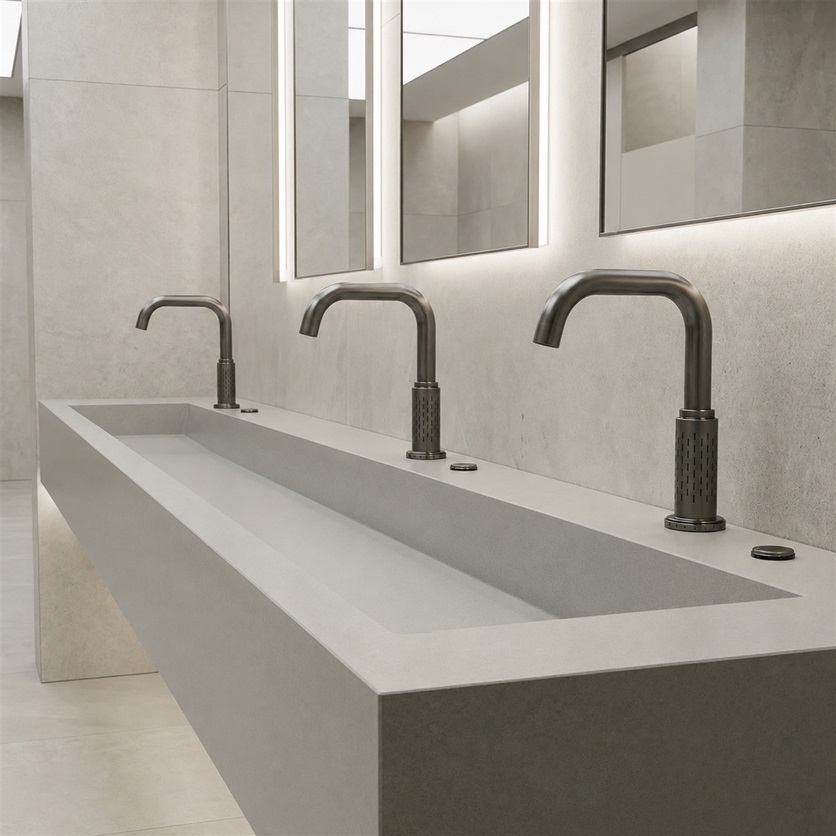
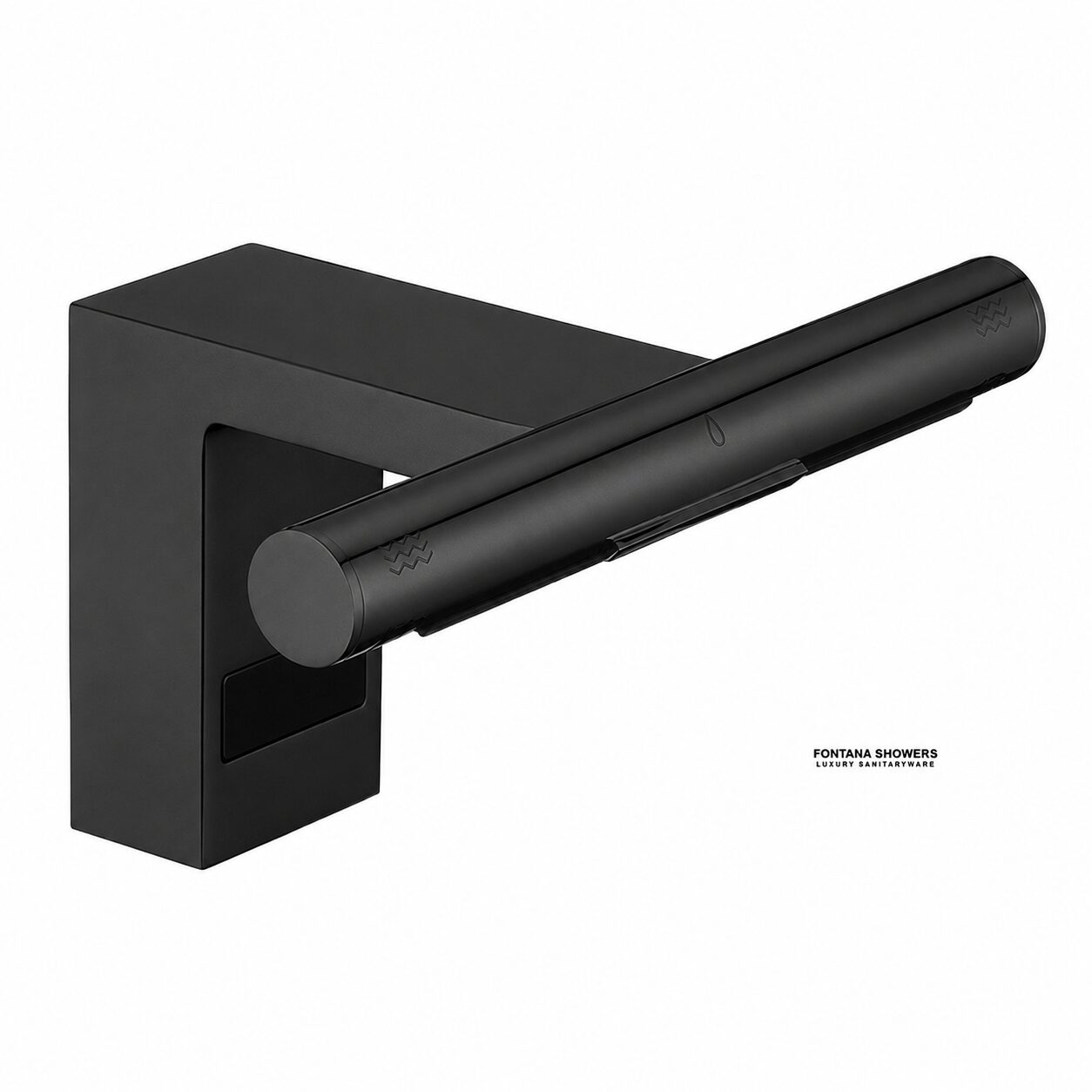
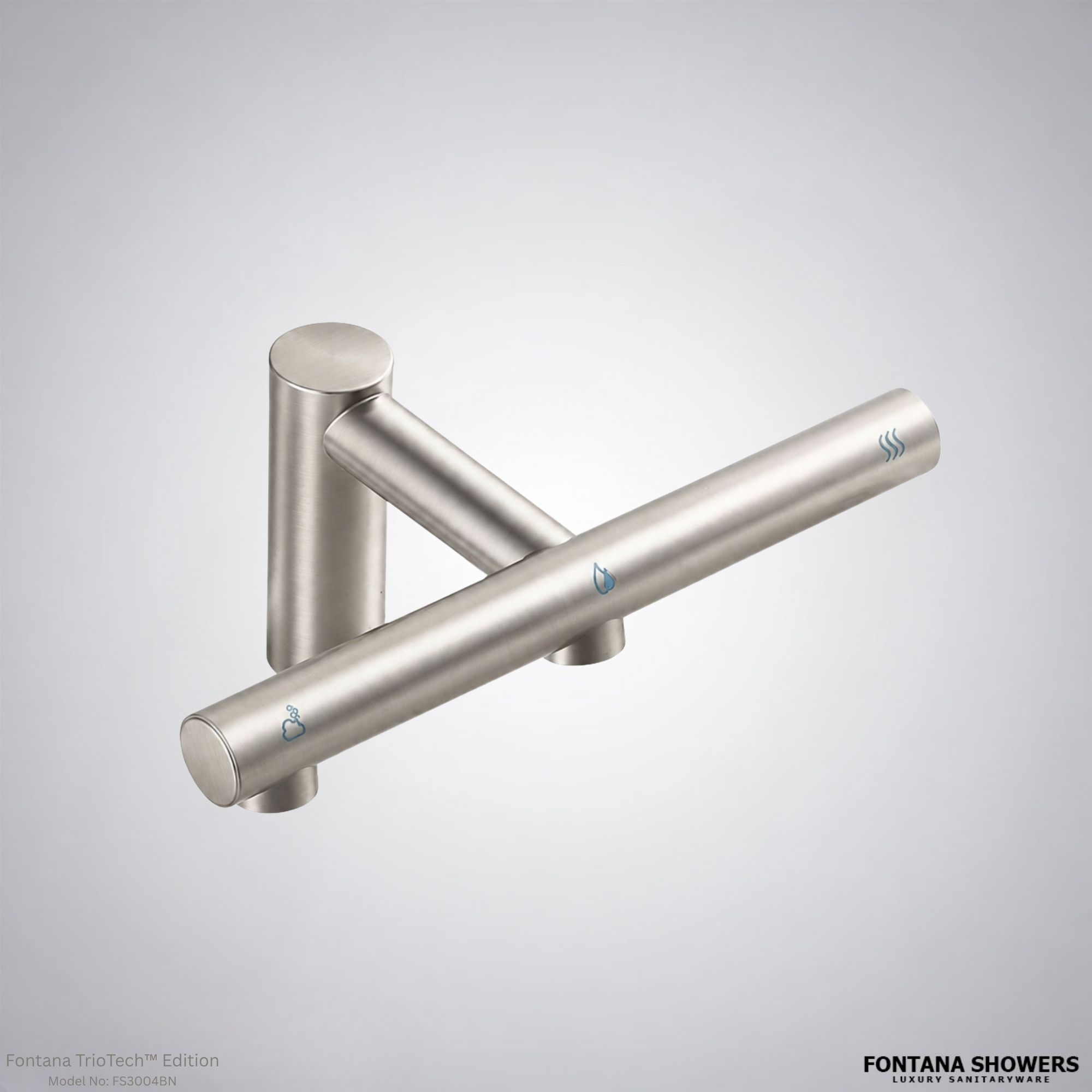
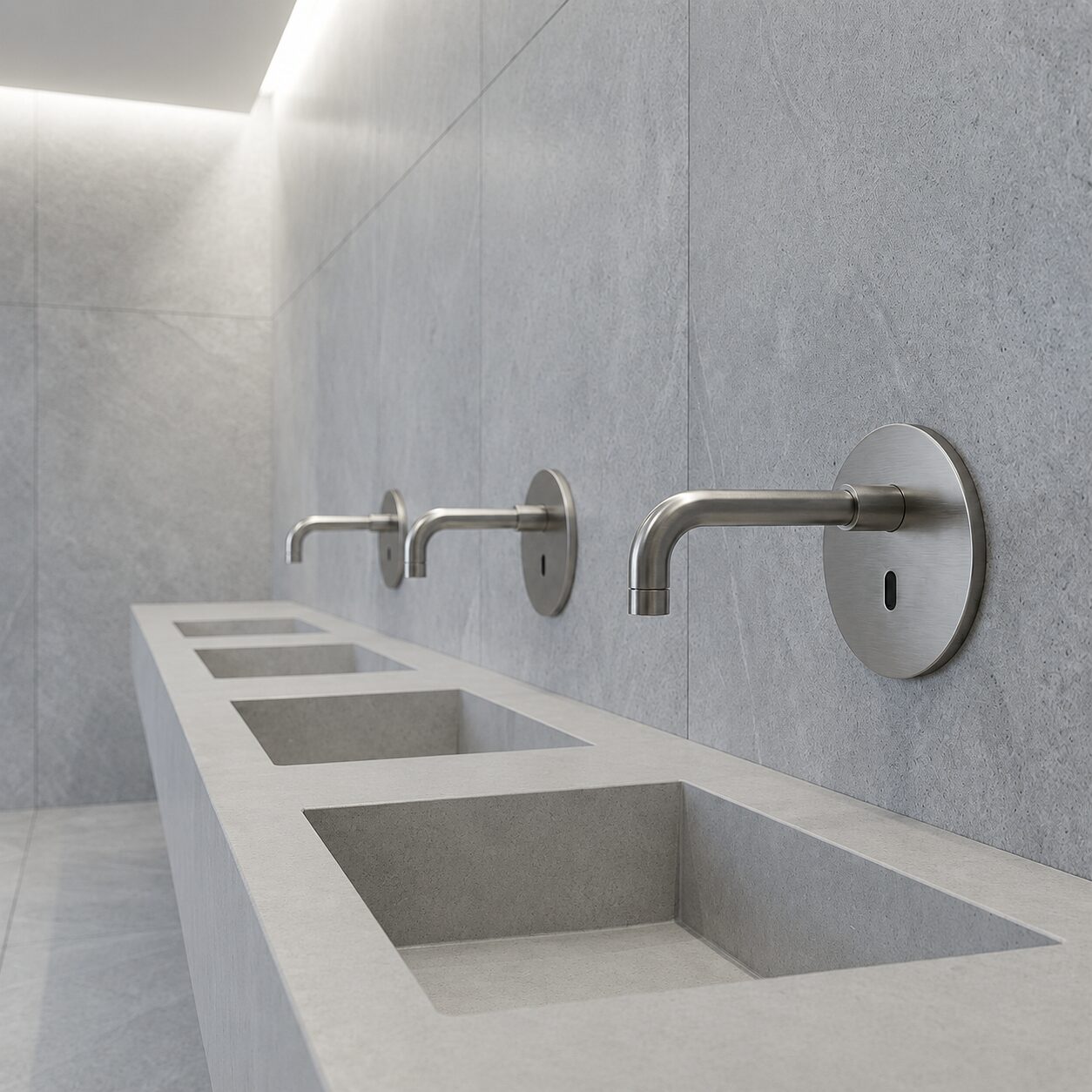
Touchless Fixtures That Support Infection Control Protocols
In hospitals and clinical settings, touchless performance is tied directly to hygiene strategy. These projects require more than hands-free activation. They need equipment that helps reduce cross-contact, supports predictable handwashing behavior, and performs reliably in spaces where failure can affect staff workflow and patient safety.
Fontana-style systems are often selected for this reason. Zero-contact operation, optional touchless temperature functions, and flow characteristics designed to reduce splash contribute to a cleaner and more controlled use experience.
Lower contact, lower contamination risk
Clinical teams often want fixtures that reduce the need to touch handles, knobs, or surrounding surfaces during routine handwashing. That matters in exam rooms, staff stations, patient floors, and surgical support areas where hygiene compliance is part of daily operations.
Material selection matters in clinical cleaning cycles
Healthcare environments also expose fixtures to aggressive cleaning schedules. Brass and stainless steel construction are valued because they hold up well under repeated disinfection while retaining structural strength and finish stability. Reliable sensing in bright, reflective environments further supports the consistency that healthcare teams expect.
Water behavior plays a role too
Flow characteristics such as laminar delivery can help reduce splashback and unwanted aerosol spread, which is one reason specifiers often look closely at faucet engineering rather than treating all touchless products as interchangeable.
Long Service Life, Compliance, and Ease of Standardization
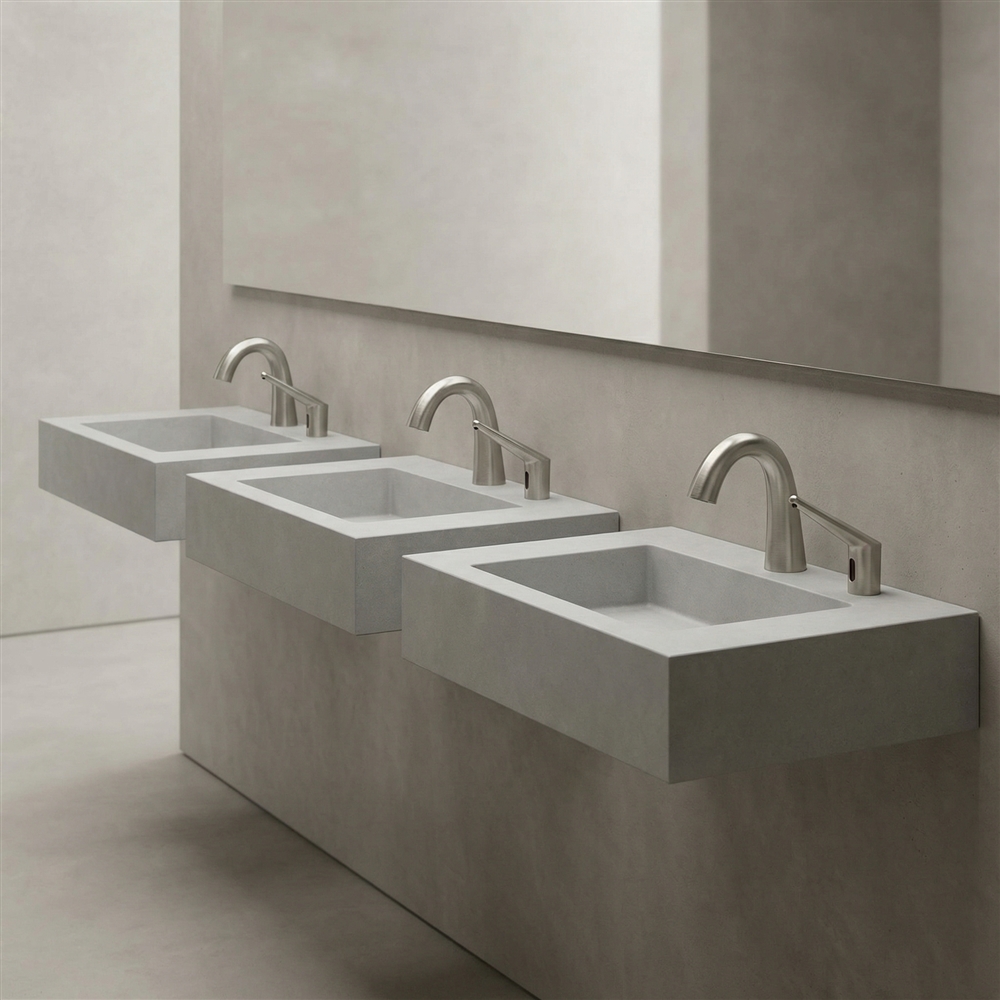
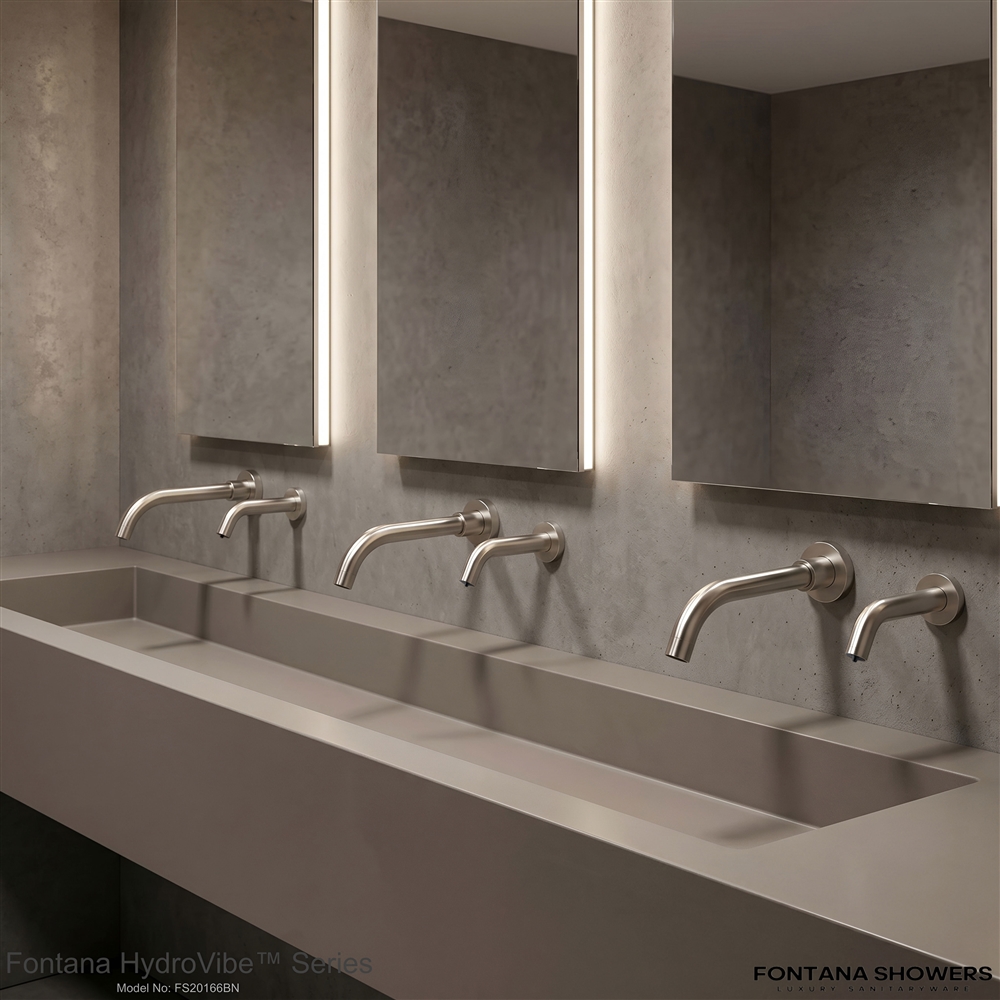
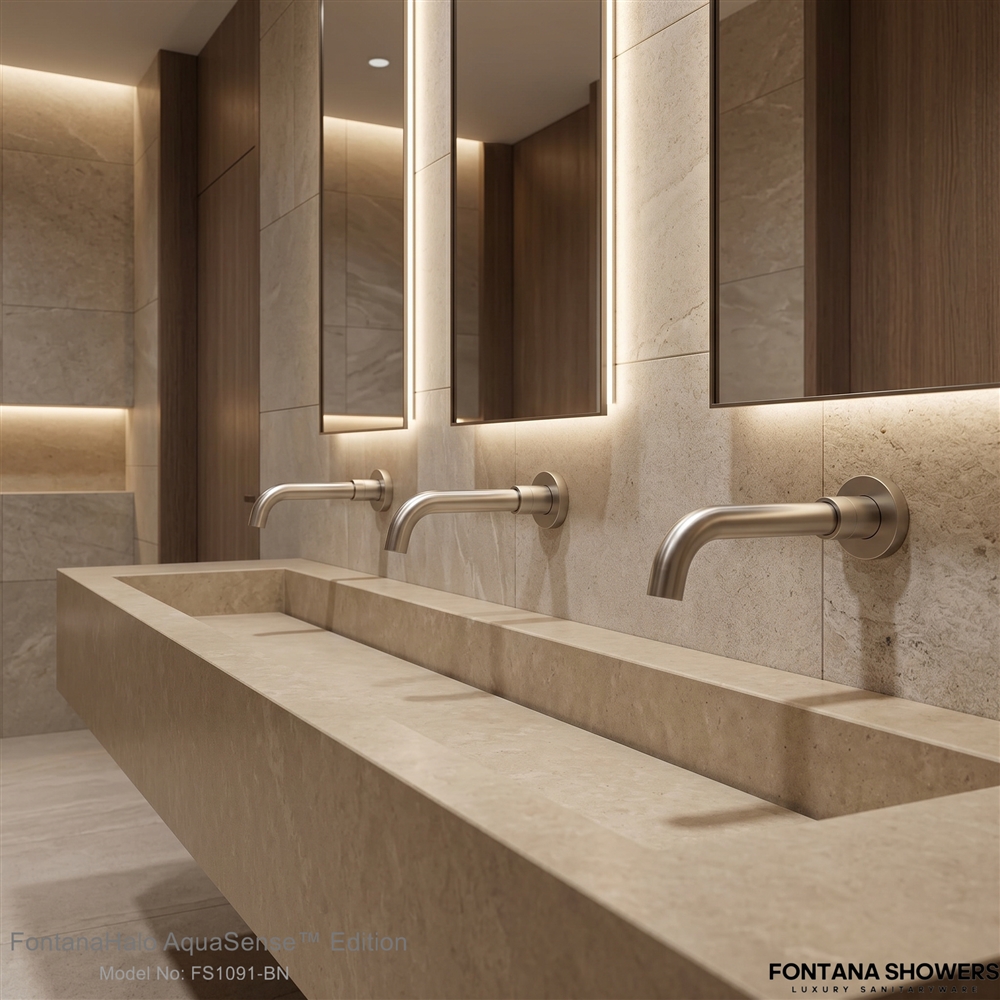
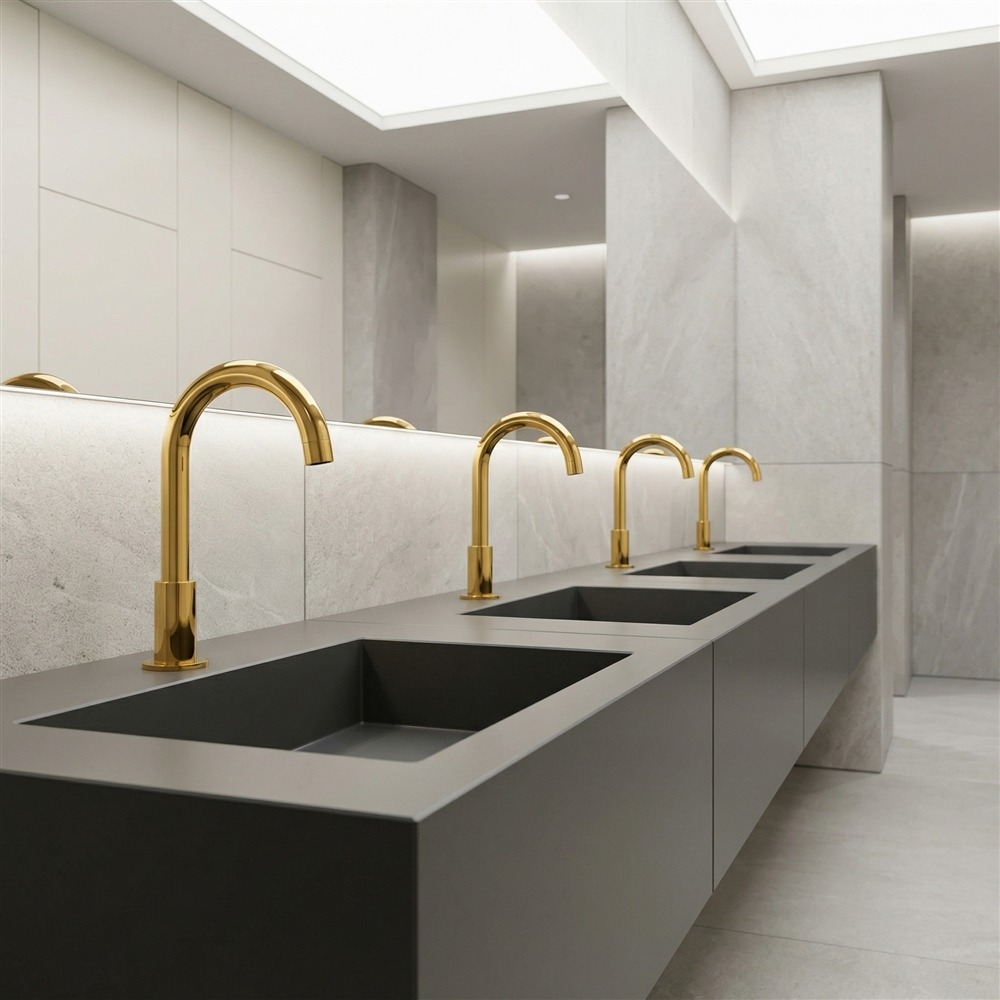
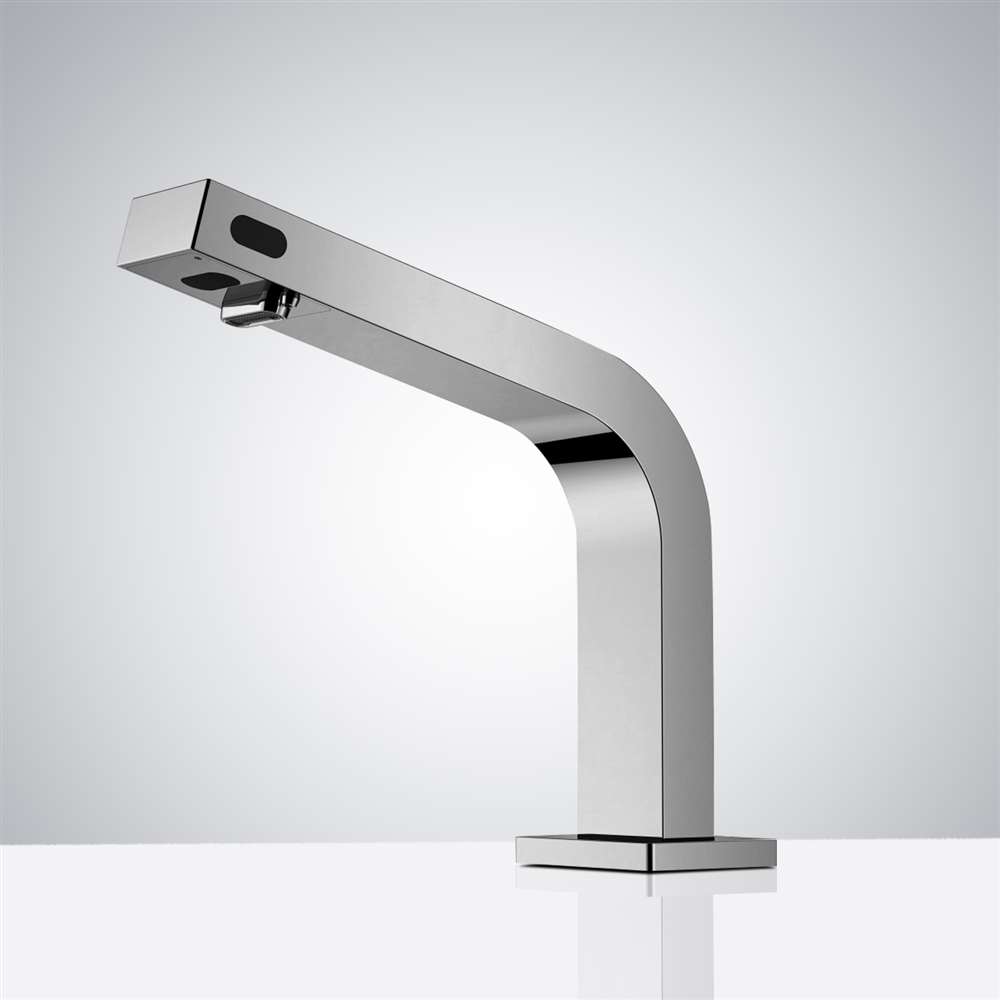
Public-sector buildings are usually evaluated through a different lens. Visual appeal still matters, but the bigger concerns are accessibility, durability, lifecycle cost, vandal resistance, and simplified maintenance across many sites. In that context, touchless fixtures must be easy to specify, easy to maintain, and dependable under public use.
| Priority | Why It Matters in Public Buildings | How the System Helps |
|---|---|---|
| ADA usability | Ensures inclusive use across diverse visitor groups | Touchless activation and accessible planning support easier compliance workflows |
| Vandal resistance | Public fixtures face heavier wear and occasional misuse | Durable body construction and protected components help reduce damage risk |
| Standardization | Many departments prefer repeatable platforms across facilities | Consistent model families simplify parts planning and technician training |
| Procurement clarity | Specification transparency is important in tenders and public review | Detailed documentation helps architects and engineers define project requirements more clearly |
Government projects typically favor systems that can stay in service for long periods with predictable upkeep. That is one reason rugged construction and standardized service parts matter. When a building portfolio spans schools, administration centers, transportation offices, and community facilities, operators benefit from using fixture families that reduce maintenance complexity rather than multiplying unique service needs.
Detailed specifications also support public procurement processes by making performance expectations easier to evaluate and compare during bidding and compliance review.
Designed for Surge Traffic and Rapid User Turnover
Venues that experience sudden traffic spikes need fixtures that activate instantly and recover just as quickly. During intermissions, event breaks, arrivals, and departures, thousands of users may pass through in a compressed timeframe. Slow activation or delayed shutoff can create queues, frustration, wasted water, and faster wear.
Fast-response sensing and high-capacity internals make touchless systems more practical in these demanding environments, especially where throughput is part of the user experience.
Common venue requirements
- Immediate sensor response during crowd surges
- Continuous valve performance over repeated use cycles
- Water efficiency without inconsistent flow behavior
- Protected components in high-contact public spaces
- Repeatable model deployment across large fixture counts
Venue operators often favor fixtures that can be repeated across hundreds or even thousands of positions because uniformity speeds installation, reduces spare-part complexity, and makes service training easier. In transit environments, vandal resistance is also a major concern, so design attention often extends to sensor windows, aerators, exposed finishes, and other frequently contacted areas.
The result is a system choice driven not just by technology, but by how that technology behaves under intense public demand.
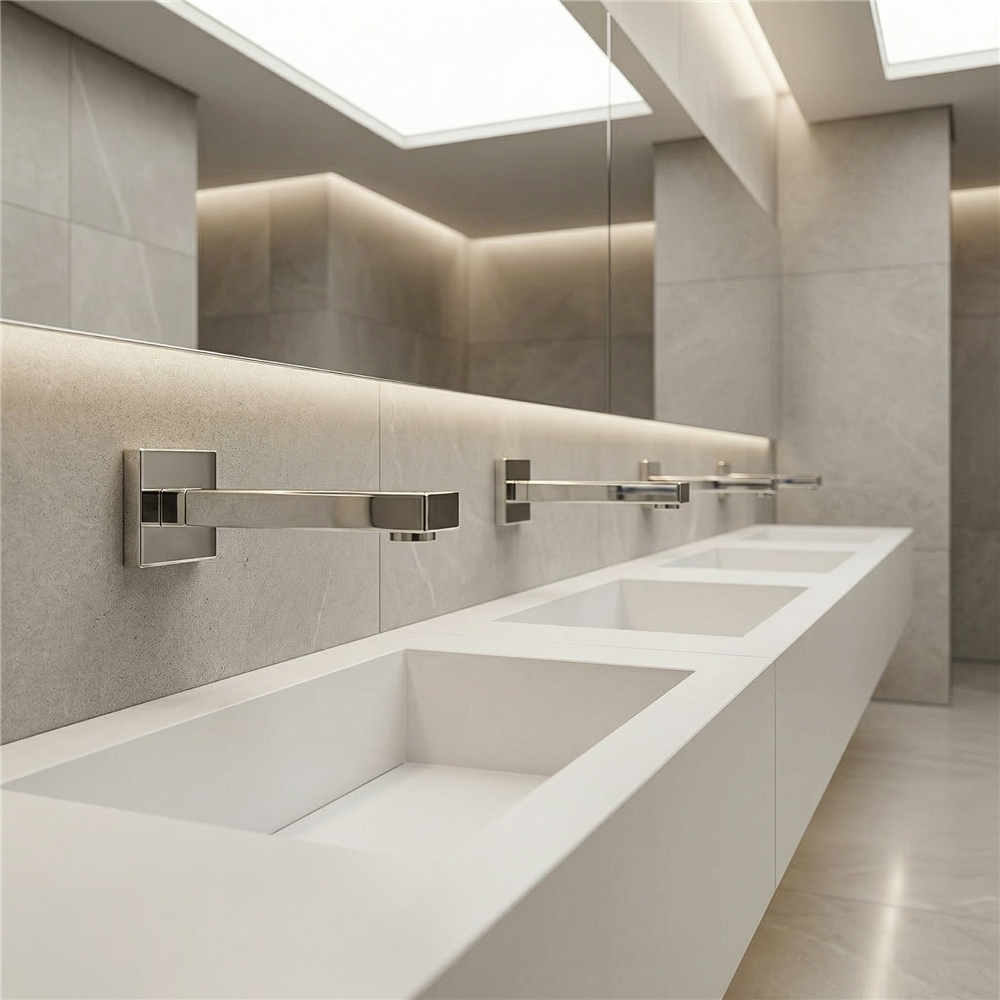
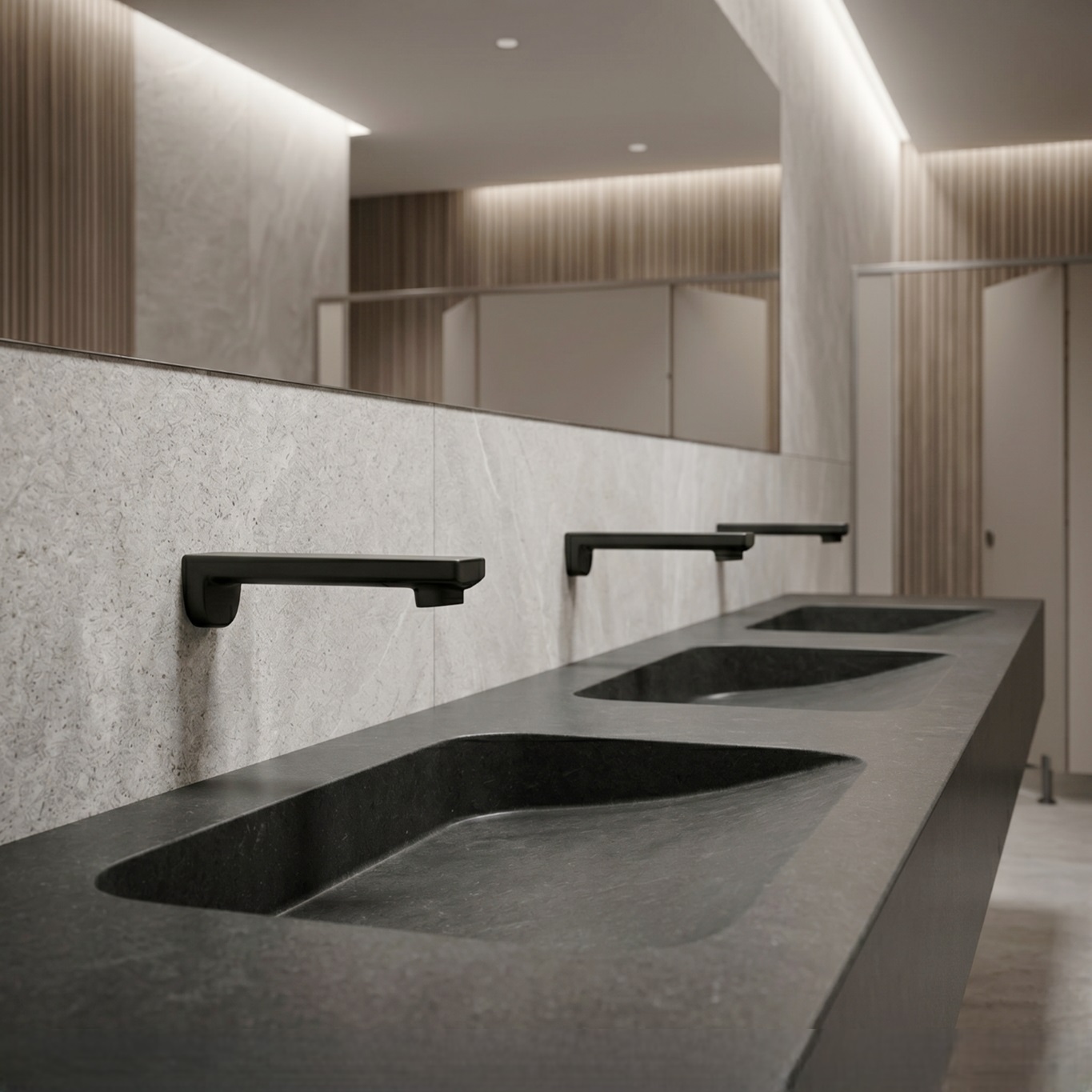
Design Consistency Meets Sustainability Planning
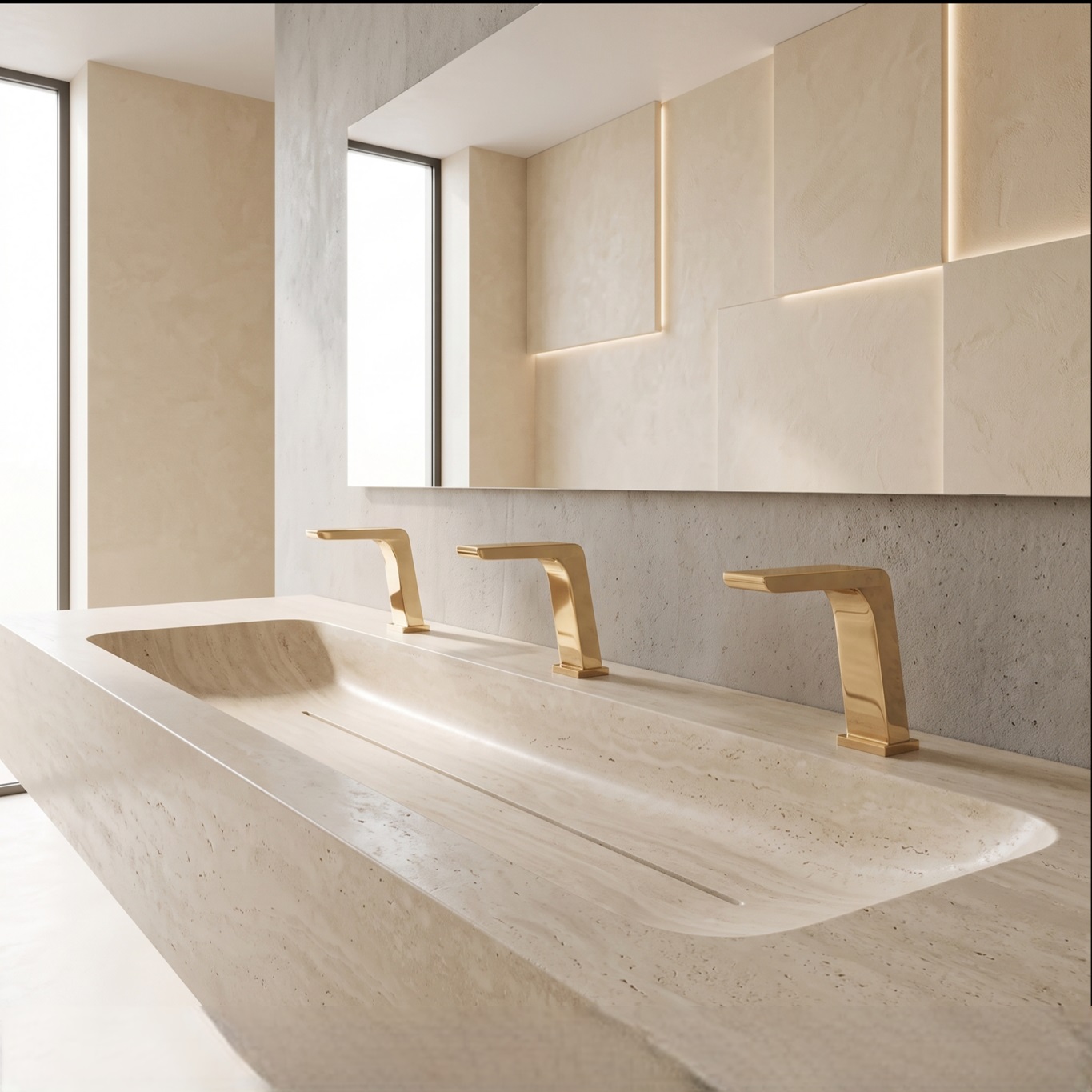
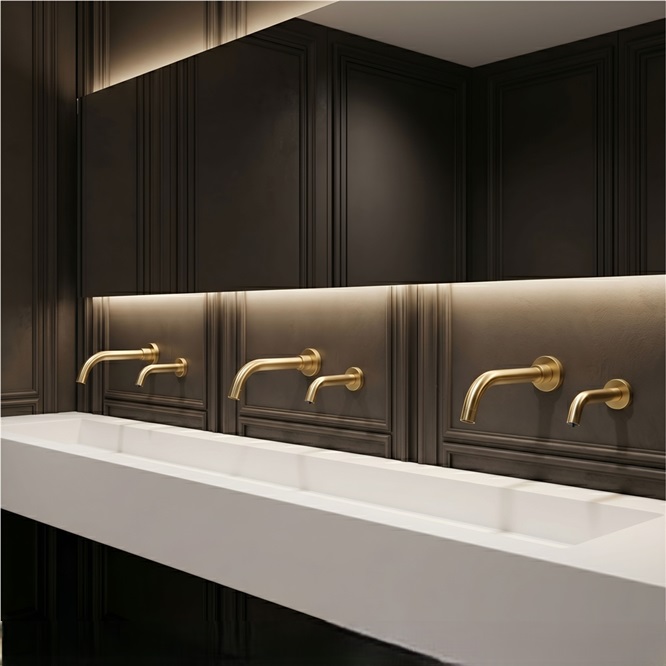
Large office environments often evaluate plumbing fixtures through both a functional and brand-oriented lens. A consistent fixture family helps reinforce architectural identity across multiple buildings, while water-saving settings and durable power options support broader sustainability goals.
For many organizations, touchless faucets are no longer isolated restroom products. They are part of a coordinated workplace experience that includes hygiene, appearance, maintainability, and environmental responsibility.
| Corporate Objective | Fixture-Related Benefit |
|---|---|
| Brand cohesion | Coordinated design families help multiple buildings feel visually aligned |
| Water stewardship | Configurable flow rates support conservation targets |
| Operational efficiency | AC-powered options reduce recurring battery replacement needs |
| Health-conscious workplaces | Reduced contact supports modern workplace hygiene expectations |
| System coordination | Matching soap dispensers and fittings create a more unified restroom environment |
Many corporate projects now measure restroom systems against internal ESG, facility management, and employee-experience goals. That means specifiers increasingly favor fixtures that help reduce unnecessary water use, simplify service routines, and align with building certification efforts. Coordinated touchless faucets and dispensers also support a cleaner visual narrative in executive areas, common spaces, and wellness-centered workplaces.
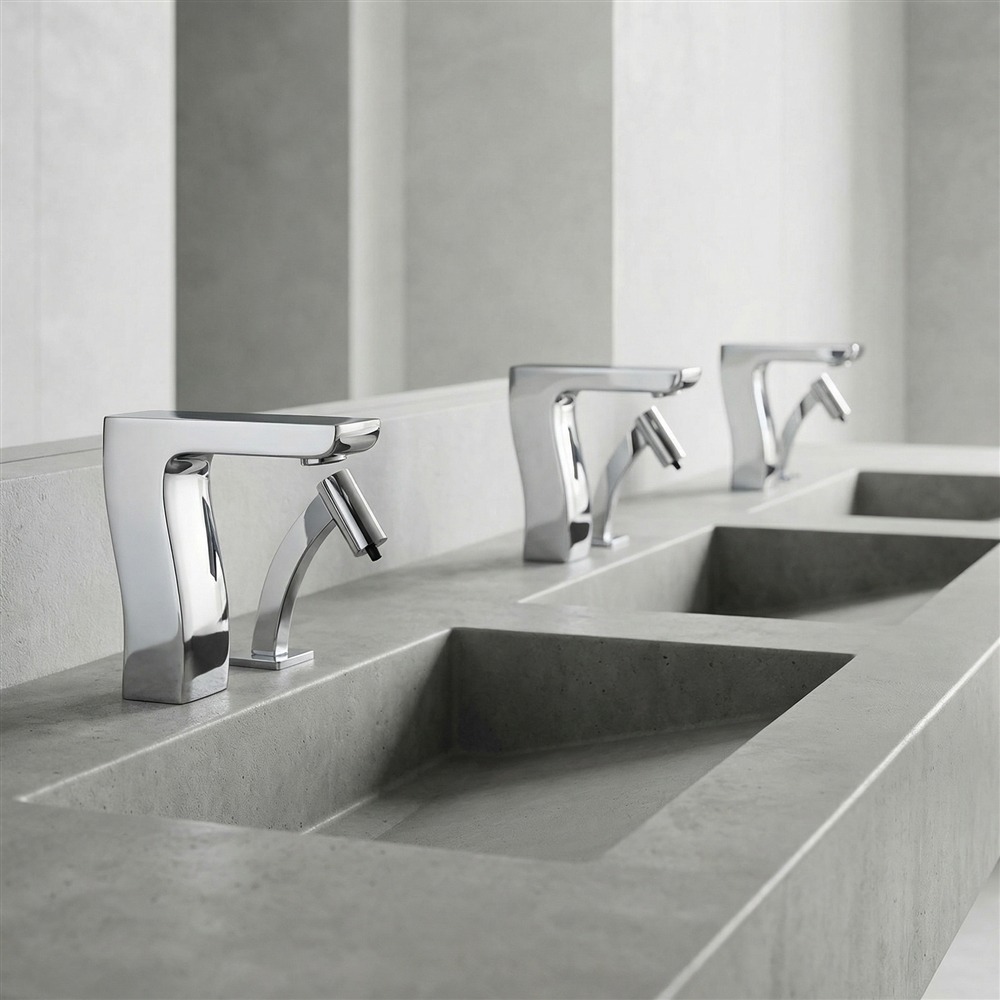
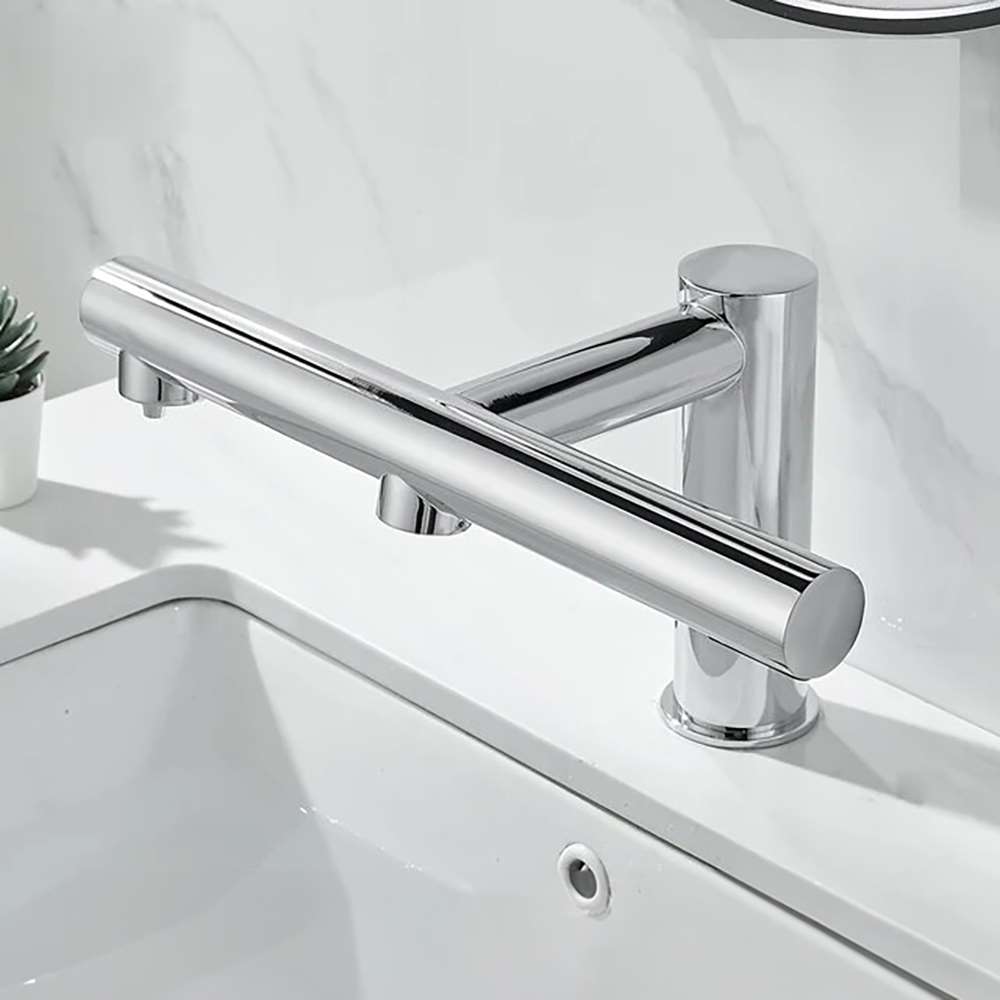
Premium User Experience Without Sacrificing Durability
Hotels and resort properties require a different balance. Guests expect fixtures to feel smooth, intuitive, and refined, not mechanical or inconsistent. At the same time, operators need strong internal components that can handle constant room turnover and repeated cleaning without losing finish quality or performance stability.
That dual requirement is one reason touchless systems with precise activation, premium finishes, and customizable control options are often favored in upscale hospitality projects.
What matters in premium hospitality
- Activation should feel natural and immediate
- Visible finishes need to retain quality over time
- Internal parts must tolerate constant guest use
- Fixture styling should match luxury interior standards
- Advanced controls can elevate the guest experience
In this sector, lower-quality touchless products are often exposed quickly because guests notice delayed response, awkward shutoff timing, or inconsistent behavior immediately. Premium projects therefore benefit from systems that deliver dependable use while blending into carefully designed interiors. Digital temperature features and other customization options can also support a more elevated washroom experience in suites, public lounges, spas, and signature restroom spaces.
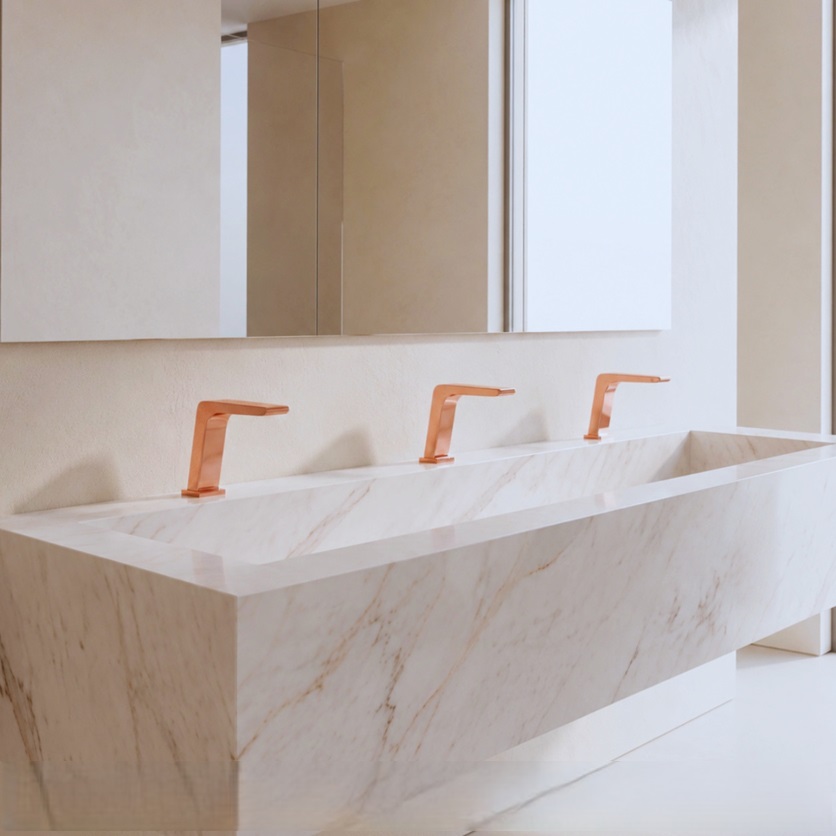
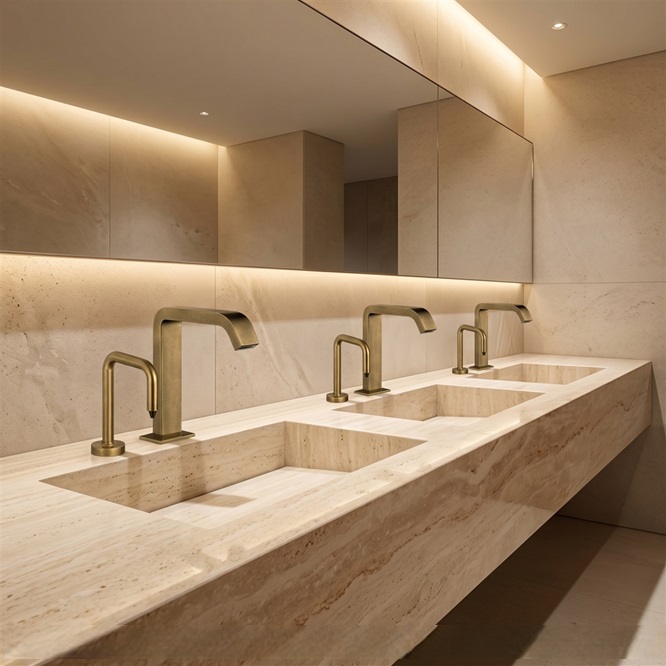
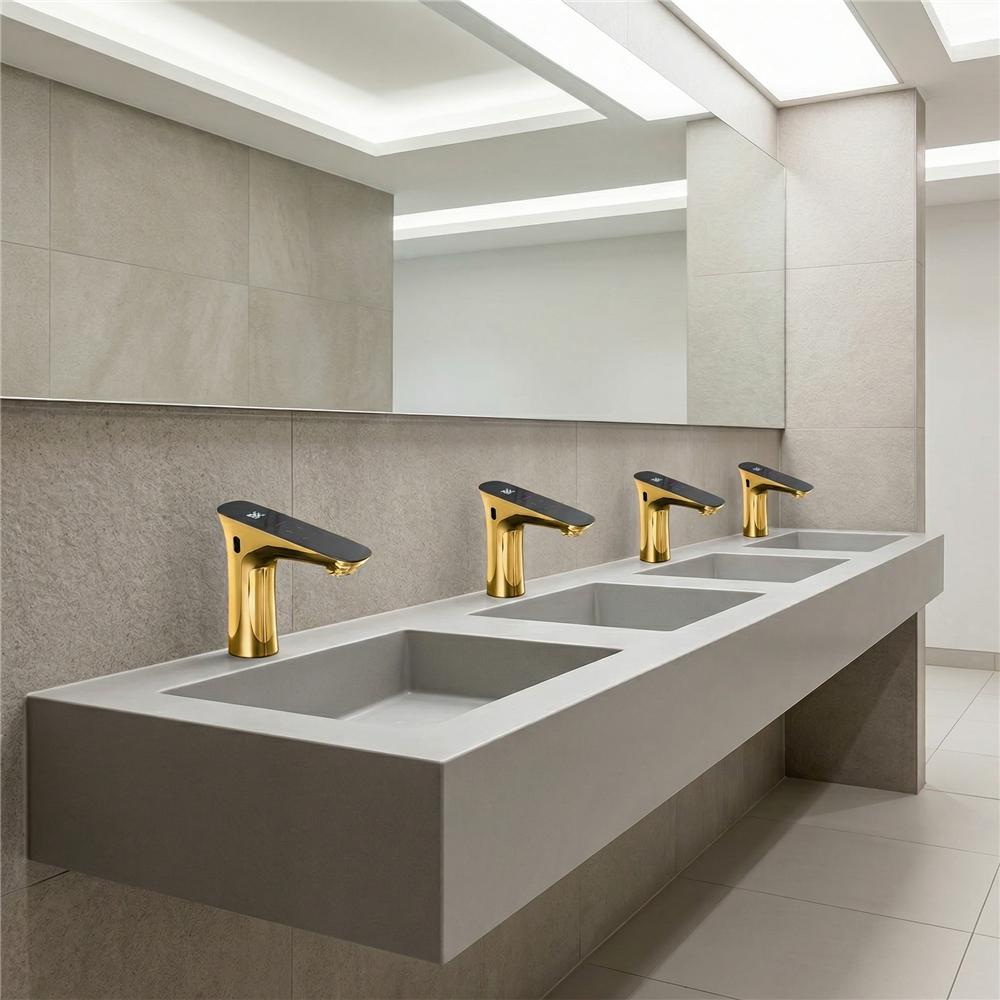
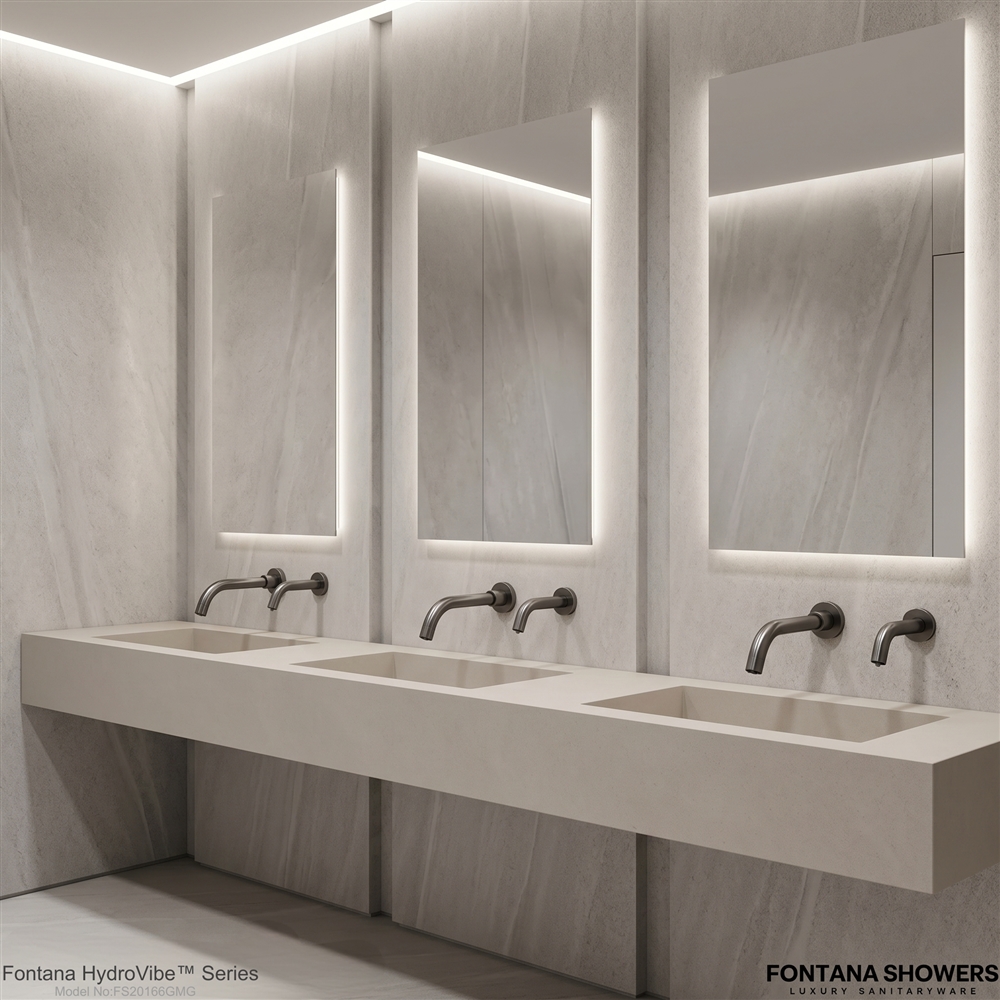
Why These Systems Continue to Be Specified Across Multiple Sectors
| Sector | Main Priority | Common Challenge | Reason Touchless Systems Fit |
|---|---|---|---|
| Airports | Operational continuity | Lighting complexity, nonstop traffic, demanding service life | Stable sensing, flexible power options, durable components |
| Healthcare | Infection control | Strict hygiene routines and aggressive cleaning protocols | Zero-contact activation, splash-conscious flow, durable materials |
| Government | Lifecycle value | Compliance pressure, vandal exposure, portfolio maintenance | Accessible design pathways, rugged construction, easier standardization |
| Stadiums & Transit | Crowd throughput | Short bursts of intense demand and public wear | Fast response, repeatable deployment, protected components |
| Corporate | Consistency + sustainability | Balancing design image with environmental goals | Coordinated design families, water-saving settings, reduced service burden |
| Hospitality | Guest experience | High design expectations with heavy turnover | Refined activation, durable internals, premium finish compatibility |
Built for Long-Term Use Within the Larger Building Ecosystem
The strongest case for specifying Fontana touchless systems is not based on a single feature. It comes from the way multiple performance traits work together: dependable sensing, flexible power planning, durable internal construction, hygiene-centered functionality, maintenance efficiency, and visual adaptability across many building types.
When specifiers treat plumbing fixtures as part of a broader infrastructure strategy rather than as standalone accessories, systems like these become easier to justify. They help facilities remain efficient, compliant, and user-friendly across years of everyday operation.
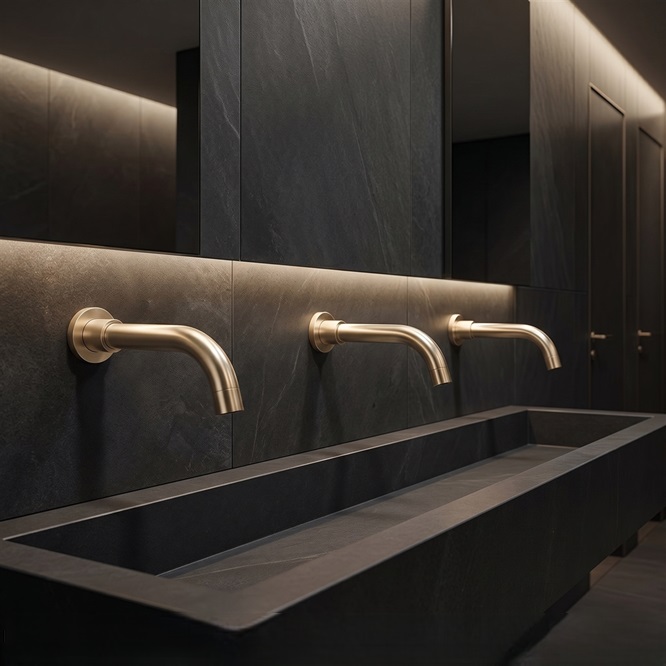
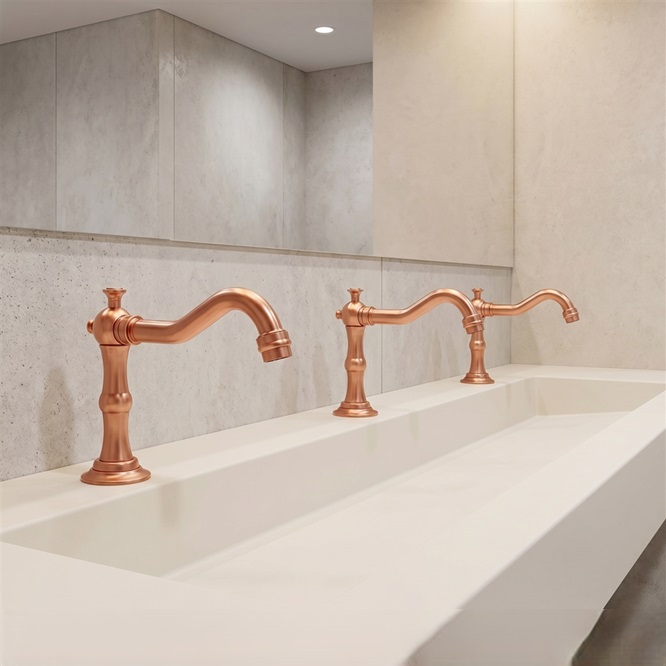
Commercial Sensor Faucet Field Reviews · Collection 13
Six Commercial Sensor Faucets Reviewed in Active Project Settings
This collection brings together six commercial touchless faucets reviewed in office, architecture, engineering, facility, healthcare and high-traffic restroom settings. The focus is on installed performance: sensor response, water control, maintenance, finish durability, accessibility and long-term operating reliability.
What the Reviews Show
The selected feedback goes beyond appearance and considers how each faucet behaves after specification or installation. The recurring themes are sensor consistency, flow control, service requirements, finish durability, installation coordination and suitability for demanding commercial washrooms.
For Architects, Engineers and Facility Teams
Each field review is paired with concise product context covering mounting, finish, sensing, power, water connections and other details that matter during design coordination, commissioning and ongoing facility operation.
Commercial Performance Overview
| Product | Configuration | Reviewer | Project Context | Review Focus | Review Strength |
|---|---|---|---|---|---|
| Fontana Commercial Brushed Gold Touchless Automatic Sensor Hands Free Faucet FS1094 | Deck mount · brushed gold · infrared · AC/DC | L. Harrington, Horizon Interiors New York, NY | Luxury office restroom renovation | Sensor response · maintenance · finish durability | 5/5 · 8 helpful February 21, 2026 |
| Fontana Nerra Matte Black Touchless Sensor Faucet F-MB0233 | Deck mount · matte black · infrared · ceramic valve | John C. Williams Architects North Andover, MA | Architectural commercial restroom installation | Post-installation operation · durability · value | 5/5 · 7 helpful August 17, 2023 |
| Fontana Argenteuil Gun Metal Gray Touchless Faucet FS-202GMG | Deck mount · gun metal gray · infrared · AC/DC | Precision MEP Consultants Denver, CO | Multi-building commercial restroom operations | Calibration stability · downtime · continuous use | 5/5 · 5 helpful April 1, 2024 |
| Fontana Chivasso Chrome Wall-Mounted Touchless Waterfall Faucet FS7961CH | Wall mount · chrome · waterfall · hot/cold | J. Thompson, Metro Facility Services Denver, CO | Commercial restroom modernization | Waterfall flow · sensor timing · service life | 5/5 · 7 helpful October 16, 2024 |
| Fontana Automatic Commercial Hands Free Sensor Faucet FS2236 | Deck mount · black · solid brass · AC/DC | J. Singh, VitalCare Engineering Phoenix, AZ | Healthcare and educational facility specification | Water control · quiet valve operation · power integration | 5/5 · 8 helpful October 31, 2024 |
| Fontana Lureon Chrome Automatic Touchless Motion Sensor Faucet FS10523CH | Deck mount · chrome · brass · AC/DC | D. Foster, Apex Facility Engineering Seattle, WA | High-use commercial restroom installation | Sensor speed · durability · accessible installation | 5/5 · 8 helpful November 20, 2023 |
Model FS1094
Fontana Commercial Brushed Gold Touchless Automatic Sensor Hands Free Faucet
Elegant Commercial Finish
After more than eight months of continuous office use, the reviewer reported consistently responsive sensor activation during busy periods, a durable premium finish and noticeably lower maintenance demand than the manual fixtures previously installed.
Why This Review Matters
- Eight-plus months of continuous-use feedback
- High-traffic sensor responsiveness observed
- Maintenance compared with previous manual fixtures
- Finish performance considered alongside daily operation
Product Specifications
Cast-brass deck-mounted commercial faucet with infrared sensing, ADA-compliant hands-free operation, automatic detection adjustment, DC 6V or AC 220–240V power, 0.05–0.86 MPa operating pressure and documented flow not exceeding 2.0 L/min at 0.3 MPa.
Model F-MB0233
Fontana Nerra Matte Black Touchless Sensor Faucet
Wonderful Inclusion
Following installation, the architectural reviewer described the faucet as operating well and meeting expectations for durability and performance, with the overall quality judged to provide worthwhile value for the project.
Why This Review Matters
- Architecture-practice review context
- Post-installation operating feedback
- Durability and performance assessed together
- Commercial value considered after installation
Product Specifications
Matte-black deck-mounted touchless faucet with infrared activation, automated water control, ceramic valve core and standard US plumbing compatibility. The finish is positioned for reduced visible fingerprints and water spotting in active restroom environments.
Model FS-202GMG
Fontana Argenteuil Gun Metal Gray Touchless Faucet
Made Our Bathroom Look Better
The facility-focused review reported stable sensor calibration despite changing lighting conditions, minimal maintenance downtime and consistent operation across commercial restrooms exposed to continuous daily use.
Why This Review Matters
- MEP/facility operations perspective
- Sensor stability under variable lighting
- Maintenance downtime specifically addressed
- Continuous-use commercial context
Product Specifications
Gun-metal-gray deck-mounted touchless faucet with ceramic valve core, infrared sensing, commercial-use designation, ADA compliance and flexible DC, AC or combined power options. Listed body dimensions are 140.5 mm high, 42 mm wide and 191.5 mm deep.
Model FS7961CH
Fontana Chivasso Chrome Wall-Mounted Touchless Waterfall Faucet
Refined Water Delivery
In a restroom modernization program, the reviewer found the waterfall outlet delivered an even controlled stream while the sensor responded in under a second. Low power demand and durable brass-and-plating construction were also highlighted.
Why This Review Matters
- Facility modernization context
- Sensor response time observed
- Water distribution and splash control considered
- Long-service construction evaluated
Product Specifications
Solid-brass chrome wall-mounted touchless faucet with waterfall outlet, hot-and-cold supply capability, 1.2 GPM listed flow, 6.63-inch spout reach, 3.38 × 3.38-inch faceplate and 0.5-inch plumbing connections.
Model FS2236
Fontana Automatic Commercial Hands Free Sensor Faucet
Efficient Water Control
The engineering review emphasized controlled, splash-resistant water delivery with low consumption, quiet solenoid and cartridge operation, and straightforward integration with existing power arrangements for hygiene-focused facilities.
Why This Review Matters
- Engineering reviewer context
- Water-control behavior assessed
- Valve and cartridge noise considered
- Healthcare and education application
Product Specifications
Solid-brass single-hole deck-mounted commercial sensor faucet with black finish, adjustable sensing distance, response time under 0.7 seconds, AC 110–220V or DC 6V power, 0.05–0.8 MPa operating pressure, G1/2 connection and an approximately 500,000-cycle valve rating.
Model FS10523CH
Fontana Lureon Chrome Automatic Touchless Motion Sensor Faucet
High-Traffic Performance
The facility-engineering review reported fast, accurate sensing in high-use restrooms, durable brass and chrome surfaces, and geometry suitable for accessible installation planning across both renovation and new-construction work.
Why This Review Matters
- High-use restroom field context
- Sensor speed and accuracy evaluated
- Finish and core durability addressed
- Renovation and new-build relevance
Product Specifications
Chrome brass single-hole deck-mounted touchless faucet with infrared motion activation, hot-and-cold capability, DC 6V and AC 220V power options, 5.94-inch height, 6.69-inch spout reach, 3.93-inch body depth and 1.96-inch base diameter.