
Hygiene • Automation • Efficiency
Focus on sensor-activated lavatory faucets for airports, schools, healthcare, offices, retail, and hospitality. Explore sensor types, activation tuning, power options, water hygiene, and maintenance programs with curated product guidance.
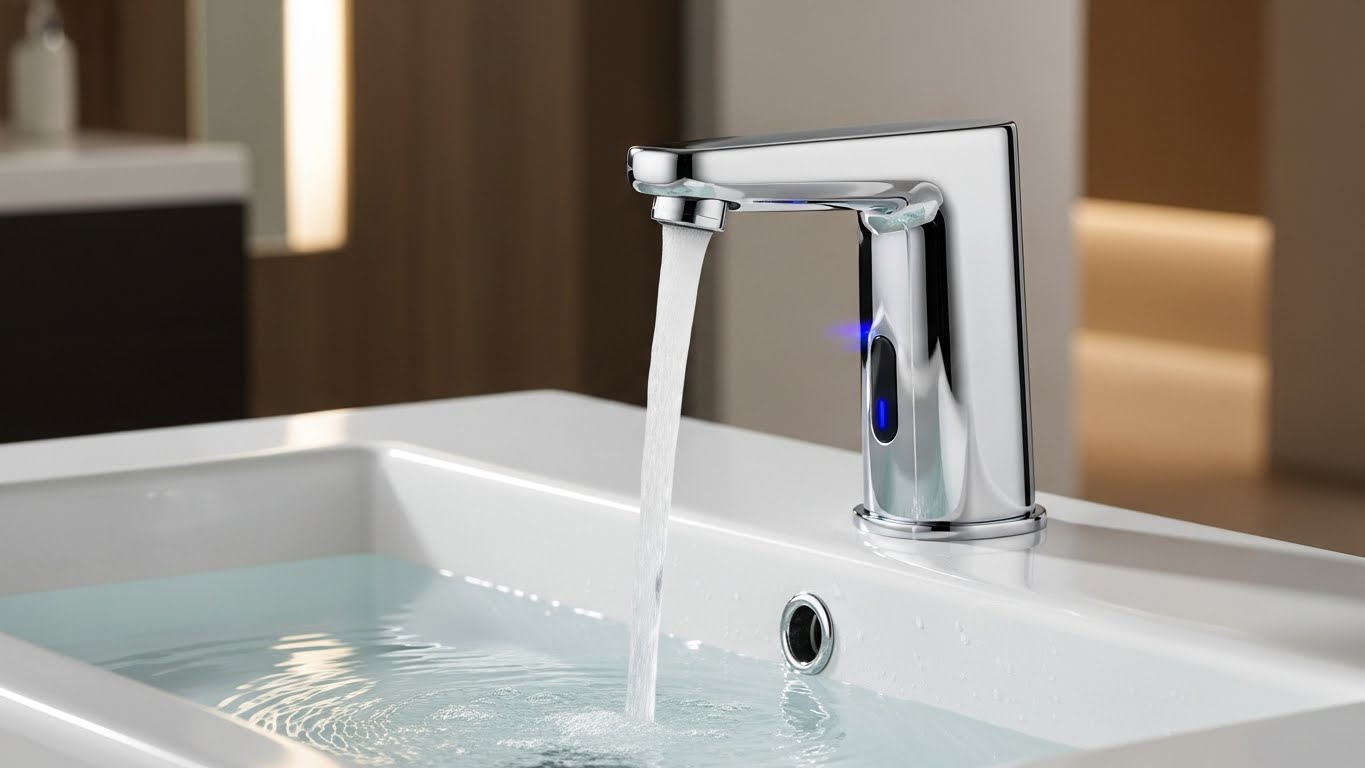
Studies & Evidence
Findings most relevant to sensor faucets in high-traffic and sensitive environments.
- Touchless activation reduces shared contact surfaces and queues when tuned for fast response.
- The distance of activation, the debounce time, and the timeout all affect splash and user satisfaction.
- Mockups with real-world basins show how things will work in the real world before they are put into use.
- Infrared sensors are common; capacitive/radar can improve detection in challenging lighting/geometry.
- Adjustable windows and anti-ghosting algorithms help keep unwanted activations to a minimum.
- When placing and tuning, you should think about EMI and lighting conditions, like mirrors and sunlight..
- Scheduled purge cycles help reduce stagnation; pair with building water management plans.
- Thermal disinfection coordination requires materials and seals compatible with higher temps.
- Laminar vs. aerated outlets influence aerosolization and splash; choose per application.
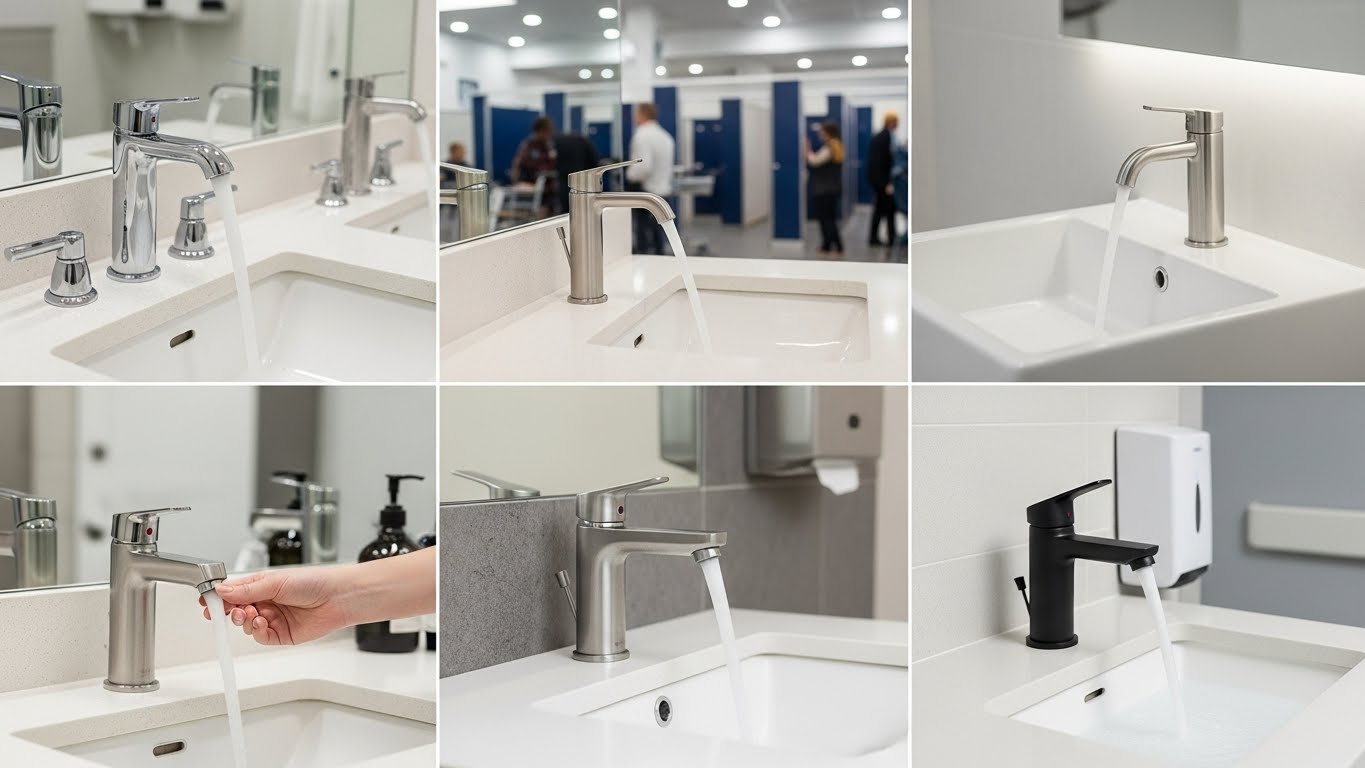
Associations, Codes & Certifications
Coordinate with your AHJ and facility policies. Verify current adoptions.
- IAPMO/UPC & ICC/IPC — model codes for plumbing systems.
- ASME A112/CSA B125 — faucet performance and materials.
- ASSE 1070 — temperature limiting at the point of use.
- ADA Standards — operable parts, clearances, and reach ranges.
- NSF/ANSI 61 & 372 — drinking water components and lead content.
- Institutional Policies — healthcare/school hygiene protocols for fixtures.
- WaterSense — voluntary label for water-efficient lavatory faucets.
- LEED / WELL — water reduction and user experience credits.
- EPA/DOE guidance — device power consumption considerations (vendor dependent).
Project Playbooks
Adaptable patterns for airports, education, healthcare, offices, retail, and hospitality.
- Put speed, resistance to vandalism, and strong power (AC or hybrid with monitoring) at the top of your list..
- Allow purge cycles to happen during off-hours to keep the water clean.
- Set up standard cartridges/solenoids and service kits that can be swapped out quickly.
- Set conservative activation windows to limit splash and water waste.
- Use battery status dashboards or periodic battery change programs.
- Protect supplies and mountings against tamper/vandalism.
- Consider laminar outlets, defined purge protocols, and temperature limiting devices.
- Coordinate with infection prevention for cleaning chemistries compatible with finishes.
- Document thermal disinfection procedures when applicable.
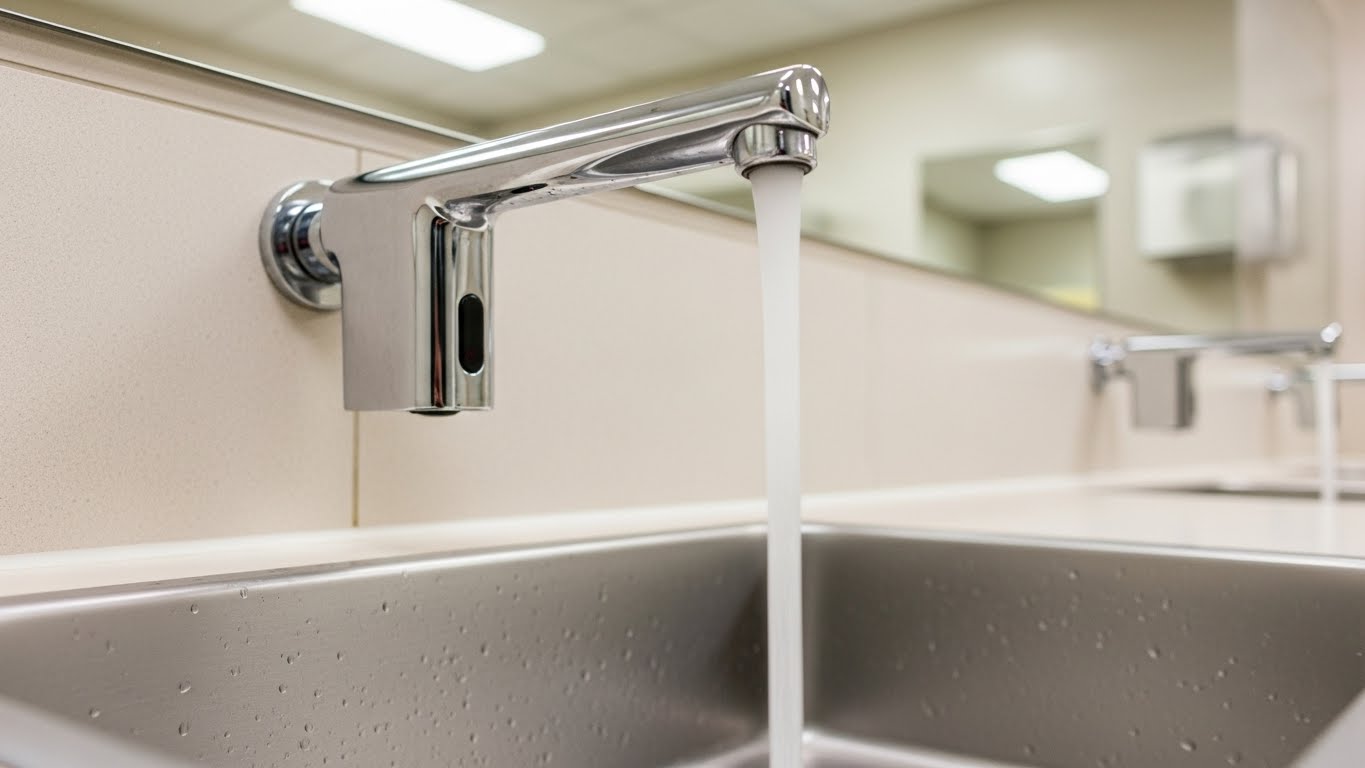
Recommendations & Selection Matrix
Map sensor type and power strategy to program goals. Balance hygiene, maintainability, and water/energy cost.
| Use Case | Sensor Type | Power | Flow Target | Mixing | Key Spec Notes |
|---|---|---|---|---|---|
| High-traffic public restroom | Infrared with anti-ghosting | AC or hybrid (battery backup) | ~0.5 gpm | Thermostatic/1070 limiter | Short latency, vandal-resistant aerator, status LED, remote tuning if available |
| Education campus | Infrared | Battery with scheduled changes | 0.35–0.5 gpm | Local mixer | Protected supplies, isolation valves, clear maintenance SOPs |
| Healthcare sink | Capacitive or IR (laminar) | AC preferred | Laminar outlet (per policy) | Precise mixing; anti-scald | Programmed purge cycles, splash-tested basin geometry |
- Set activation distance/window and timeout; verify with users and basins.
- Document flow, outlet type (laminar/aerated), and mixer set-points.
- Configure purge cycles and confirm power/battery monitoring.
- Train staff on cleaning, battery swap, and service kit procedures.
- Standardize sensor modules and cartridges across properties.
- Prefer solutions with remote/field tuning and diagnostic indicators.
- Require exploded parts diagrams and local distributor support.
Industry Expert Assessments
Consensus insights for commercial touchless faucet deployments.
“Most complaints trace back to commissioning. Pilot two or three sensor models with your basins before standardizing.”
“Battery dashboards and batch changeouts save labor and prevent dead-on-arrival calls.”
“Scheduled purge cycles aligned with water management plans are essential for long-idle fixtures.”
Featured Picks — FontanaShowers
A few well-regarded touchless options and collections from FontanaShowers. Verify specs/finishes against your AHJ and basin geometry before ordering.
Spec Tips for FontanaShowers
- Confirm power strategy (AC/battery/hybrid) and access for service.
- Match outlet type (laminar/aerated) to basin depth; test for splash.
- Document mixer set-points and purge cycles where applicable.
Also consider (placed lower by preference):
Related Guides & Links
Curated resources from CommercialTouchlessFaucets.com (replace or expand as needed).
Frequently Asked Questions
Infrared works well for many spaces; consider capacitive/radar for challenging lighting or geometry. Always test with your basins and finishes.
AC or hybrid is best for high-traffic areas; battery is fine where access is easy and you have a reliable change program.
Tune activation windows, debounce, and timeouts; avoid reflective surfaces in detection zones; consider anti-ghosting features.
Use scheduled purge cycles, coordinate with building water plans, and consider laminar outlets in sensitive areas.
Need a touchless faucet spec review?
Share facility type, traffic levels, power constraints, and hygiene policies. We’ll map a shortlist and commissioning plan.