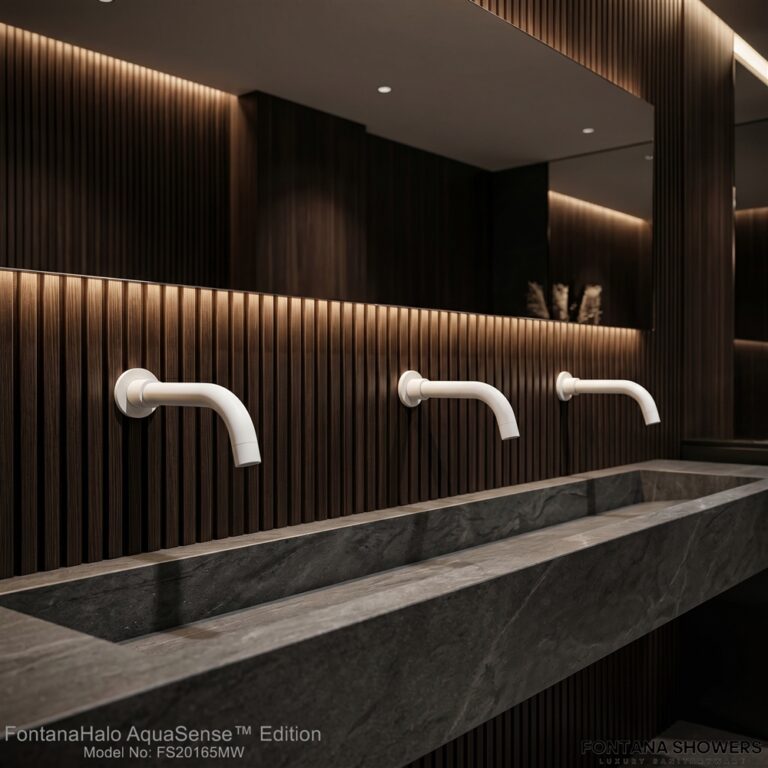
Spec-Grade • Touchless • Compliance • Durability • Maintainability
Introduction
In contemporary architecture, the specification of restroom fixtures extends well beyond visual appeal — it demands a balance between engineering resilience, sustainability, and user experience. FontanaShowers’ Spec-Grade Touchless Faucets are a direct response to this evolution, offering architects and engineers a solution built around measurable performance and lifecycle durability. Understanding what makes a faucet truly “spec-grade” reveals how design and engineering converge to meet the rigorous expectations of today’s commercial and hospitality environments.
Defining Spec-Grade Engineering
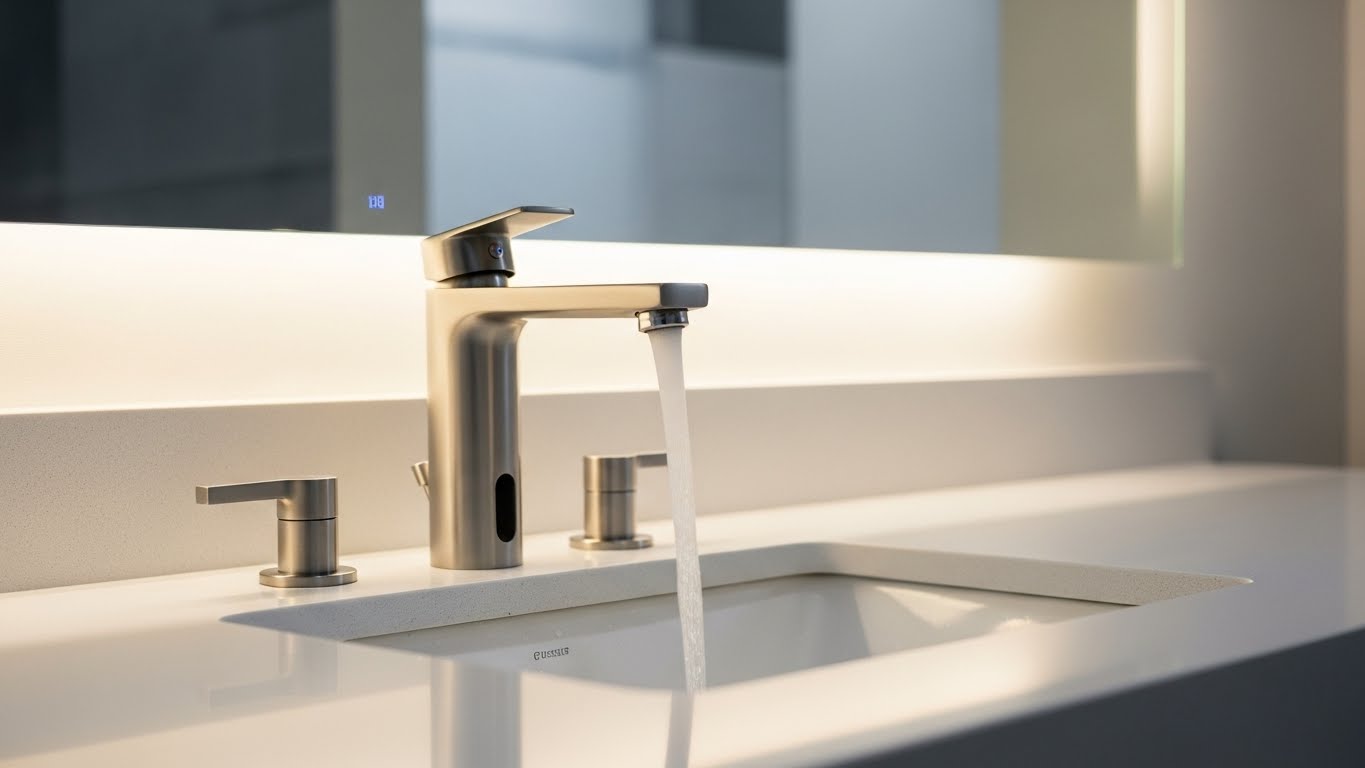
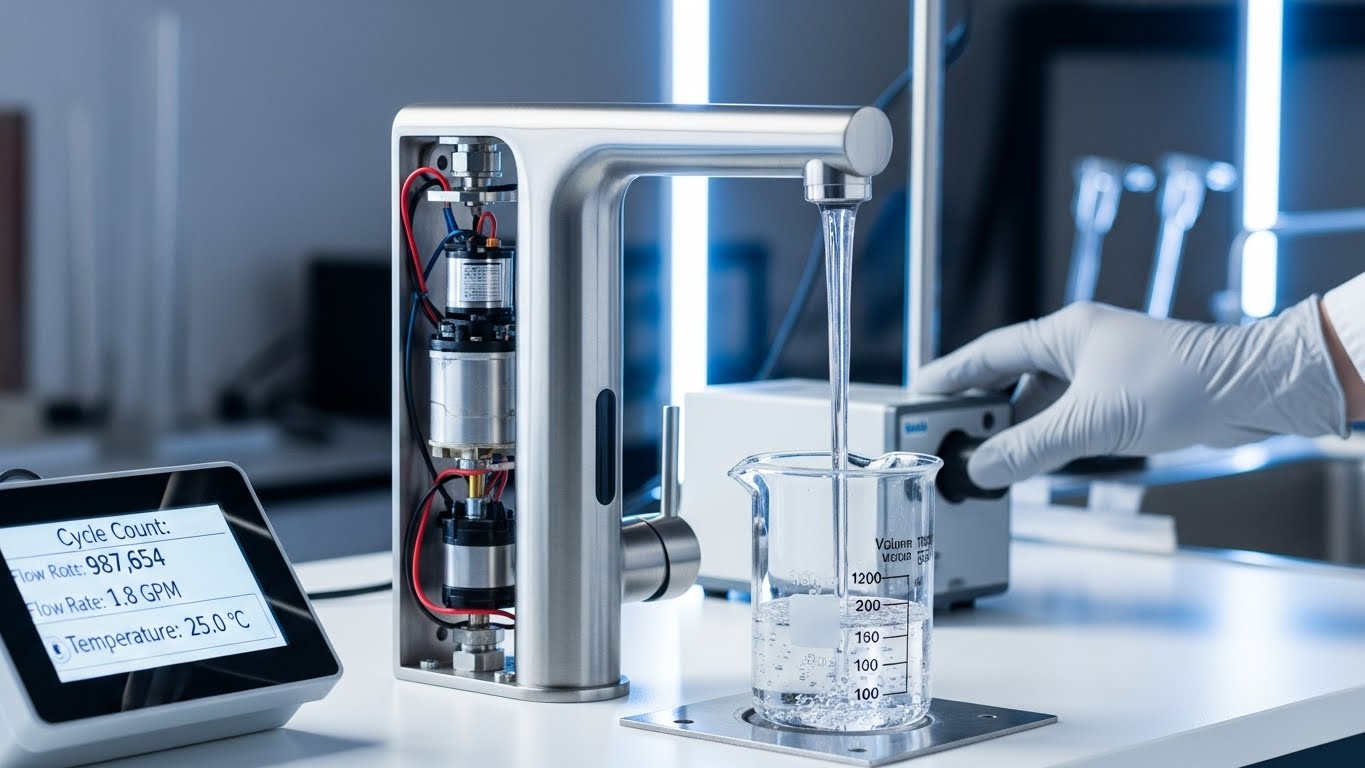
The term “spec-grade” is more than a marketing label — it denotes construction quality suited for continuous public use under stringent performance criteria. For FontanaTouchless systems, this begins with solid brass bodies. Then, precision-machined valves and sensor modules designed to maintain performance accuracy over millions of cycles also matter.
Where residential fixtures are optimized for periodic use, spec-grade touchless faucets have been subjected to ASTM endurance and corrosion testing, simulating years of exposure to high-traffic conditions. The consequence of such a difference is that, at airports, hotels, healthcare facilities, and academic campuses, the fixture will maintain consistent flow rates, accurate sensing, and minimum maintenance intervals.
Sensor Intelligence and Energy Management
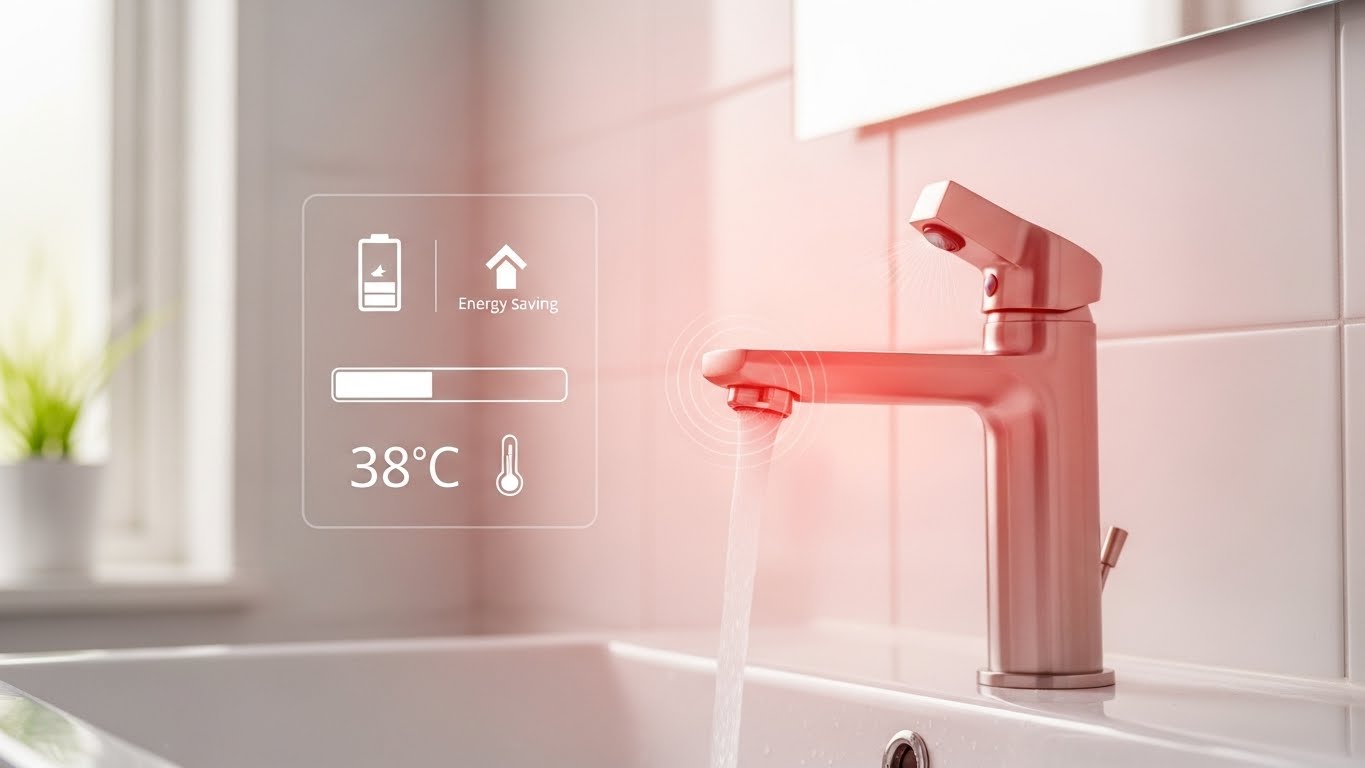
At the heart of FontanaTouchless technology lies advanced infrared sensing with adaptive calibration — a system capable of adjusting to ambient lighting and reflective surfaces, critical for architectural settings with diverse materials and finishes.
The units are designed to use very little energy. The low-voltage DC and high-cycle lifespan solenoid valves can be activated more than 500,000 times. The battery-powered units have energy-saving stand-by circuits, and the AC-powered units have surge protection to keep building systems from getting messed up by electricity.
Material Integrity and Code Compliance
FontanaShowers’ Spec-Grade Touchless Faucets maintain full compliance with cUPC, NSF/ANSI 61, and NSF/ANSI 372 standards, ensuring both mechanical integrity and potable water safety. The use of low-lead brass alloys reduces contamination risks. While WaterSense certification guarantees that flow rates remain within the EPA’s efficiency parameters. This is typically 0.5 GPM or lower.
These attributes make the line suitable for LEED, WELL, and CALGreen-aligned projects. Thus, enabling architects to meet sustainability criteria without compromising on tactile or functional design outcomes.
Design for Maintainability
Other than performance and quality per se, another area of spec-grade designs is serviceability. While it may tend to have less significance during the specification process, it is an important area that FontanaShowers tries to cover through its component assemblies that make it possible to replace the solenoid and sensors without necessarily altering the fixtures and surfaces around it.
Architectural Integration
FontanaTouchless fixtures are designed to coordinate with diverse architectural palettes — from minimalist modern restrooms to high-end hospitality interiors. Their engineering precision allows for flexible mounting options and compatibility with ADA and accessibility guidelines, ensuring that design intent and technical compliance coexist within the built environment.
Conclusion
For architects and specifiers, specifying by performance means looking ahead. This vision is realized in the Spec-Grade Touchless Faucets offered by FontanaShowers, which bring together code requirements, durability, and technology-oriented design in a solution ready for specification. For spaces that have high traffic and insist on a certain level of ease, sanitation, and energy optimization, spec-grade design represents more than a solution – it represents a benchmark.