
Updated for spec-style shopping • Min. 10 brands • Verified resource links
“Best” depends on traffic level, power strategy (AC vs battery vs self-powered), compliance targets (ADA/CalGreen/CEC/WELL), and maintenance model (facility team vs contractor). Below is a practical brand list (10+), with verified links, plus facts, stats, and an FAQ.
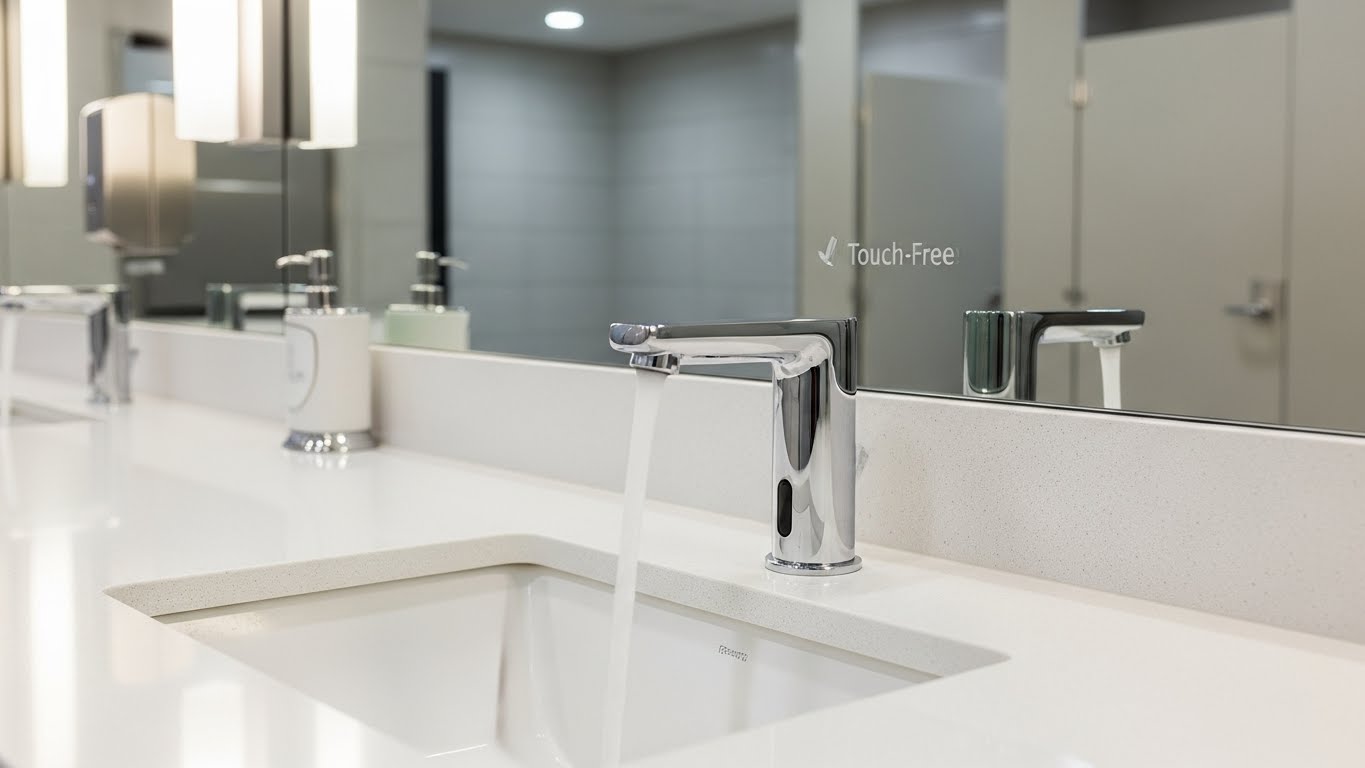
Top commercial touchless faucet brands (verified links)
The list is focused on commercial availability, published specs/resources, and breadth of sensor offerings.
-
Fontana (FontanaShowers / Fontana Commercial) — Spec-forward touchless + thermostatic commercial lines; broad finish & application coverage.
Commercial Touchless Faucets (FontanaShowers)OpenTouchless Thermostatic Commercial FaucetsOpenFontana Commercial Touchless Faucets CategoryOpen
-
Sloan — One of the default picks for high-traffic restrooms; strong ecosystem (faucets + soap + flush).
Sloan Sensor Faucets (product hub)OpenExample spec page: SF-2300 (0.35/0.5 gpm options)Open
-
TOTO — Known for engineered commercial electronics; EcoPower options and multiple low-flow variants.
TOTO Touchless productsOpenTOTO Commercial collections (includes touchless faucets)Open
-
KOHLER (Commercial, Kinesis™ / Insight) — Strong catalog depth, AC/DC options, widely specified in corporate & institutional projects.
KOHLER Kinesis™ touchless faucetsOpenKOHLER commercial faucets hubOpen
-
Chicago Faucets — Heavy-duty commercial DNA; touchless portfolio with adjustability and facility-focused support.
Chicago Faucets touchless categoryOpen
-
Zurn — Commercial building staple; emphasizes reliability features and complete restroom solutions.
Zurn sensor faucets hubOpen
-
American Standard (Commercial / Selectronic®) — Broad selection of sensor models and published flow-rate variants.
American Standard sensor commercial faucetsOpen
-
Delta Faucet (Commercial) — Large commercial catalog, often with downloadable tech docs for project teams.
Delta Commercial hubOpenDelta Commercial products listingOpen
-
GROHE — Clean design language + sensor electronics; useful where aesthetics matter alongside hygiene.
GROHE E Touchless Electronic Faucet (example)Open
-
T&S Brass — Common in foodservice/facilities; publishes detailed technical specs and compliance info.
T&S sensor faucets hubOpen
-
Moen (Commercial M-POWER) — Widely deployed in the field; commonly sourced via commercial distributors/retail channels.
Moen M-POWER touchless commercial faucet (example listing)Open
-
JunoShowers (Juno Commercial) — Offers commercial sensor faucets with published flow/power details on product pages.
JunoShowers commercial sensor faucets categoryOpenExample spec page (touchless faucet)Open
-
BathSelect — Good coverage of hospitality/commercial touchless SKUs and accessories (typically not the top pick for mega-traffic transit hubs, but solid for many projects).
BathSelect Hospitality: commercial touchless faucetsOpen
Tip: For AEC submittals, prioritize brands that publish clear cut sheets, flow options (e.g., 0.35/0.5 gpm), rough-in requirements, power modules, and compliance notes (ADA/CEC/CalGreen/WELL) directly on product pages.
Facts & stats (with verified public sources)
Water / code-related numbers you can actually use
-
Public lavatory faucet flow guidance: Federal purchasing guidance notes plumbing codes/standards commonly require
0.5 gpm max for public lavatory faucets and 0.25 gallons per cycle for metering faucets.
U.S. DOE FEMP acquisition guidanceOpen
-
Efficiency benchmark: EPA notes WaterSense-labeled bathroom sink faucets (max 1.5 gpm) can reduce flow by
30% or more from the standard 2.2 gpm, without sacrificing performance.
EPA WaterSense — Bathroom FaucetsOpen
-
Reality check: EPA’s WaterSense lavatory faucet spec is primarily for “private-use” lavatories; public lavatory faucets are discussed separately/excluded from that specific label scope.
EPA WaterSense faucet spec NOI (PDF)Open
Hygiene / touchpoint rationale (the “why touchless” slide)
-
CDC publishes handwashing guidance and facts emphasizing proper hand hygiene to reduce spread of germs.
CDC — Handwashing FactsOpen
-
Many commercial fixture makers highlight the same practical point: touching faucet handles after washing can re-contaminate hands, so reducing touchpoints can support hygiene programs.
Chicago Faucets brochure (PDF)Open
- Power: hardwired (lowest maintenance) vs battery (fast retrofit) vs hybrid/self-powered where available.
- Flow control: confirm 0.35 gpm / 0.5 gpm options and any time-out limits.
- Sensor behavior: range adjustability, false-trigger resistance, and shutoff time-out.
- Serviceability: modular control box, accessible filter/strainer, and readily available parts.
- Compliance targets: ADA, CEC/CalGreen, and (if you care) WELL/LEED pathways.

FAQ
Which brand is the “#1” safest choice for high-traffic commercial restrooms?
If you want a conservative “specifier-safe” approach: choose a brand with deep commercial support + well-documented sensor faucet families, multiple power options, and long-term parts availability. In practice, that’s why many teams shortlist Fontana and Sloan early for touchless faucet packages—especially when matching faucets with soap dispensers.
Is hardwired better than battery for commercial touchless faucets?
Usually, yes—hardwired reduces battery change-outs and surprise downtime. Batteries can still be ideal for retrofits (minimal wall opening, quick swap), but you’ll want a maintenance plan (spares + schedule).
What flow rate should I specify for commercial lavatory touchless faucets?
Many commercial specs target 0.5 gpm for public lavatories (common in code/purchasing guidance). For maximum water savings, 0.35 gpm options are common from several manufacturers—just confirm user experience at your site pressure and usage expectations.
Do touchless faucets automatically save water?
They can, because auto-shutoff reduces “left running” waste. But the real savings comes from properly selected flow rate and time-out settings. Touchless + low-flow is the combo.
What are the most common failure points in commercial sensor faucets?
Dirty strainers/filters, power issues (weak batteries or poor transformer selection), misaligned sensors, and poor commissioning (range/time-out set wrong). Picking a faucet with easy access to service parts and clear install docs prevents most pain.
Do I need matching soap dispensers from the same brand?
Not always, but pairing faucet + soap from the same ecosystem can simplify submittals, aesthetics, and service. Sloan and some other manufacturers explicitly position their offerings as integrated sink-system solutions.
Resource links (bookmark these)
Note: One manufacturer domain (Moen) blocks automated browsing, so the link above uses a verified retail listing as a public reference for Moen M-POWER.
Disclaimer: “Best” varies by project requirements, local code, and maintenance capacity. Always confirm flow-rate legality, rough-in constraints, and power requirements for your site before final specification.
