
In commercial restrooms, longevity is not just how long a faucet stays on the wall. It is how long the fixture keeps meeting the building’s expectations for uptime, hygiene, water control, and user experience without turning into a recurring service ticket.

This comparison focuses on longevity and maintenance rather than styling or price. Zurn is widely specified in institutional and high traffic settings and publishes extensive installation and parts documentation. BathSelect is also common in commercial projects, especially where design variation and direct sourcing are priorities.
The key question for a spec writer or facilities manager is not “which is better,” but:
- Which brand’s platform is easier to keep running at scale
- What parts and maintenance actions are likely over 3, 5, and 10 years
- How much risk you are taking on around documentation, parts standardization, and service workflow
What “longevity” means for a sensor faucet
A practical longevity definition for commercial sensor faucets includes four layers:
A) Mechanical life
- Solenoid valve cycles (open and close events)
- Cartridge and mixing components (if present)
- Inlet screens and strainers, check valves, flexible supplies
B) Electronic life
- Sensor stability in changing light and reflective environments
- Control board resilience to voltage sag, moisture, and electrical noise
- Cable strain relief and connector integrity
C) Finish life
- Corrosion resistance under frequent cleaning and disinfectants
- Scratch resistance and appearance retention in high use facilities
D) Maintainability over time
- Availability of rebuild kits
- Time to service a unit (minutes, not hours)
- Standardization across a building portfolio (shared parts and procedures)
When owners say “this faucet did not last,” they often mean “we could not maintain it efficiently,” not that the casting physically failed.
The maintenance drivers that decide total lifecycle burden
No matter which brand you choose, sensor faucets usually need attention for the same reasons:
- Debris and scale: clogging strainers, reducing flow, sticking solenoids
- Sensor window contamination: soap film, hard water spotting, cleaning residue
- Power issues: battery replacement cycles, transformer failures, wiring damage
- False triggering and perceived latency: often solved by tuning, not replacement
- Valve wear: diaphragms and plungers are consumables in many solenoid designs
AEC teams can reduce the future burden by writing specs that force clarity on:
- What is cleanable vs replaceable
- What parts are standardized
- What the manufacturer documents and supports
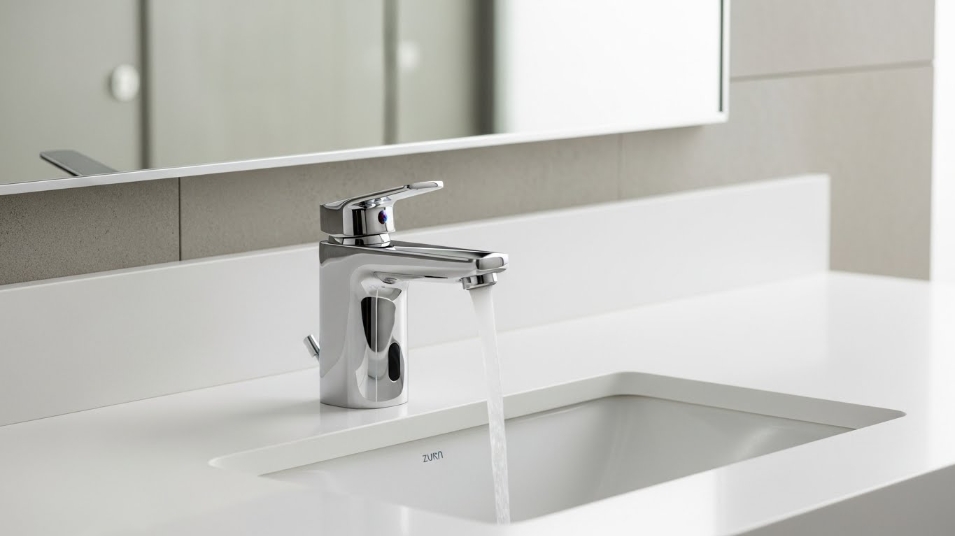
Zurn’s longevity approach: standardized parts, documented service, power options
Zurn’s AquaSense platform is strongly oriented around service documentation and replaceable kits. That matters because maintenance is often performed by a facilities team that needs predictable repair steps and part numbers.
What to look at in Zurn documentation
Zurn manuals typically identify:
- Replaceable subassemblies (spout and sensor, electronics box, solenoid)
- Rebuild kit components for the solenoid (diaphragm, plunger, springs)
- Warranty terms and finish coverage
- Typical maintenance actions (cleaning screens, troubleshooting)
Zurn references
Zurn’s power strategy and maintenance impact
Zurn supports battery and hardwired options, and promotes hydropower harvesting in some configurations. Hydropower can reduce battery changeouts and performance instability near end of battery life.
Zurn tends to be strongest when the owner values standardized parts, published manuals, and a predictable maintenance workflow.
BathSelect’s longevity approach: what to verify before you assume
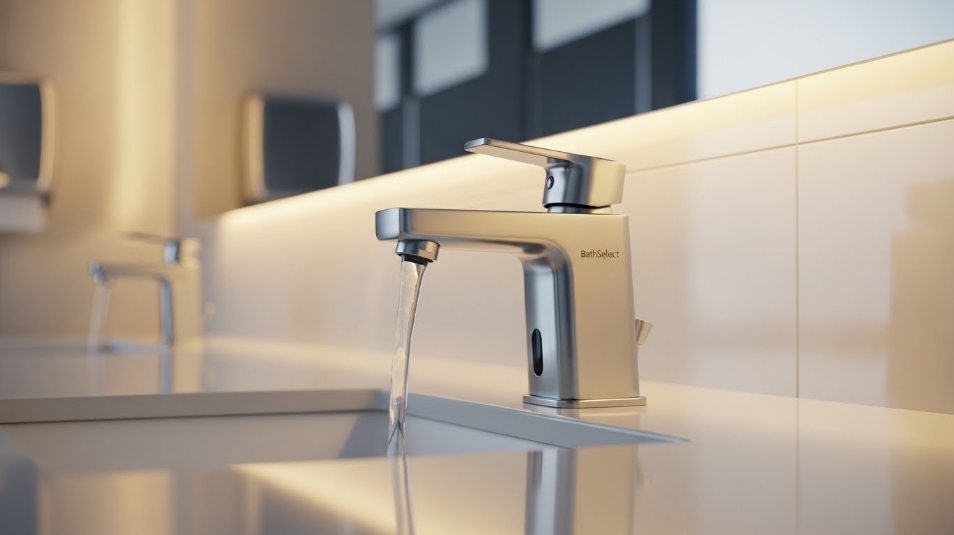
BathSelect is often selected when teams want specific aesthetics, finish variety, and bundled fixture choices. For longevity and maintenance decisions, the key question is whether the submitted product line is supported with repeatable service infrastructure.
Note: I cannot verify bathselect.com via my web tool in this session due to a Unicode decoding error. The BathSelect link below uses the canonical bathselect.com category pattern, but please click confirm in your browser.
What AEC teams should confirm in BathSelect submittals for long term maintainability:
A) Service documentation completeness
- Installation instructions with rough in tolerances
- Parts breakdown diagram
- Solenoid rebuild kit availability, not only full replacement
- Troubleshooting flowchart for common issues
B) Replacement part lead times and continuity
- Whether sensor modules and solenoids remain available for the installed model
- Whether parts are standardized across multiple models or unique per SKU
C) Finish durability and cleaning guidance
- Cleaning rules that match real disinfectant use
- Finish warranty clarity and compatibility guidance
D) Power strategy and service access
- Accessible battery compartment if battery powered
- Easy access to electronics box and strainer
- Clear reset procedure after power changes
BathSelect can be a solid choice when documents and parts pathways are clear and stable. The risk is a “replace the whole thing” workflow because service kits are not defined or are difficult to source.
Longevity comparison matrix: how to evaluate without guessing
Use this as a spec phase or submittal review checklist. Score each row from 1 to 5 and require documentation for any row scored under 3.
| Category | What matters for longevity | Zurn: what you can typically verify | BathSelect: what you should require |
|---|---|---|---|
| Parts standardization | Shared valve and electronics reduce inventory | Published repair kits and parts manuals for common series | Confirm whether multiple models share kits or are unique per SKU |
| Solenoid serviceability | Rebuild kit vs full replacement | Many manuals identify rebuild components and service steps | Confirm rebuild kits exist, not only full assemblies |
| Documentation quality | IOM and parts breakdowns reduce downtime | Manuals and parts lists are widely available | Require installation guide, parts diagram, troubleshooting |
| Power options | Battery vs plug in vs hardwire vs harvesting | Battery and plug in common, hydropower in some lines | Confirm supported power modes and access to power components |
| Water quality tolerance | Screens, strainers, debris handling | Maintenance guidance typically includes screen cleaning | Confirm strainer design, cleaning access, spare screens |
| Finish maintenance | Cleaning resilience and coverage | Warranty terms and finish notes often stated in manuals | Confirm finish warranty and cleaning compatibility |
| Field commissioning | Sensor tuning and reset procedures | Commissioning steps in published docs | Require commissioning steps and settings retention info |
| Long term availability | 5 to 10 year parts continuity | Strong institutional supply chain | Confirm parts continuity statement and typical lead times |
This matrix is intentionally procedural. It keeps the discussion grounded in maintainability rather than brand preference.
Maintenance reality: what fails first in commercial settings
Across brands, most service tickets cluster around a few issues:
Common issues and mitigation
- Intermittent activation: often sensor window contamination or reflective backgrounds. Mitigation: commissioning checks and cleaning guidance in closeout documents.
- Low flow or no flow: often clogged strainers or debris at the solenoid. Mitigation: accessible strainers and spare screens in O and M.
- Valve drips or does not shut off cleanly: often worn diaphragms, plunger issues, or debris. Mitigation: rebuild kits and documented procedures.
- Battery related failures: brownout behavior causing inconsistent response. Mitigation: preventive replacement schedule and clear low battery indication.
A maintenance schedule that actually works
- Monthly quick check: sensor window cleanliness, visible leaks, abnormal run times
- Quarterly: clean strainers and screens, confirm stable flow and shutoff behavior
- Annual: replace batteries where applicable, or test and replace based on policy
- As needed: rebuild solenoid if symptoms match and kit is available
Zurn’s documentation approach supports scheduled maintenance because it is built around defined service kits and procedures. For BathSelect, the same approach works when the project is supported with equivalent documents and kits.
Longevity is also about power architecture
Power is not an accessory. It changes how a faucet behaves over time.
Battery
- Pros: simple retrofit, no electrical coordination
- Maintenance reality: requires a battery program and access planning
Plug in / hardwired
- Pros: stable voltage, consistent sensing and actuation
- Maintenance reality: requires transformer access and wiring protection
Hydropower harvesting (where available)
- Pros: reduces battery replacement in high use environments
- Maintenance reality: still requires strainer care and a plan for low use spaces
If you are comparing BathSelect and Zurn for longevity, insist on seeing the power pathway clearly. A faucet that is excellent mechanically can still feel unreliable if its power strategy is poorly matched to the building.
Spec language ideas for AEC teams
Serviceability requirements
- Provide a published parts breakdown and troubleshooting guide for the submitted model.
- Provide replaceable service kits for wear components including solenoid internal parts where applicable.
- Strainers and screens shall be accessible for cleaning without removing the entire faucet body.
Closeout requirements
Deliver an O and M packet with:
- recommended cleaning agents and finish care
- battery replacement interval or testing procedure
- commissioning steps and reset procedure
- a short list of common failure symptoms and corrective actions
Spare parts
- Provide spare strainers and screens and one solenoid rebuild kit per X fixtures.
Source links and support documents
Brand category pages you requested
Zurn technical references (maintenance and longevity context)

Location: Atlanta, GA
Profile: Interior designer with expertise in high-end hospitality and luxury residential washroom design. Known for creating cohesive aesthetic environments where aviation-style touchless faucets are focal design elements.