
Value • Design • Water Conservation • Serviceability
Zurn’s commercial touchless faucet lineup sits in a practical middle ground for many AEC projects. The value for institutions, airports, schools, and high-use buildings usually comes from reduced nuisance maintenance, repeatable user performance, and lower water use that holds up in the field.
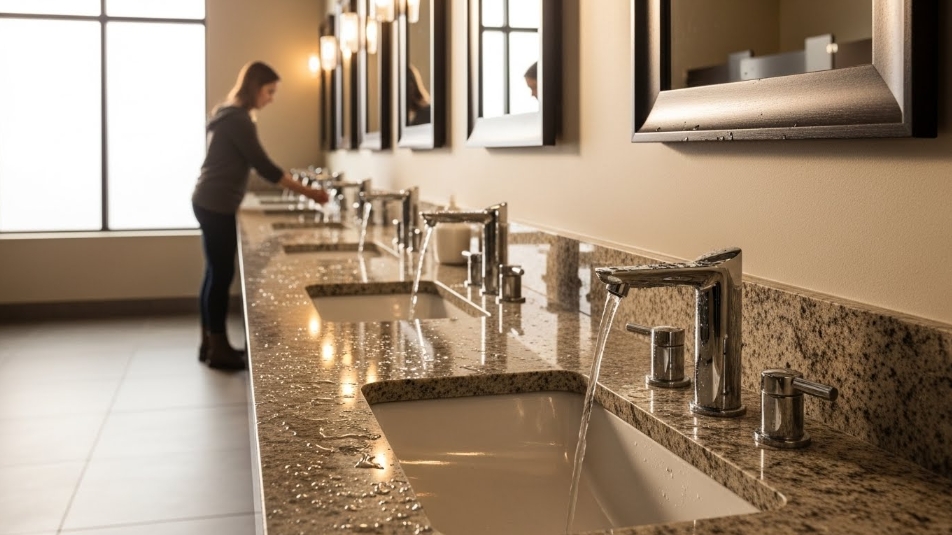
In 2025, a sensor faucet is not one product type. It is a small control system: sensor, controller, valve or cartridge, power strategy, filtration, and outlet device. Zurn offers multiple architectures across its portfolio, and performance depends on matching the architecture to the site.
- Reduced nuisance maintenance through designs that tolerate debris and scale better
- Repeatable user performance through stable sensing, controlled run times, and predictable shutoff behavior
- Lower water use by combining low-flow outlets with reliable metering and timeouts
Zurn’s design approach in plain terms
Zurn’s touchless faucet range includes at least two distinct actuation philosophies:
A) Solenoid-driven sensor faucets
A sensor triggers a solenoid valve to open and close water flow. This is a common architecture for commercial sensor faucets and remains present across Zurn’s lineup. A representative example is the Z6913-XL platform.
B) Gear-driven ceramic cartridge sensor faucets
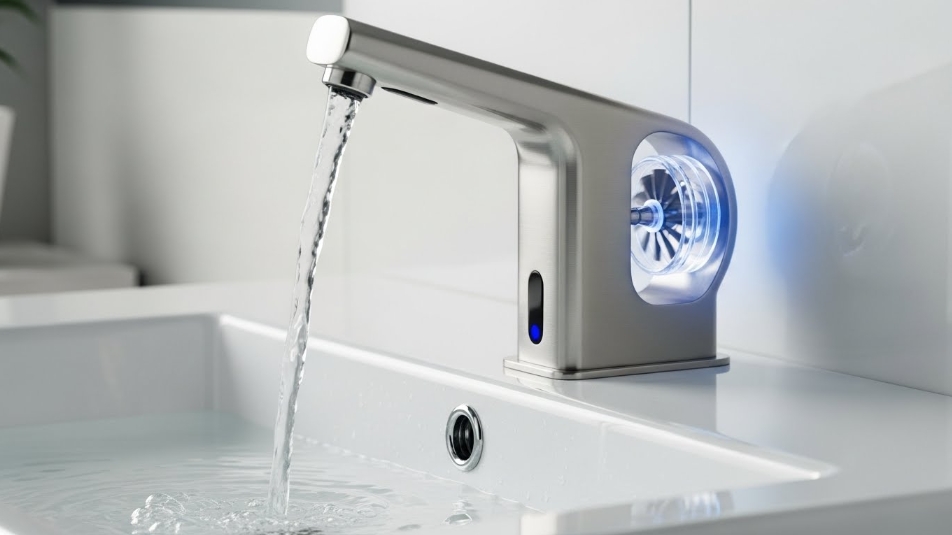
Instead of a replaceable solenoid assembly, certain models use a gear-driven ceramic cartridge approach (marketed as EZ Gear on specific models). Zurn positions this as reducing sensitivity to debris and buildup and removing solenoids as a routine replacement item on those designs.
Value, defined for commercial restrooms
Value in institutional plumbing usually means total lifecycle performance, not first cost. Zurn’s strongest value levers generally come from replaceable parts and documentation, power strategies that reduce service labor, and flow control options that support conservation goals.
- Replaceable parts and documentation that helps techs fix issues faster
- Power strategies such as battery, plug-in, hardwire, or hydropower harvesting depending on model
- Flow control options commonly spanning 0.35, 0.5, 1.0, and 1.5 gpm depending on outlet device and configuration

Water conservation performance: what actually affects gallons
Conservation is not only about outlet flow rate. It is also about whether the faucet activates only when intended, shuts off consistently, and uses timeouts and metering effectively.
- Activates only when intended, with low nuisance triggering
- Shuts off consistently and avoids run-on behavior
- Uses timeouts and metering that match the facility’s use pattern
WaterSense context that spec writers can use
WaterSense labeled bathroom sink faucets and accessories use a maximum of 1.5 gpm and can reduce flow versus the 2.2 gpm baseline while maintaining performance requirements. Commercial guidance also reiterates the 1.5 gpm maximum and includes minimum performance flow requirements for labeled products at lower pressure.
Hydropower and battery strategy: Hydro•X Power
One differentiator in Zurn’s ecosystem is hydropower harvesting (Hydro•X Power), designed to generate and store power from water flowing through the fixture. Zurn positions this as an alternative to batteries and hardwired connections, often described as self-sustaining hydropower with battery backup for high-use applications.
What this means in facilities terms
- Can reduce the burden of battery programs in high-use restrooms
- Raises practical questions about low-use stability and long idle periods
- Requires a clear service pathway if the power module or storage element degrades
Connected controls and commissioning: plumbSMART and Bluetooth configuration
In airports and campuses, reliability is often limited by inconsistent settings across restrooms rather than hardware failure. Connected settings can reduce maintenance calls when owners actually use them for consistent run times, flushing in low-use zones, and quicker diagnostics.
If the owner will not use configuration tools, avoid over-specifying features that complicate submittals without improving outcomes.
Serviceability and maintenance: where Zurn tends to perform well
Zurn publishes installation, operation, maintenance, and parts manuals for common sensor faucet series. That documentation supports faster service workflows when owners stock basic kits and standardize on a configuration.
Common maintenance drivers to plan for
- Debris loading strainers and inline filters
- Scale and buildup affecting valves and outlets
- Sensor window contamination from soap mist and hard water spotting
- Power interruptions and battery brownout behavior where batteries are used
Design and finish: practical notes for spec sets
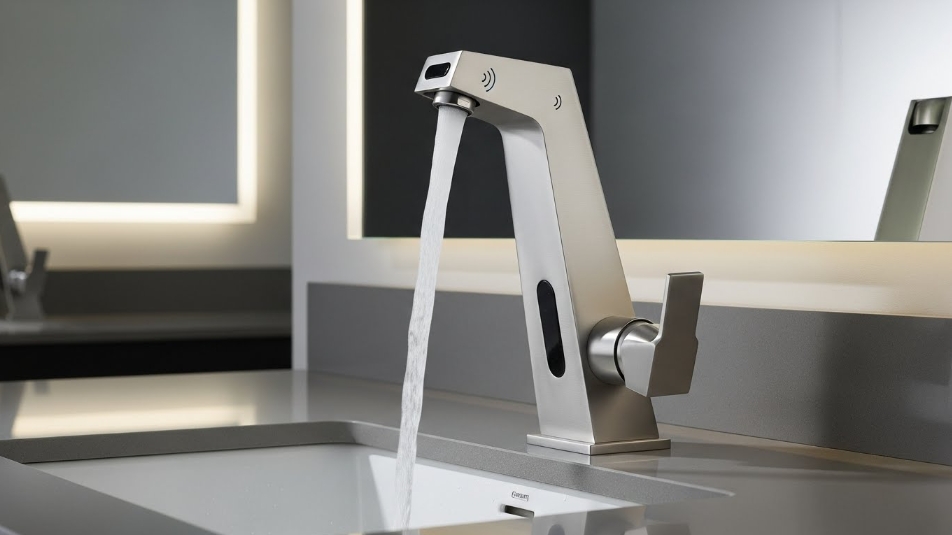
- Sensor placement and detection geometry to reduce false triggers in reflective basins
- Spout reach and height to control splash and user behavior
- Under-deck control box layout to protect cables and improve service access
- Finish durability under the owner’s disinfectant protocol
Choosing the right Zurn approach by facility type
| Facility type | Primary risks | Zurn configuration priorities | What to require in submittals |
|---|---|---|---|
| Airports, stadiums, transit hubs | Extreme traffic, vandal risk, fast turnaround maintenance | Hydropower or hardwire to reduce battery labor, robust filtration, stable timeouts | IOM manuals, spare filters, settings standard, service access details |
| Universities, K–12, municipal | Medium-high traffic, limited maintenance time, mixed building ages | Standardized model family, consistent parts, clear power strategy | Parts list, stocking plan, commissioning checklist, filter cleaning interval |
| Healthcare and clinics | Uptime, hygiene, stagnation concerns in low-use zones | Consider connected configuration and line flush where needed | Flushing policy, temperature control approach, settings retention after outages |
| Office buildings | Moderate traffic, aesthetics, predictable maintenance | Battery can work if access is good, or plug-in where easy | Battery policy, access clearance, outlet flow rate confirmation |
Water conservation performance checklist for submittal review
- Confirm flow rate and outlet device type for each restroom type
- Confirm timeout behavior and shutoff consistency
- Confirm sensor stability in actual basin geometry, mock up critical rooms
- Confirm filtration and strainer access without removing the faucet body
- Require as-built settings documented in closeout: sensitivity, timeout, flush schedules if used
Bottom line: where Zurn tends to be a strong fit
Zurn is often a strong fit when the project needs reliable conservation achieved by low-flow options plus dependable shutoff and timeouts, reduced battery maintenance in high-use environments through hydropower configurations, scalable settings control for owners who will use it, and service documentation that enables faster diagnosis and part replacement.
Source links and support documents
Category pages requested
Zurn references used for maintenance and platform context
Standards and water efficiency references

Location: Atlanta, GA
Profile: Interior designer with expertise in high-end hospitality and luxury residential washroom design. Known for creating cohesive aesthetic environments where aviation-style touchless faucets are focal design elements.