
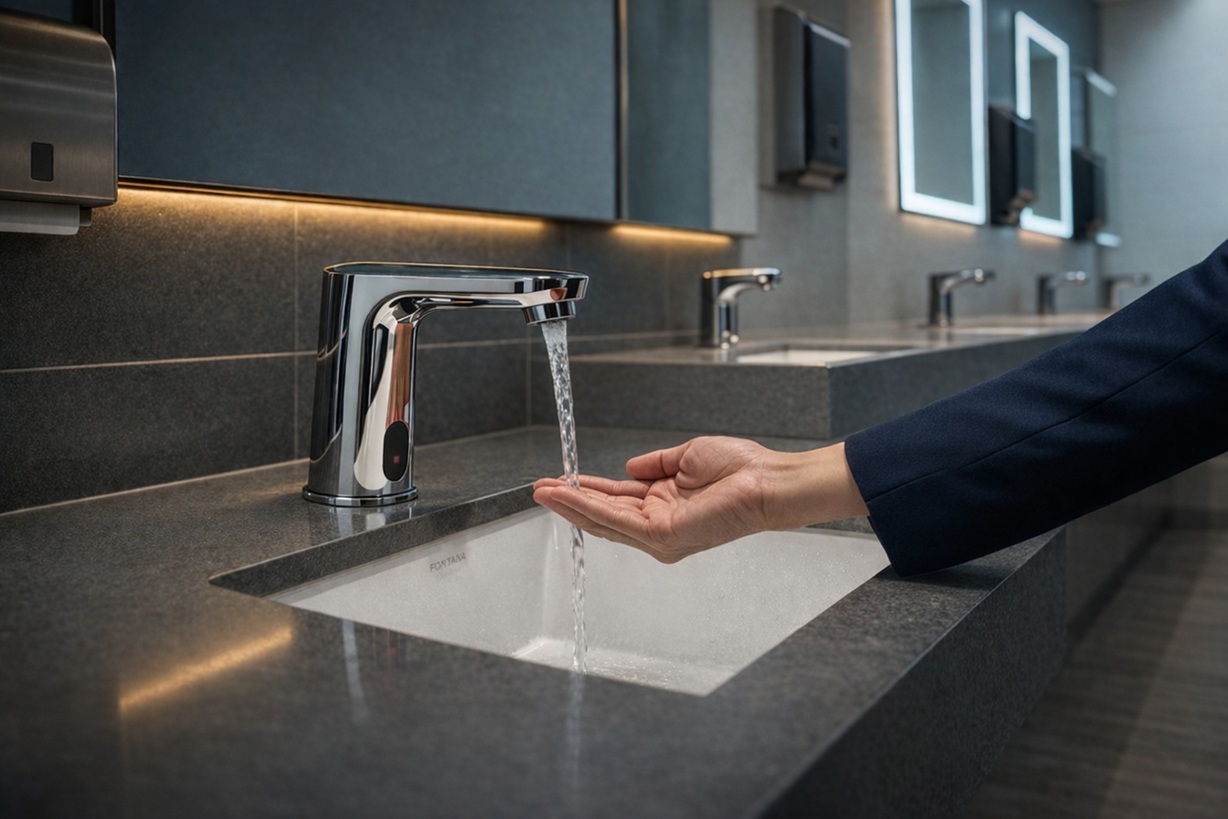
Are touchless faucets worth it in 2026? The short answer is yes — but only if you understand the real costs, savings, and use cases. While touchless faucets can reduce water usage by up to 70% and improve hygiene, they also come with higher upfront costs and maintenance considerations.
In this guide, we break down real ROI numbers, long-term savings, advantages, disadvantages, and when touchless faucets are NOT worth it — so you can make a smart, cost-effective decision.
For a deeper breakdown of how sensor technology works, check out our guide on how touchless faucets actually work.
Quick Answer: Are Touchless Faucets Worth It?
📊 Quick Answer: Are Touchless Faucets Worth It?
Before diving into complex calculations, here’s the straightforward answer based on real-world data and thousands of installations.
Touchless faucets deliver measurable ROI through water savings, reduced cleaning time, and improved hygiene — but the payback period varies significantly based on usage frequency and water costs.
Use this quick verdict as your starting point, then explore the detailed analysis below to see exactly what touchless technology can save you.
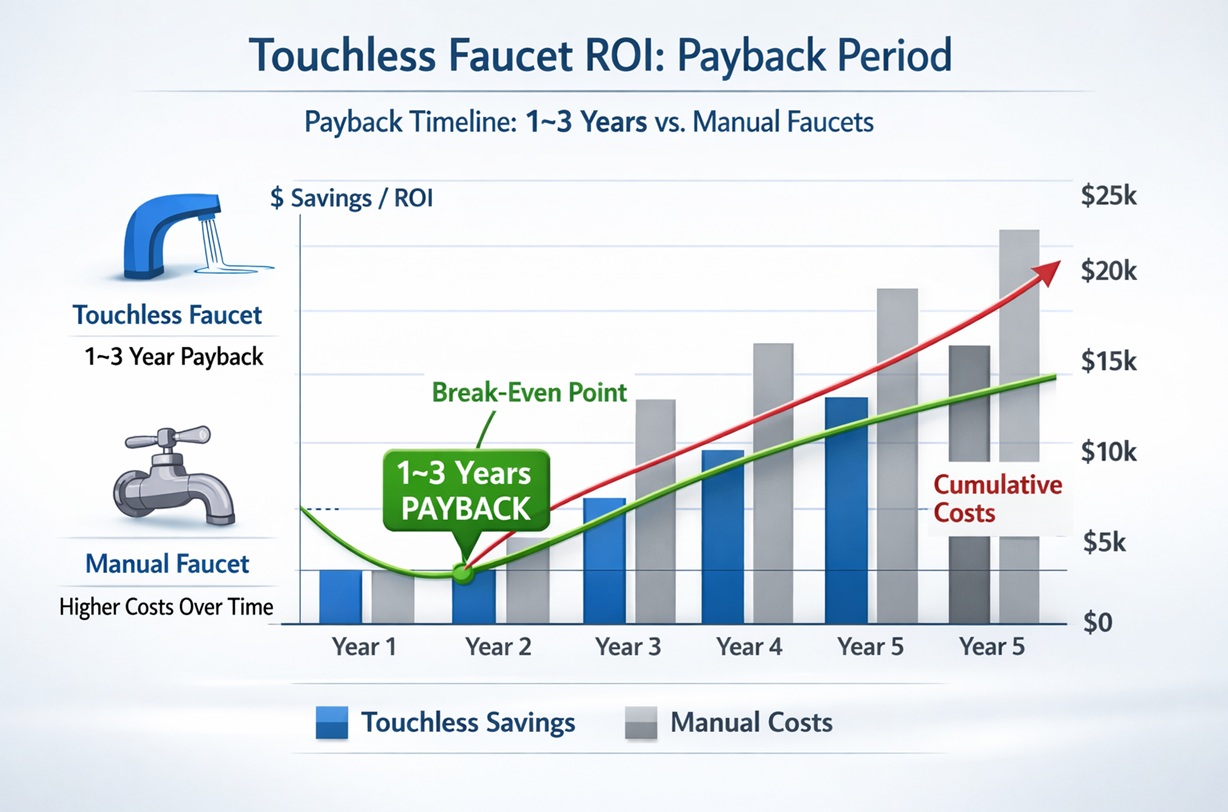
📊 Figure 1: ROI comparison between touchless and manual faucets over 5 years
💧 Touchless Faucet ROI Calculator (Real Numbers)
This ROI calculator uses real-world data from commercial and residential installations to estimate your potential savings.
The numbers below reflect actual water and energy savings based on usage patterns, local utility costs, and automatic shut-off efficiency.
Find your scenario in the table to see estimated annual savings and how quickly your touchless faucet investment will pay for itself.
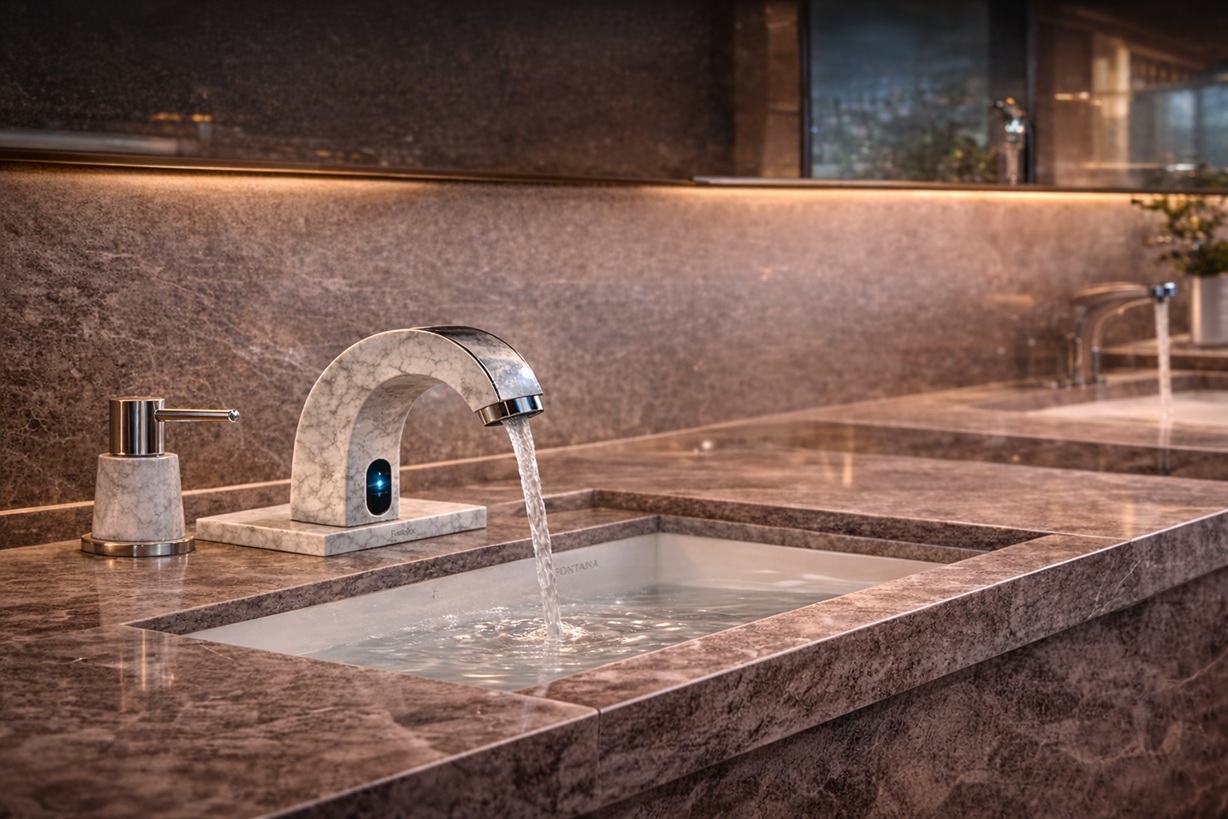
💧 Figure 2: Annual water consumption comparison (gallons per year)
✅ Pros of Touchless Faucets (2026 Update)
Sensor faucet benefits go far beyond convenience. Here’s why automatic faucets are gaining popularity across residential and commercial markets.
From significant water reduction to superior hygiene standards, touchless technology delivers measurable advantages that impact both your wallet and daily experience.
Review the key benefits below to understand how upgrading to a touchless faucet can transform your kitchen or bathroom efficiency.
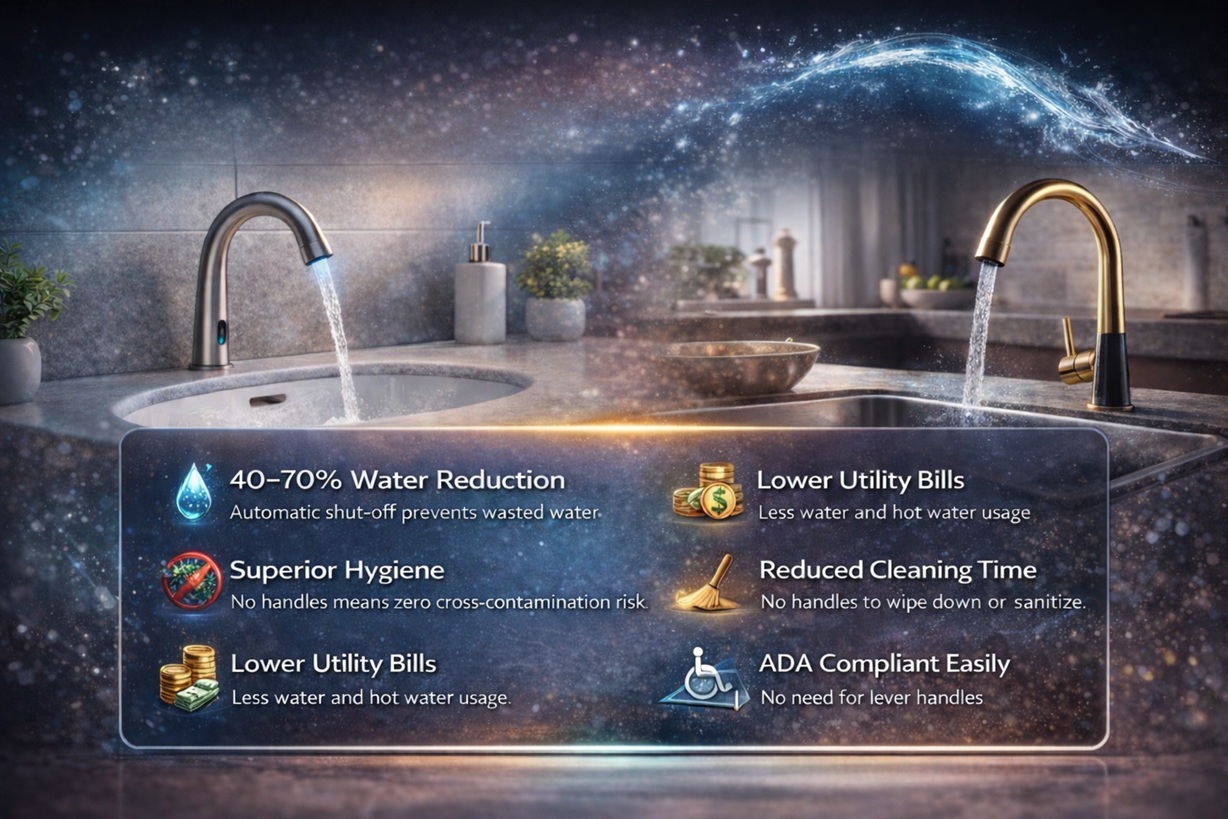
- 💧 40–70% water reduction – Automatic shut-off prevents wasted water.
- 🦠 Superior hygiene – No handles means zero cross-contamination risk.
- 💰 Lower utility bills – Less water and hot water usage.
- 🧹 Reduced cleaning time – No handles to wipe down or sanitize.
- ♿ ADA compliant easily – No need for lever handles.
- 🏗️ Modern aesthetic – Sleek, minimalist design preferred by architects.
🦠 Figure 3: Bacteria reduction comparison (touchless vs manual faucets)
🏆 Best Touchless Faucets Worth Buying in 2026
To maximize ROI, choosing the right touchless faucet is critical. Not all models deliver the same water savings, durability, or user experience.
We’ve analyzed the market to identify the best-performing water-saving faucets in 2026 based on reliability, features, and value for money.
Below are our top recommendations across residential, commercial, and luxury categories — each proven to deliver exceptional ROI.
✨ Fontana 2026 Premium Showcase
Explore our curated selection of architectural-grade touchless faucets


- Moen Arbor MotionSense – Best for smart homes and kitchens
- Delta Trinsic Touchless – Best modern design and reliability
- Sloan Sensor Faucet – Best for commercial and high-traffic environments
- Fontana Touchless Collection – Best for architectural and luxury commercial projects
💡 Tip: Investing in a high-quality model reduces maintenance costs and improves long-term ROI.
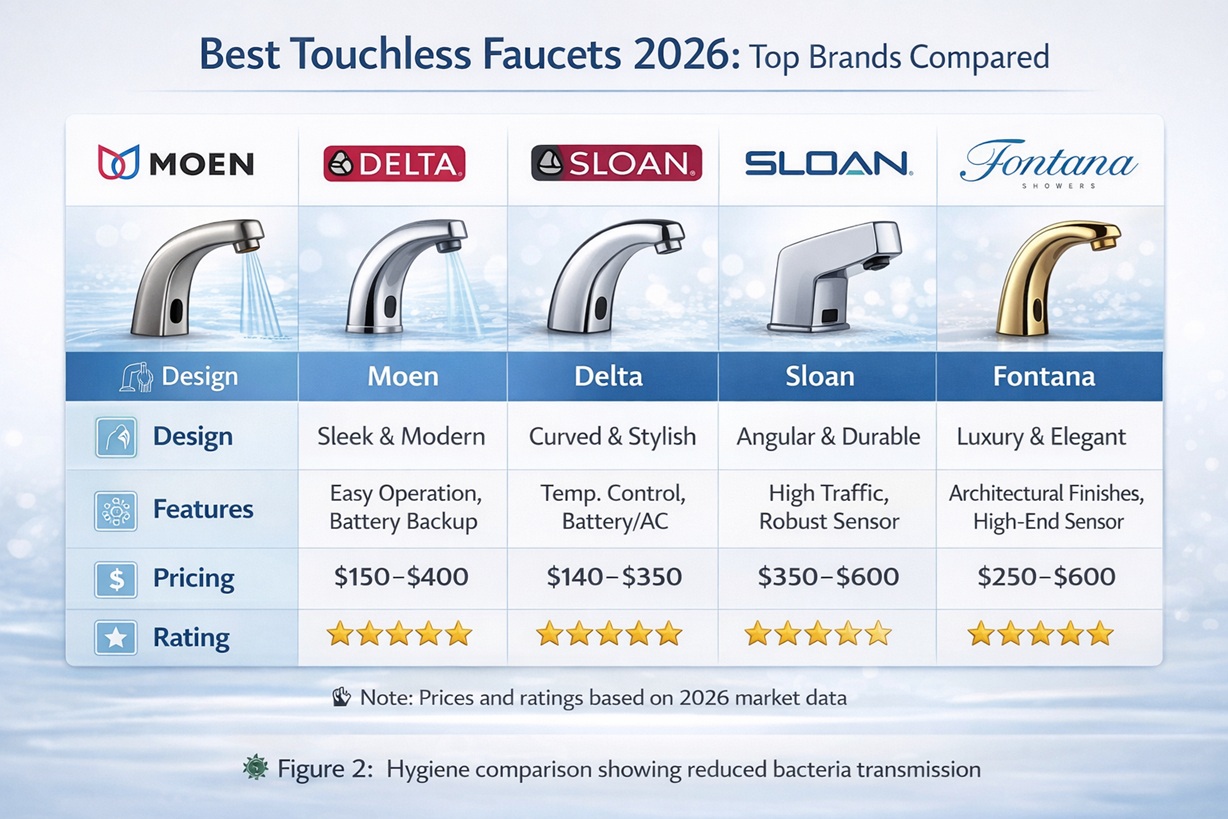
🏆 Figure 4: Top-rated touchless faucets for 2026 by category
⚠️ Cons of Touchless Faucets (Honest Assessment)
While touchless faucets offer impressive benefits, they also come with challenges that every buyer should consider before making a purchase decision.
Understanding automatic faucet cost and potential drawbacks helps you make an informed decision and avoid unexpected expenses down the road.
Review the honest assessment below to determine if the trade-offs align with your budget, lifestyle, and maintenance expectations.
- 💰 Higher upfront cost – 2 to 5 times more expensive than manual faucets.
- 🔋 Battery replacement – Every 1 to 2 years (or hardwire for extra cost).
- 🔧 Sensor maintenance – Sensors need occasional cleaning.
- ⚡ Power dependency – Hardwired units won’t work during outages.
- 🎯 Sensor range issues – Can false-trigger or fail to detect.

🔧 Figure 5: Common maintenance tasks for touchless faucets
❌ When Are Touchless Faucets NOT Worth It?
Touchless faucets aren’t always the best choice. In certain scenarios, a traditional manual faucet may deliver better value and fewer headaches.
Understanding when to skip the upgrade helps you avoid unnecessary expenses and match the right technology to your actual usage patterns.
Review these scenarios below — if any apply to your situation, a manual faucet might be the smarter short-term decision.
- 🏠 Low-use residential powder rooms – Payback period exceeds 5 years.
- 🔧 Homes with no DIY skills – Installation may require a plumber.
- 🏚️ Rental properties – Tenants may not understand sensor operation.
- 💵 Tight budget, urgent need – Manual faucet is cheaper today.
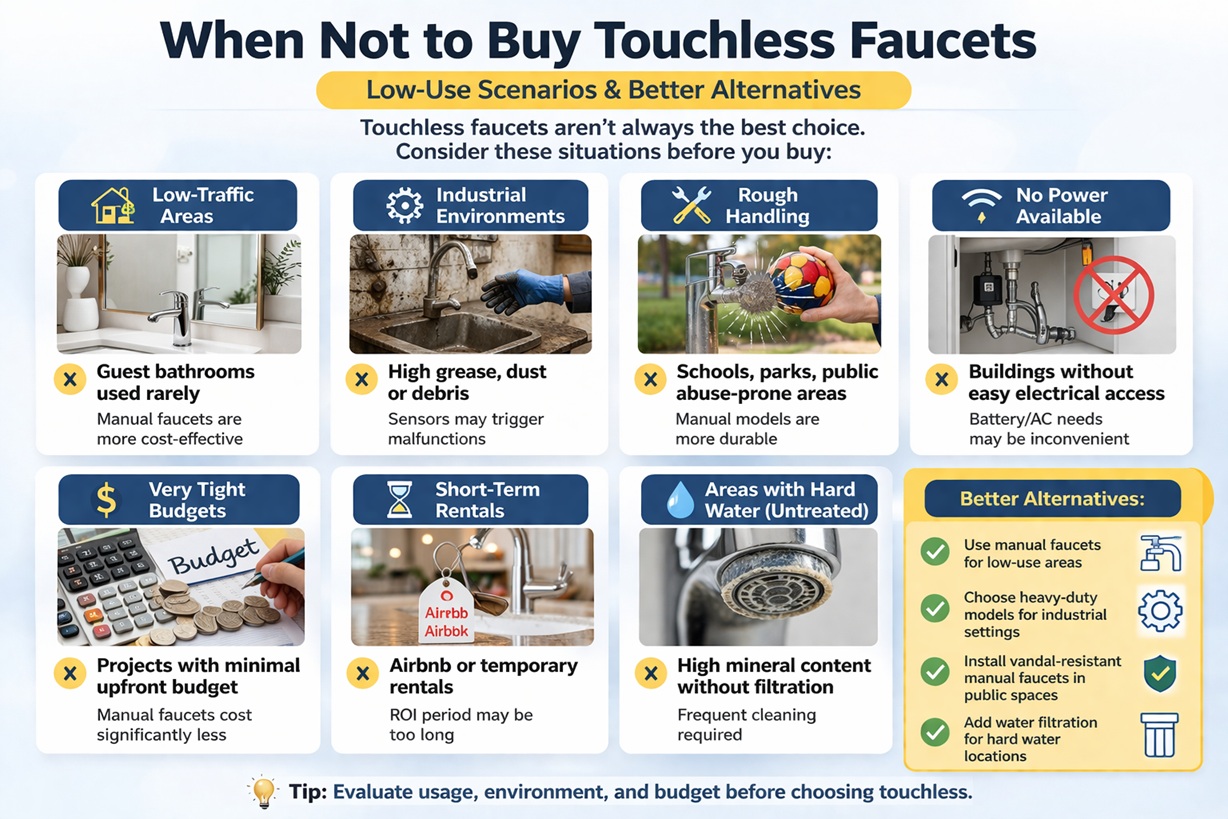
⚠️ Figure 6: Scenarios where manual faucets may be a better choice
💡 Pro Tip: Expert Advice for Maximum ROI
After analyzing thousands of installations across commercial and residential properties, one recommendation consistently delivers the best long-term value.
Following this expert advice can save you hundreds of dollars in maintenance costs and prevent inconvenient downtime.
Take note of this pro tip before finalizing your touchless faucet purchase decision.
📊 Touchless vs Manual Faucets: 5-Year Cost Comparison
When comparing touchless vs manual faucet costs, the long-term picture tells the real story — not just the initial purchase price.
This 5-year total cost of ownership analysis includes installation, water usage, maintenance, and battery replacements to give you a complete financial view.
Review the numbers below to see how touchless technology becomes cost-competitive over time, especially for commercial applications.
Conclusion: Touchless faucets are cost-competitive over 5 years for most homes and offer significant savings for commercial applications.

📊 Figure 7: Total cost of ownership comparison (5 years)
📚 Continue Your Learning Journey
This ROI guide is just one part of understanding touchless faucet technology. To make a truly informed decision, we recommend building a complete knowledge base.
Our comprehensive beginner’s guide covers the fundamentals — from sensor technology and installation to maintenance and troubleshooting.
Start from the beginning to ensure you have all the context needed before making your purchase decision.
Start with our beginner’s guide: What Is a Touchless Faucet and How Does It Work? (2026 Guide)
❓ Frequently Asked Questions (FAQ)
Find quick answers to the most common questions about touchless faucet technology, costs, installation, and maintenance.
Click on any question below to reveal the detailed answer — designed to help you make a confident purchasing decision.
Each answer is based on real-world data and industry expertise from commercial and residential installations.
🎯 Final Verdict: Are Touchless Faucets Worth It in 2026?
After analyzing ROI data, water savings, maintenance costs, and real-world performance — here’s our final, unbiased recommendation.
The decision ultimately depends on your specific usage patterns, budget, and priorities. Use this verdict as your guide to make a confident choice.
Below we’ve summarized when touchless faucets deliver maximum value and when a traditional manual faucet might still be the better option.
Final verdict: Touchless faucets are absolutely worth it for most homes and commercial spaces in 2026. They offer a strong return on investment through water savings, improved hygiene, and reduced maintenance.
If you’re upgrading a bathroom or managing a high-traffic facility, investing in a quality touchless faucet is a smart long-term decision.
⚠️ NOT RECOMMENDED for: Extremely tight budgets, rarely-used guest bathrooms, or properties with unreliable power.
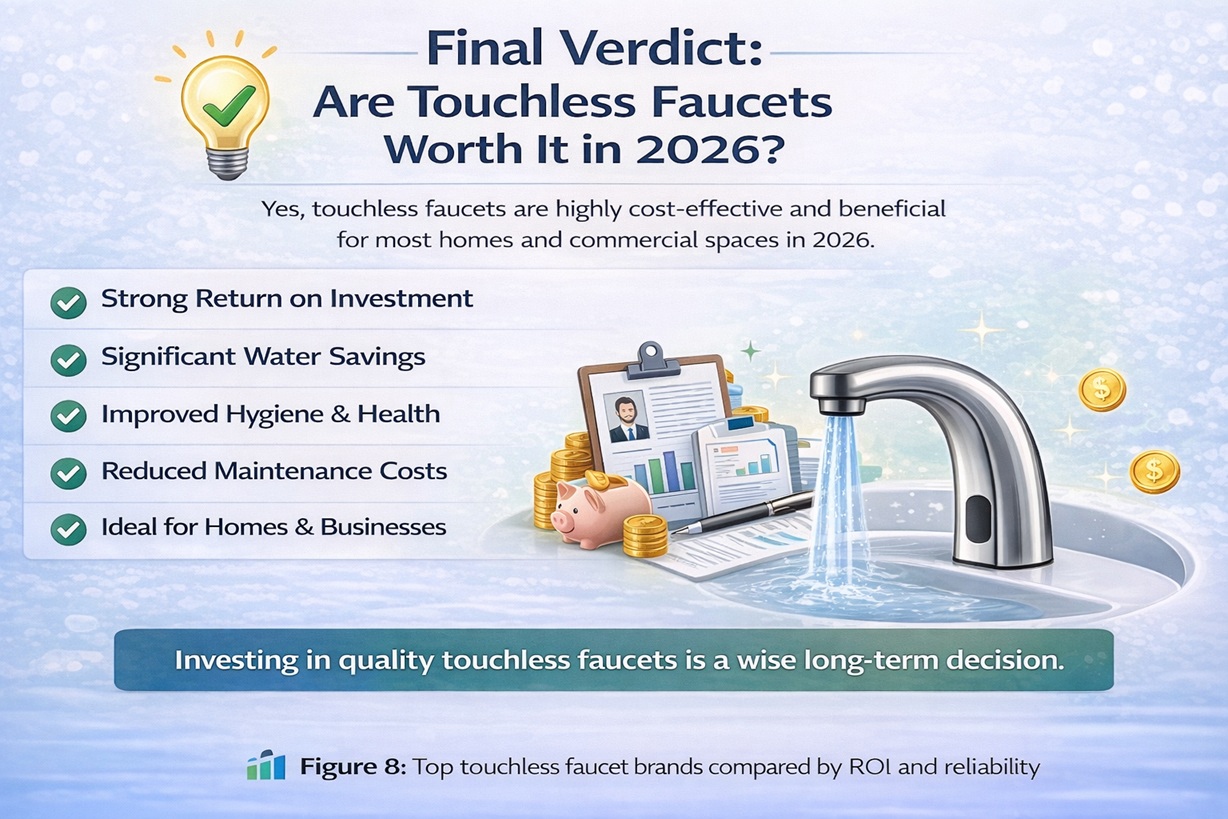
🎯 Figure 9: Final decision matrix for touchless faucet investment
📊 Ready to Calculate Your ROI?
Now that you understand the numbers, it’s time to take action. Our team can help you calculate precise ROI based on your specific water rates and usage patterns.
Whether you need detailed spec sheets, BIM files for your project, or personalized advice from our AEC specialists — we’re here to support you.
Choose the option below that best fits your needs and let’s move forward with your touchless upgrade.
📊 Ready to Calculate Your ROI?
Get personalized ROI estimates, download spec sheets, or speak with our AEC team about your project requirements.
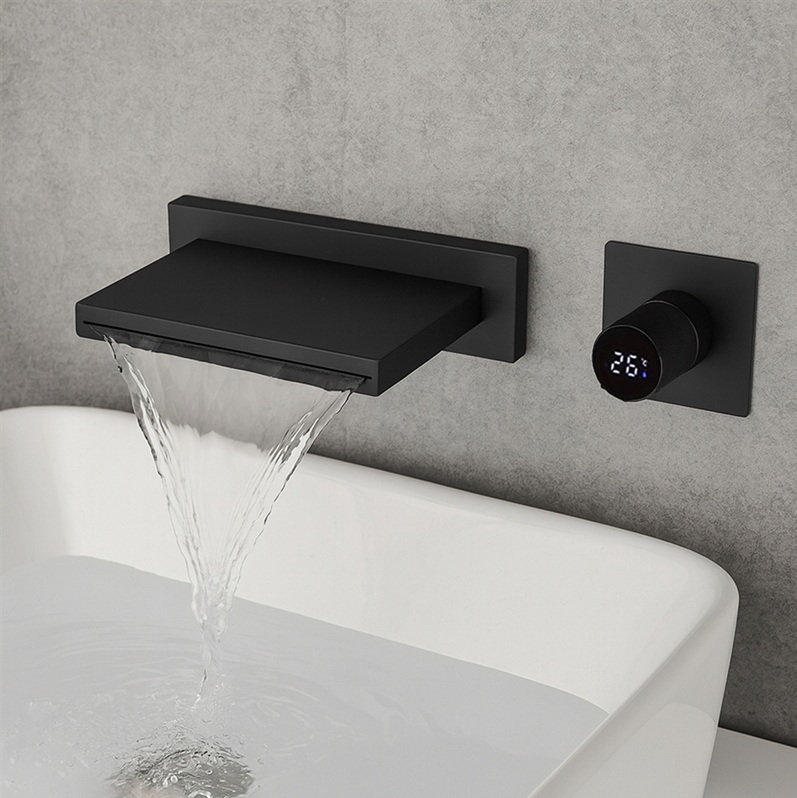
Fontana Touchless Collection
Explore premium architectural touchless faucet models designed for commercial restrooms, luxury hotels, and modern AEC projects.



Contact our AEC support for BIM files, CAD drawings, and bulk pricing
✨ Each Fontana faucet is engineered for commercial-grade durability, water efficiency, and touchless hygiene.
Need help selecting the right model for your project? Contact our AEC support team for BIM files, CAD drawings, and bulk pricing.
Discover the complete Fontana collection — from touchless faucets to smart showers and sensor-activated fixtures
With expertise in commercial restroom systems, I specialize in touchless faucets, MultiFeed soap dispensers, and high-performance bathroom fixtures for large-scale projects. My focus is on durability, hands-free hygiene, and lifecycle efficiency in high-traffic environments such as airports, healthcare facilities, and corporate buildings.
Working closely with architects, engineers, and facility managers, I provide technical insight into sensor-driven solutions, water efficiency, and smart fixture integration—helping deliver reliable, sustainable, and user-focused commercial designs.

With expertise in commercial restroom systems, I specialize in touchless faucets, MultiFeed soap dispensers, and high-performance bathroom fixtures for large-scale projects. My focus is on durability, hands-free hygiene, and lifecycle efficiency in high-traffic environments such as airports, healthcare facilities, and corporate buildings.
Working closely with architects, engineers, and facility managers, I provide technical insight into sensor-driven solutions, water efficiency, and smart fixture integration—helping deliver reliable, sustainable, and user-focused commercial designs.