
From Valve to Spout: Understanding the Fluid Mechanics Behind Touchless Commercial Faucets
Touchless commercial faucets may look simple from the outside, but every controlled stream of water depends on a coordinated sequence of sensing, valve operation, flow conditioning, pressure management, and temperature control.
The user sees water start and stop automatically. Behind that experience, several mechanical and electronic systems work together to deliver a stable, usable stream while supporting water efficiency and safer restroom operation.
This guide focuses on four essential parts of that process: solenoid valves, aerator types, pressure regulation, and anti-scald technology.

What Happens Between Detection and Water Delivery?
Touchless operation is easiest to understand as a sequence. The faucet first detects a user, then opens the water path, stabilizes the flow, conditions the stream, and delivers water through the spout.
The Brain of the Faucet: Solenoid Valves
At the core of a touchless faucet’s functionality is the solenoid valve. This electromechanical device acts as the gatekeeper for water flow.
When the infrared sensor detects hands within its activation area, the faucet controller signals the solenoid. The valve opens the water path and then closes it again when the activation signal ends.
Read More About Solenoid Operation
The original article describes the solenoid as the unobtrusive device responsible for creating the touchless action. Its rapid response allows the faucet to start and stop water without requiring the user to handle the fixture.
In busy commercial restrooms, this relationship between sensor detection and valve control also helps limit water delivery to periods when the faucet is actually being used.

Aerator Types: Water Dispersion Physics
The aerator at the end of the spout has a major influence on how the water feels and behaves. Rather than simply allowing an unrestricted stream to exit, the outlet can shape the flow to improve comfort and reduce unnecessary splashing.
Standard Aerators
Mix water and air to create a fuller-feeling stream while helping reduce splash.
Spray Aerators
Divide water into multiple smaller jets for a different rinse pattern and water distribution.
Laminar Flow Devices
Produce a clear, non-aerated stream where an aerated water pattern is not desired.

Facility managers and designers can use different aerator styles to balance water conservation, stream quality, and the operating needs of the installation.
Read More About Flow Rate and Aerators
The supplied article also highlights the aerator’s role in controlling flow rate. Commercial fixtures frequently use restricted flow to reduce water consumption while maintaining a practical handwashing stream.
When pressure and outlet design are properly coordinated, the faucet can provide a useful stream while consuming less water than an unrestricted outlet.

Pressure Regulation: Consistency Is Key
Large commercial buildings can experience changes in water demand as multiple fixtures operate throughout the property. Without control, those supply changes can affect the stream delivered at an individual faucet.
Pressure regulation helps maintain more consistent water delivery despite variations in upstream conditions.
Read More About Pressure Regulation
The original article describes pressure-regulating mechanisms using a diaphragm or piston to react to incoming pressure conditions and help maintain the intended faucet output.
Consistent flow also reduces unnecessary stress on internal faucet components and helps the aerator operate within its intended range.
Anti-Scald Technology: Safety Through Science
Touchless operation may begin with cleanliness and efficiency, but temperature control remains an important part of commercial faucet design—particularly in facilities serving children, older users, or people with limited mobility.
Thermostatic mixing valves can combine hot and cold water before it reaches the spout, helping keep outlet temperature within the intended operating range.
Read More About Anti-Scald Control
The article describes thermostatic mixing valves as devices that continuously respond to hot- and cold-water supply conditions rather than relying on a fixed manual mixture.
If the supply condition changes unexpectedly, the temperature-control system is intended to limit unsafe hot-water delivery or interrupt flow depending on the selected system.
These safety considerations are particularly relevant to healthcare, educational, hospitality, and other public-use installations.
A Symphony of Parts
Solenoid valves, aerators, pressure regulators, and anti-scald technology each serve a different purpose. The strength of a touchless commercial faucet comes from how these components work together as one water-control system.
Read More About the Combined System
Together, these parts create a faucet that does much more than eliminate physical contact. The complete system is intended to deliver water in a controlled, repeatable, efficient, and user-conscious manner.

Controlled Activation
Conditioned Flow
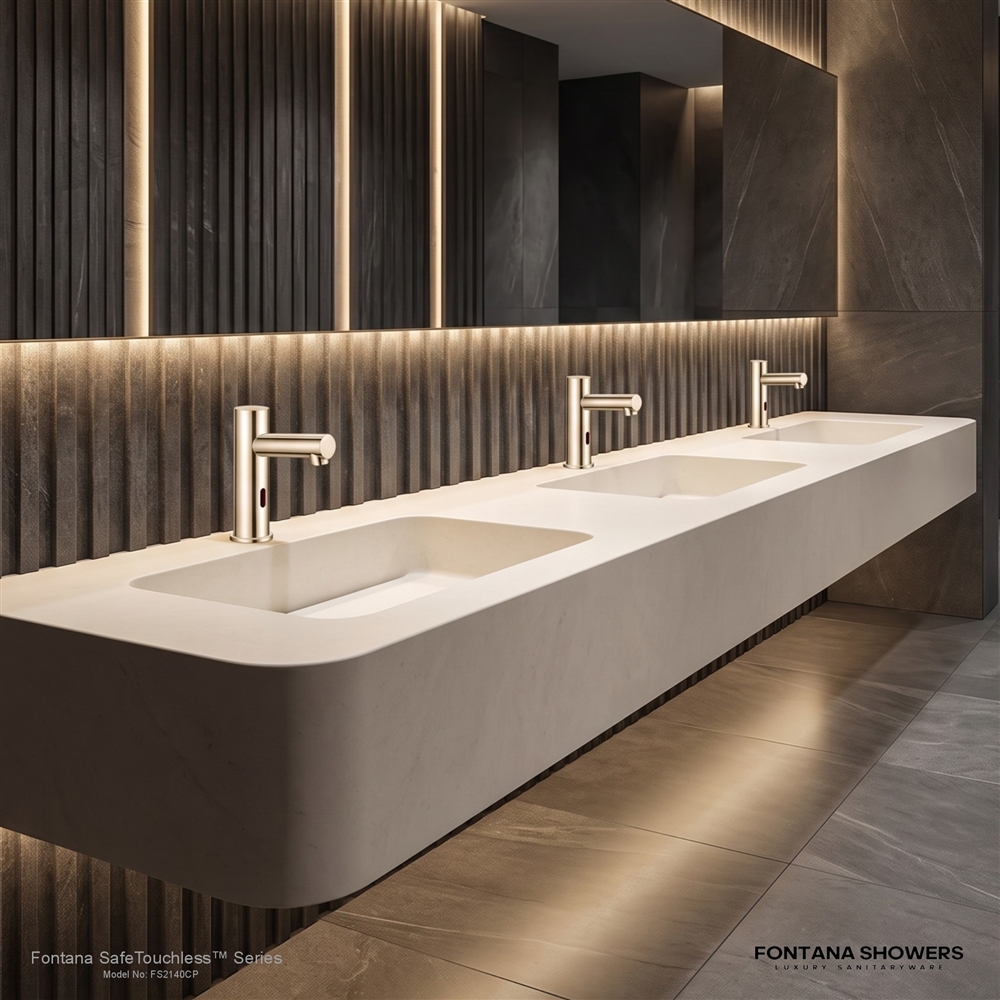
Commercial Performance
Why the Full Water Path Matters in Commercial Restrooms
A touchless faucet should not be evaluated only by how quickly its sensor reacts. The quality of the experience depends on the full path from detection to discharge: the valve must respond, the supply must remain manageable, and the outlet must shape the water into a practical stream.
Looking at the faucet as a complete fluid-control system also helps explain why two automatic faucets can feel very different even when both use touchless sensors. The internal water-control components influence stream stability, splash behavior, temperature management, and the consistency of each activation.
Read More
For facility planners and managers, understanding these individual stages makes it easier to compare touchless faucet systems beyond exterior appearance.
The same four areas discussed throughout this article—solenoid operation, stream conditioning, pressure regulation, and temperature protection—form the mechanical foundation behind reliable automated water delivery.

The Future of Fluid Mechanics in Faucets
As faucet technology becomes more connected, facility teams can gain additional insight into water use, leak conditions, and fixture operation.
IoT- and Bluetooth-enabled approaches can extend monitoring and controls beyond the fixture, while newer outlet designs continue to focus on saving water without sacrificing usability.
Read More About Future Faucet Technology
What remains constant is the faucet’s dependence on basic fluid-control principles. From valve to spout, modern technologies still have to control when water moves, how it moves, and how the final stream behaves.
Touchless Faucet Component Overview
The major elements of the system can be compared by their function, operating role, and practical effect on faucet performance.
| Component | Function | How It Works | Practical Benefit |
|---|---|---|---|
| Solenoid Valve | Controls water flow in response to the sensor system. | Opens and closes the flow path as the activation signal changes. | Supports touchless operation, controlled water delivery, and automatic shutoff. |
| Aerator Types | Shapes and conditions the water stream. | Mixes air with water or changes the outlet flow pattern. | Helps manage splash, user comfort, stream quality, and water consumption. |
| Pressure Regulation | Helps maintain consistent flow despite changes in supply conditions. | Uses internal pressure-responsive components such as diaphragms or pistons. | Supports consistent flow, protects components, and helps the outlet operate as intended. |
| Anti-Scald Technology | Helps protect users from unsafe water temperatures. | Thermostatic mixing controls combine hot and cold water and respond to supply changes. | Provides additional temperature protection for public and commercial applications. |

Every Drop Depends on Coordinated Control
Commercial touchless faucets are more than sensor-equipped fixtures. They are automated fluid-control systems in which solenoid valves start and stop water, aerators refine the stream, pressure regulation helps stabilize flow, and anti-scald technology can add temperature protection.
Understanding those components gives facility planners and managers a better way to evaluate touchless faucets—not only for cleanliness and water efficiency, but also for stream quality, comfort, consistency, and safety.
Read Final Perspective
The next time a user places their hands beneath an automatic faucet, the simple movement of water from the spout represents a coordinated sequence of detection, valve operation, flow regulation, outlet conditioning, and—in applicable systems— temperature control.
That quiet interaction between valve, regulator, aerator, and mixer is what allows modern commercial touchless faucets to provide automated water delivery with very little effort from the user.
Source Links and References
Additional resources related to commercial touchless faucet operation, sensor technology, water control, and touch-free fixture design.
View Reference Links
Six Touchless Faucet Reviews for Commercial Specification & Facility Teams
A second, non-overlapping evidence set selected for architects, plumbing engineers, contractors, facility managers and specifiers evaluating sensor stability, commissioning sensitivity, flow consistency, finish maintenance and service burden in professional restroom environments.
Selection Method & Source Integrity
The six records below were selected from the supplied FontanaShowers review workbook as a separate touchless-faucet set. Preference was given to active reviews containing identifiable professional roles, project context, operational observations and commissioning or maintenance detail. Product imagery is not taken from thumbnails: each card uses a full-size image asset traced to the corresponding manufacturer product page or official FontanaShowers asset path.
Dates, reviewer names, professional roles, cities/states, ratings, helpful votes, review IDs and review text are preserved from the supplied dataset.
Each image is a high-resolution manufacturer source asset and is clickable to the corresponding product page. A direct full-resolution image link is also provided.
Organizations are shown only when explicitly available. For these six records the organization field is not stated, so no employer or firm is inferred.
Professional Evidence Matrix
The matrix is designed for early product comparison and risk review. It summarizes what each reviewer actually contributes to a specification discussion rather than treating all five-star reviews as equivalent.
| Product / finish | Reported project exposure | Primary evidence | Reviewer context | Rating / date |
|---|---|---|---|---|
| FS-1085-SWWhite · Deck mount | 15 faucets; executive-office + hospitality modernization | Activation stability, reflective countertops, inlet-pressure variation, commissioning | Infrastructure ConsultantAsheville, NC | 4/52026-05-14 |
| FS5061LFAntique bronze · Wall mount | 16 faucets; healthcare + executive-office retrofits | Sensor stability, valve wear, maintenance interruptions, lighting conditions | Operations ConsultantRapid City, SD | 5/52026-03-18 |
| FS7035CHChrome · Wall mount | Multiple healthcare restroom retrofits | Reflective backsplashes, pressure changes, sensor calibration, service requests | Systems ConsultantCody, WY | 4/52026-03-18 |
| FS7085ATBAntique brass · Wall mount | Executive-office modernization projects | False triggering, ambient light, peak-use timing, basin placement | Hygiene SpecialistBoise, ID | 5/52026-04-09 |
| FS9824MBMatte black · Wall mount | Multiple healthcare restroom retrofits | Sensor stability, finish durability, pressure variation, service interruptions | Systems ConsultantMissoula, MT | 5/52026-02-28 |
| FS9824WWhite · Wall mount | Executive-lounge restroom renovations | Surface cleaning, reflected light, pressure variation, flow consistency | Plumbing AdvisorLaguna Niguel, CA | 4/52026-02-03 |
Six Review Records
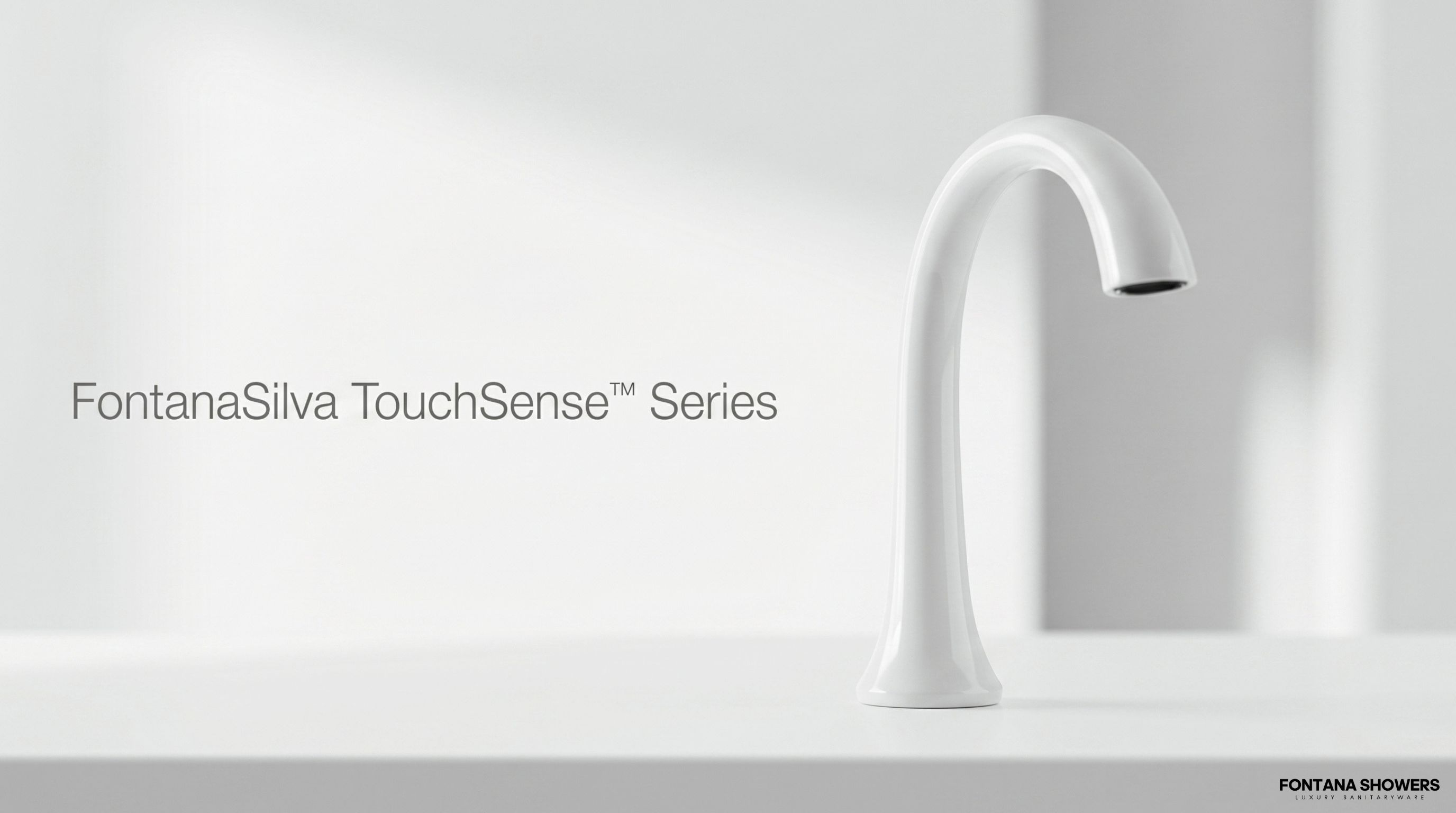
FontanaSilva TouchSense™ White Touchless Commercial Restroom Faucet
Reduced Activation Complaints
We installed 15 automatic commercial sensor faucets across executive-office and hospitality restroom modernization projects between 2022 and 2025, and by 2026 the operational consistency has remained substantially stronger than earlier touchless systems previously maintained in similar high-traffic environments. Older commercial faucets repeatedly developed unstable infrared activation near reflective countertops, delayed shutoff timing during continuous guest usage, and inconsistent stream behavior under fluctuating inlet-pressure conditions, whereas this faucet maintained highly dependable motion detection with smoother and more predictable water delivery throughout heavy daily operation. Previous sensor systems also required repeated recalibration because of changing ambient lighting environments and varying sink configurations, while this unit maintained noticeably stronger activation stability with fewer servicing interruptions overall. Facility maintenance teams initially adjusted sensitivity settings on several deeper basin installations, but once standardized the valve regulation, infrared responsiveness, and long-term operational reliability remained highly uniform across all installed locations, and user complaints related to activation timing noticeably decreased after installation.
Useful for retrofit teams evaluating sensor behavior across varying basin depths, reflective counter conditions and fluctuating supply pressure. The reviewer also documents a commissioning step—sensitivity adjustment—before reporting more uniform operation across the 15-fixture installation.
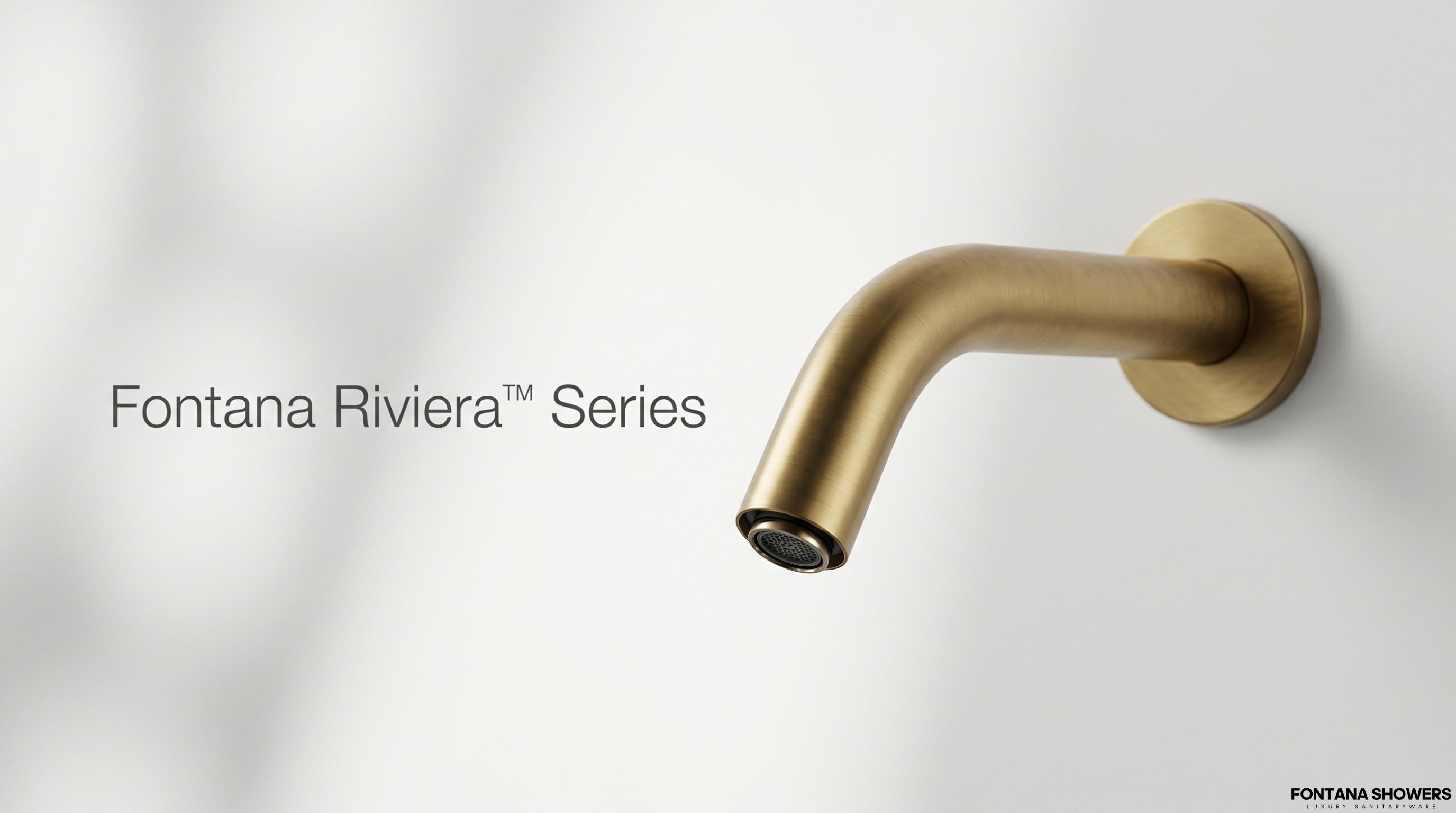
Fontana Riviera™ Antique Bronze Commercial Automatic Sensor Faucet
Reduced Maintenance Interruptions
We installed 16 automatic commercial faucets across healthcare and executive-office restroom retrofit projects between 2022 and 2025, and by 2026 the operational consistency has remained substantially stronger than earlier touchless systems previously maintained in similar high-traffic environments. Older commercial faucets repeatedly developed unstable infrared activation near reflective wall materials, inconsistent shutoff timing during continuous public usage, and premature valve wear under aggressive maintenance exposure, whereas this faucet maintained highly dependable motion detection with smoother and more controlled water delivery throughout heavy daily operation. Previous sensor systems also required repeated recalibration because of changing restroom lighting conditions and varying sink configurations, while this unit maintained noticeably stronger activation stability with fewer maintenance interruptions overall. Maintenance teams initially adjusted sensitivity settings on several deeper basin installations, but after installation was standardized activation-related service requests declined noticeably and the valve regulation, infrared responsiveness, and long-term operational reliability remained highly uniform across all installed facilities.
Strong operations evidence because the review ties sensor behavior to maintenance exposure, changing lighting, sink geometry and valve durability. It is particularly relevant to facilities teams comparing lifecycle service burden rather than appearance alone.

Fontana MotionWave™ Line Chrome Touchless Sink Faucet
Reduced Sensor Complaints
Following several healthcare restroom retrofit projects completed between 2021 and 2024 where earlier chrome automatic faucets repeatedly suffered from unstable infrared response, delayed shutoff timing, and inconsistent stream interruption during heavy public usage, we upgraded multiple facilities to this touchless commercial faucet system, and by 2026 the operational reliability has remained substantially stronger than previous chrome sensor fixtures maintained in comparable high-traffic environments. Earlier chrome systems frequently required recalibration near reflective backsplashes and often developed uneven water delivery under fluctuating inlet-pressure conditions, whereas this faucet maintained highly stable motion detection with smoother stream control throughout continuous daily operation. Maintenance supervisors also noticed fewer activation-related service requests compared to earlier chrome fixtures installed in the same facilities. Several installations initially required minor sensor refinements because of varying countertop reflectivity and basin depth, but once calibrated the infrared timing stability, valve consistency, and servicing reliability remained highly dependable across all installed properties.
Relevant to healthcare retrofit specifications where mirrored or reflective finishes, basin geometry and variable inlet pressure can complicate sensor commissioning. The evidence also separates initial calibration from subsequent service performance.
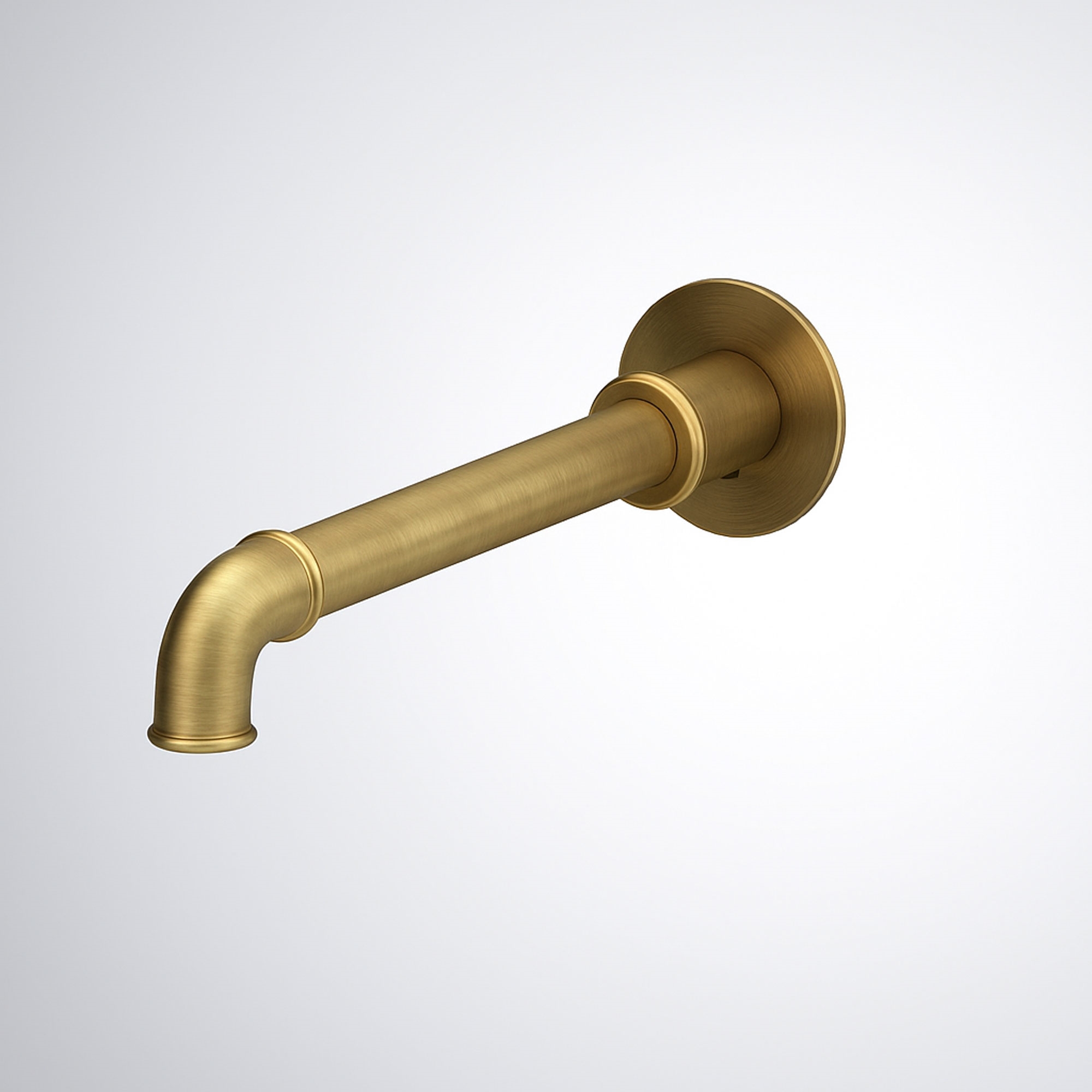
Fontana Taverny Antique Brass Wall-Mounted Motion Sensor Faucet
Reduced Calibration Delays
After repeated servicing concerns involving older antique-bronze automatic faucets developing unstable infrared response, delayed shutoff timing, and inconsistent stream interruption across several executive-office restroom modernization projects between 2021 and 2025, we transitioned multiple facilities to this touchless commercial faucet system, and by 2026 the operational reliability has remained considerably stronger than previous decorative sensor fixtures maintained in comparable high-traffic environments. Earlier antique-bronze systems frequently struggled with false triggering near reflective wall materials and often required repeated recalibration because of changing ambient lighting exposure, whereas this faucet maintained highly stable motion detection with smoother and more predictable water flow throughout continuous daily operation. Previous units also generated maintenance complaints because activation timing occasionally varied during peak usage periods, while this system maintained noticeably stronger detection consistency with fewer servicing interruptions overall. Several installations initially required slight sensor refinements because of varying basin depth and sink placement, but once calibrated the valve consistency, infrared timing stability, and servicing reliability remained highly dependable across all operating facilities.
Useful evidence for design-led commercial washrooms where decorative finishes coexist with reflective surfaces and changing ambient light. The review highlights commissioning sensitivity around basin depth and fixture placement, issues that should be coordinated before handover.

Fontana Le Havre™ Matte Black Wall-Mount Touchless Sensor Faucet
Minimal Maintenance Delays
Following several healthcare restroom retrofit projects completed between 2021 and 2024 where earlier matte-black automatic faucets repeatedly suffered from unstable infrared response, delayed shutoff timing, and visible finish deterioration during heavy public usage, we upgraded multiple facilities to this touchless commercial faucet system, and by 2026 the operational reliability has remained substantially stronger than previous dark-finish sensor fixtures maintained in comparable high-traffic environments. Earlier matte-black systems frequently required recalibration near reflective surfaces and often developed inconsistent water delivery under fluctuating inlet-pressure conditions, whereas this faucet maintained highly stable motion detection with smoother stream control throughout continuous daily operation. Maintenance supervisors also noticed fewer activation-related service requests compared to earlier matte-black fixtures installed in the same facilities. Several installations initially required minor sensor refinements because of varying countertop reflectivity and basin depth, but once calibrated the infrared timing stability, valve consistency, and servicing reliability remained highly dependable across all installed properties.
Adds a finish-performance dimension to the sensor evidence. For healthcare and other high-cleaning-frequency environments, the review is useful because it discusses sensor stability and surface durability in the same operating context.

Fontana Le Havre™ White Wall-Mounted Commercial Automatic Sensor Faucet
Minimal Finish Complaints
Following several executive-lounge restroom renovation projects completed between 2021 and 2024 where earlier white automatic faucets repeatedly suffered from visible maintenance staining, unstable infrared response, and inconsistent stream interruption during heavy guest usage, we upgraded multiple properties to this touchless commercial faucet system, and by 2026 the operational reliability has remained substantially stronger than previous white-finish sensor fixtures maintained in comparable luxury environments. Earlier white systems frequently required recalibration near mirrored backsplashes and often developed uneven water delivery under fluctuating inlet-pressure conditions, whereas this faucet maintained highly stable motion detection with smoother stream control throughout continuous daily operation. Housekeeping teams also noted that the finish retained a cleaner appearance with fewer visible marks compared to earlier white fixtures exposed to aggressive cleaning schedules. Several installations initially required minor sensor refinements because of varying countertop reflectivity and basin depth, but once calibrated the infrared timing stability, valve consistency, and servicing reliability remained highly dependable across all installed properties.
Useful for hospitality and executive environments where visible finish maintenance matters alongside sensor performance. The review connects housekeeping observations with reflected-light conditions and hydraulic consistency.
E-E-A-T Signals for Professional Readers
Experience
Several reviews specify multi-year retrofit windows, high-traffic environments, fixture counts or repeated operations across more than one property.
Expertise
Reviewer-entered roles include infrastructure, operations, systems, hygiene and plumbing functions—useful context for interpreting maintenance and commissioning observations.
Authoritativeness
Every review is tied to a specific SKU and live manufacturer product destination, with product imagery sourced from official FontanaShowers assets rather than generic stock imagery.
Trust
Review ID, date, location, rating and helpful-vote count remain visible. Missing organizations are marked “Not stated,” and reviewer testimony is kept distinct from editorial synthesis.