
Powering Touchless Fixtures in High-Traffic Areas: Battery vs. Hardwired vs. Hybrid
Touchless restroom fixtures have become common in commercial buildings, including airports, hospitals, colleges, shopping malls, and other busy facilities where cleanliness, water control, and dependable operation matter.
One of the most important decisions during fixture selection is the power source. A touchless faucet or flush valve may be battery-powered, connected directly to building power, or designed around a hybrid approach that combines primary power with backup capability.
In high-traffic environments, this choice can affect long-term maintenance, installation cost, reliability, and sustainability planning.
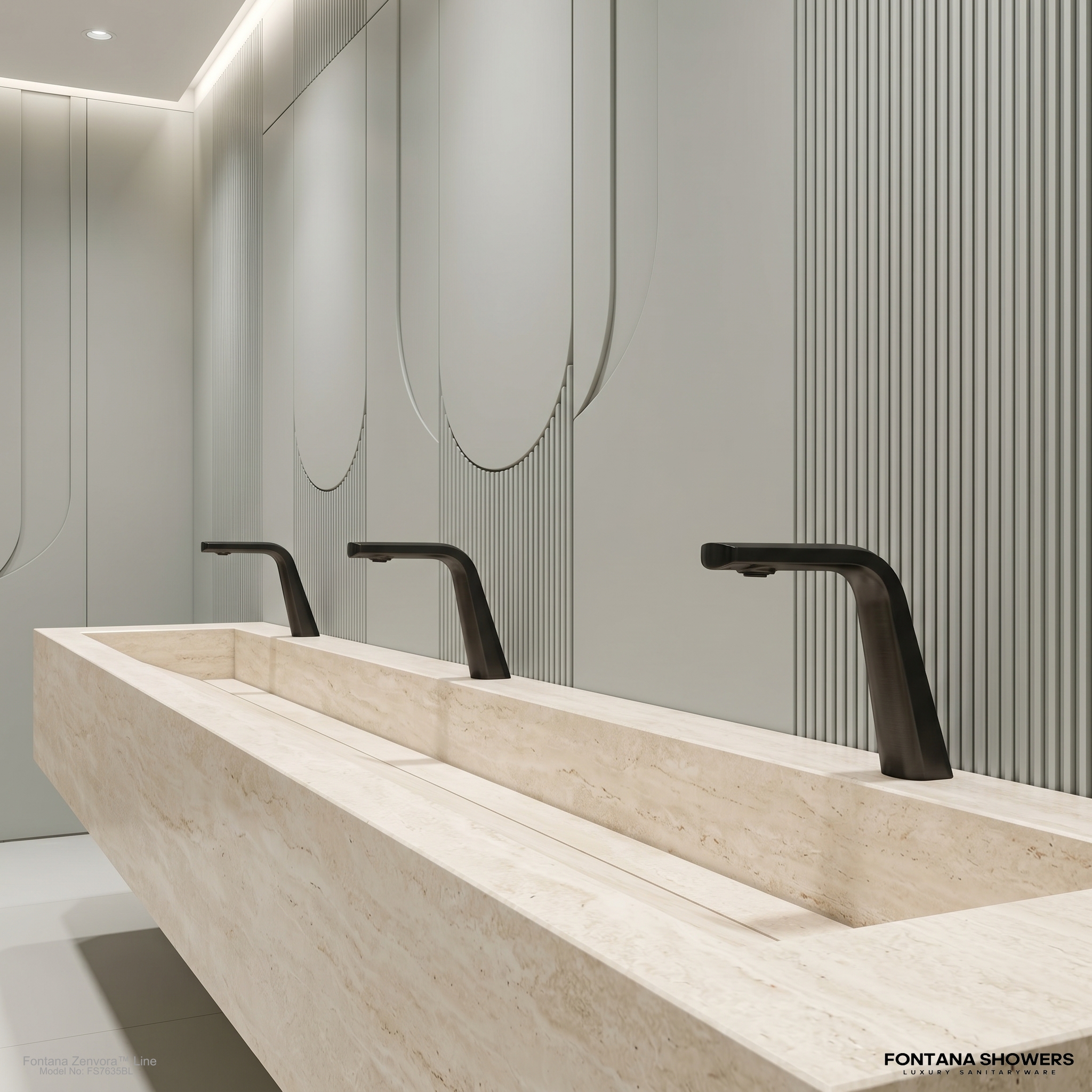


Three Ways to Power a Touchless Commercial Fixture
The best power arrangement depends on the building, the installation conditions, the expected level of use, and how the facility team plans to maintain the restroom.
Battery-Powered
A practical choice for quick upgrades and locations where electrical access would be difficult or disruptive.
Hardwired
Connected to the building electrical system for a consistent source of power without routine battery replacement.
Hybrid
Combines primary building power with battery backup for applications where service continuity is especially important.
Battery-Powered Fixtures
Battery-powered touchless fixtures are a common solution for quick upgrades. They operate from replaceable batteries such as AA cells, 9V batteries, or dedicated battery packs.
Their main advantage is installation flexibility. A restroom can often be upgraded without opening walls or extending electrical service to every fixture location.
Read More: Battery Pros & Cons
Pros
- Ideal for retrofits: No need to open walls or run new electrical lines. Fixtures can be installed more quickly and with less disruption.
- Flexibility: Useful where access to a convenient electrical supply is limited.
- Lower upfront costs: Less electrical work can mean fewer installation materials and less labor.
Cons
- Ongoing maintenance: Batteries eventually require replacement, creating recurring labor and material requirements.
- Waste factor: Repeated battery disposal over the life of a large facility adds another maintenance and sustainability consideration.
- Performance concerns: As batteries weaken, facility teams may need to address reduced sensor response or unreliable fixture operation.
In airports, stadiums, or other heavily used properties, facility teams should therefore include battery inspection and replacement in the maintenance plan.


Hardwired Fixtures
Hardwired touchless fixtures receive power directly from the building electrical system. This removes the need to rely on replaceable batteries as the primary operating source.
For new construction, the required electrical planning can be incorporated while walls, services, and restroom infrastructure are already being coordinated.
Read More: Hardwired Pros & Cons
Pros
- Long-term reliability: A consistent power supply helps sensors remain responsive without depending on battery condition.
- Lower routine maintenance: Eliminates recurring primary-battery replacement.
- Sustainability advantage: Reducing disposable battery use can support broader green-building goals.
Cons
- Higher upfront costs: Electrical work, dedicated lines, and installation coordination can increase initial project cost.
- Less flexible for retrofits: Adding wiring behind existing walls and finished tile can be disruptive.
- Power-outage exposure: Fixtures relying only on building power can be affected by an outage unless another backup method is provided.
Hybrid Fixtures
Hybrid systems combine the dependability of a building-powered connection with battery backup. Under normal conditions the fixture uses its primary power source, while the backup is available if that source is interrupted.
This approach is especially useful where restroom downtime would create an operational problem.
Read More: Hybrid Pros & Cons
Pros
- Best of both approaches: Primary power is supported by built-in backup capability.
- Reduced battery use: Backup batteries are not required to power every normal operating cycle.
- High-traffic durability: Particularly appropriate where service interruption is undesirable.
Cons
- Higher upfront cost: Hybrid systems generally require a more involved installation than battery-only fixtures.
- Two maintenance considerations: The electrical connection must be maintained and backup batteries still require periodic checking.


Retrofit Flexibility
New Construction Planning

High-Traffic Reliability
Comparing Power Options by Application
The same touchless fixture power strategy will not be ideal for every project. Existing conditions, construction stage, traffic level, and sustainability objectives all influence the decision.
Retrofits
Where high traffic makes maintenance especially important, a hybrid approach can also be considered if selective wiring is practical.
New Construction
Hardwired and hybrid solutions become easier to justify when electrical design is already part of the construction process.
Hardwiring reduces battery maintenance, while hybrid power adds another layer of operating continuity.
LEED & Sustainable Projects
Projects focused on waste reduction and lifecycle impact may favor hardwired or hybrid strategies because they reduce dependence on disposable batteries.

Choose the Power Strategy Before the Fixture Becomes a Maintenance Issue
For a high-traffic restroom, power selection should be treated as part of the fixture specification rather than as a final installation detail. A system that looks inexpensive at installation can create recurring maintenance work if its power arrangement does not match the building’s operating conditions.
Facility teams should therefore compare the initial installation requirement with the expected maintenance routine. Battery systems reduce electrical work, hardwired systems reduce recurring battery replacement, and hybrid systems add backup capability where service continuity has greater value.
The right choice is the one that best fits the building age, construction method, intensity of use, and the facility’s ability to inspect and service the fixtures over their operating life.
Read More: Practical Selection Questions
- Is the project an existing-building retrofit or new construction?
- Can electrical service be brought to the fixture without major disruption?
- How frequently will the restroom be used?
- Can the facility team support a recurring battery replacement program?
- Would a power interruption create an unacceptable restroom-service problem?
- Is reducing disposable battery use an important project objective?
Matching Power Type to the Building
Read Full Takeaway
When selecting touchless restroom fixtures, the power source should not be an afterthought. It should match the building’s age, intensity of use, installation conditions, and long-term maintenance strategy.
Comparing battery, hardwired, and hybrid systems against those conditions helps facility managers and designers select restroom fixtures that remain practical, efficient, and dependable over time.
Touchless Fixture Power Options
The three power strategies can be compared quickly by installation benefits, limitations, and the type of project where each is most practical.
| Type | Pros | Cons | Best Use |
|---|---|---|---|
| Battery | Easy installation, lower upfront cost, flexible placement. | Battery replacement, battery waste, and potential performance decline as power weakens. | Retrofits and quick upgrades. |
| Hardwired | Consistent power, lower routine maintenance, reduced disposable battery use. | Higher installation cost, more difficult retrofit work, and no independent backup during an outage. | New construction and sustainability-focused projects. |
| Hybrid | Primary power plus backup, reduced battery use, greater operating continuity. | Higher upfront cost and occasional backup-battery inspection. | High-traffic, mission-critical, and sustainability-focused projects. |
Reference Links
Additional resources related to touchless fixture power, battery operation, hardwired installations, lifecycle planning, and high-traffic restroom applications.
View Reference Links
FONTANA COMMERCIAL TOUCHLESS REVIEW EVIDENCE
Commercial Touchless Faucet Evidence for MEP, Specification & Facility Teams
The reviews emphasize MEP/specification value: infrared accuracy, false-trigger control, automatic shutoff, solenoid reliability, maintenance access, installation coordination, dual-sensor behavior, and high-traffic commercial operation.
Commercial Specification Evidence Matrix
This matrix converts the six field-review records into specification-relevant evidence categories. It is designed to help architects, MEP engineers, plumbing consultants, contractors, facility teams and procurement professionals compare what each review actually supports.
| Product / SKU | Project context | Sensor / control evidence | Installation / service evidence | Reviewer attribution | Review strength |
|---|---|---|---|---|---|
| Fontana AquaMotion Series Antique Commercial Touchless Infrared Sensor Smart Faucet AUTOMATIC-SENSOR-FAUCET-FB085A |
Large commercial office renovation; 8+ months continuous daily use | Responsive activation; limited false triggering; reduced unattended flow | Minimal servicing reported after sustained daily use | T. Harrison UrbanGrid Engineering |
5/5 December 6, 2025 8 helpful |
| Bravat Commercial Automatic Electrical Sensor Faucet FS-5958 |
Healthcare facility upgrade; hygiene and water-efficiency priorities | Reliable hands-free operation; balanced flow; splash control | Quick-connect fittings and low wiring complexity cited | D. Patel VitalCare Engineering |
5/5 January 19, 2024 8 helpful |
| Fontana Antique Edition Brushed Nickel Commercial Bathroom Touchless Faucet FS-354BN |
Multi-floor corporate restroom project; peak-use conditions | No-latency infrared activation; clean solenoid response; efficient shutoff | Standard rough-in coordination and technical documentation praised | A. Reynolds Precision MEP Consultants |
5/5 March 31, 2024 8 helpful |
| Fontana Venice Wall-Mount Dual Sensor Faucet and Soap Dispenser FS18503-DORB |
Major commercial restroom upgrade; high-traffic hygiene focus | Independent dual infrared modules; accurate activation | Clean wiring channels and stable wall-mount hardware cited | S. Ahmed Precision MEP Consultants |
5/5 December 17, 2024 8 helpful |
| Fontana Montlucon Chrome Single Hole Touchless Sink Faucet FS7545CH |
Multi-floor corporate facility; long-term commercial operation | Stable sensing under varied lighting; quiet, efficient solenoid operation | Frequent-cleaning tolerance and long-term facility suitability | S. Reynolds Metro Facility Services |
5/5 March 20, 2025 8 helpful |
| Fontana FS-763WG Wall-Mount Commercial Automatic Sensor Faucet Family FS-763WG-CW-DP |
Mixed-use commercial development; 7 months; heavier traffic periods | Accurate detection without false triggering under heavier traffic | Straightforward wall-mount and plumbing coordination | R. Kim Axis MEP Solutions |
5/5 August 19, 2025 7 helpful |
Six Field Reviews With Product Traceability

Fontana AquaMotion Series Antique Commercial Touchless Infrared Sensor Smart Faucet
Reliable Daily Operation
Specified for a large commercial office renovation, this touchless sensor faucet has maintained dependable performance for over 8 months of continuous daily use. Sensor activation remains responsive without excessive false triggering, which helped improve restroom efficiency and reduce unnecessary water consumption. The antique brass finish also added a more refined appearance compared to traditional commercial fixtures. Maintenance teams reported minimal servicing requirements, and the overall construction quality feels appropriate for demanding public restroom environments.
Strong field evidence for false-trigger control, operating consistency, and service burden in public commercial restrooms.

Bravat Commercial Automatic Electrical Sensor Faucet
Efficient Water Solution
We chose the Bravat Automatic Sensor Faucet for a healthcare facility upgrade where hygiene and water efficiency were priorities. The faucet integrates seamlessly into modern restrooms, providing reliable hands-free operation. The water flow is well-balanced, and the aerator minimizes splashing without compromising pressure. Its electrical configuration is easy to maintain, with quick-connect fittings and minimal wiring complexity. The polished chrome finish adds a clean and professional appearance suitable for medical environments. A well-engineered product meeting both aesthetic and performance standards.
Useful for MEP teams assessing flow behavior, splash control, electrical serviceability, and hygiene-driven restroom upgrades.
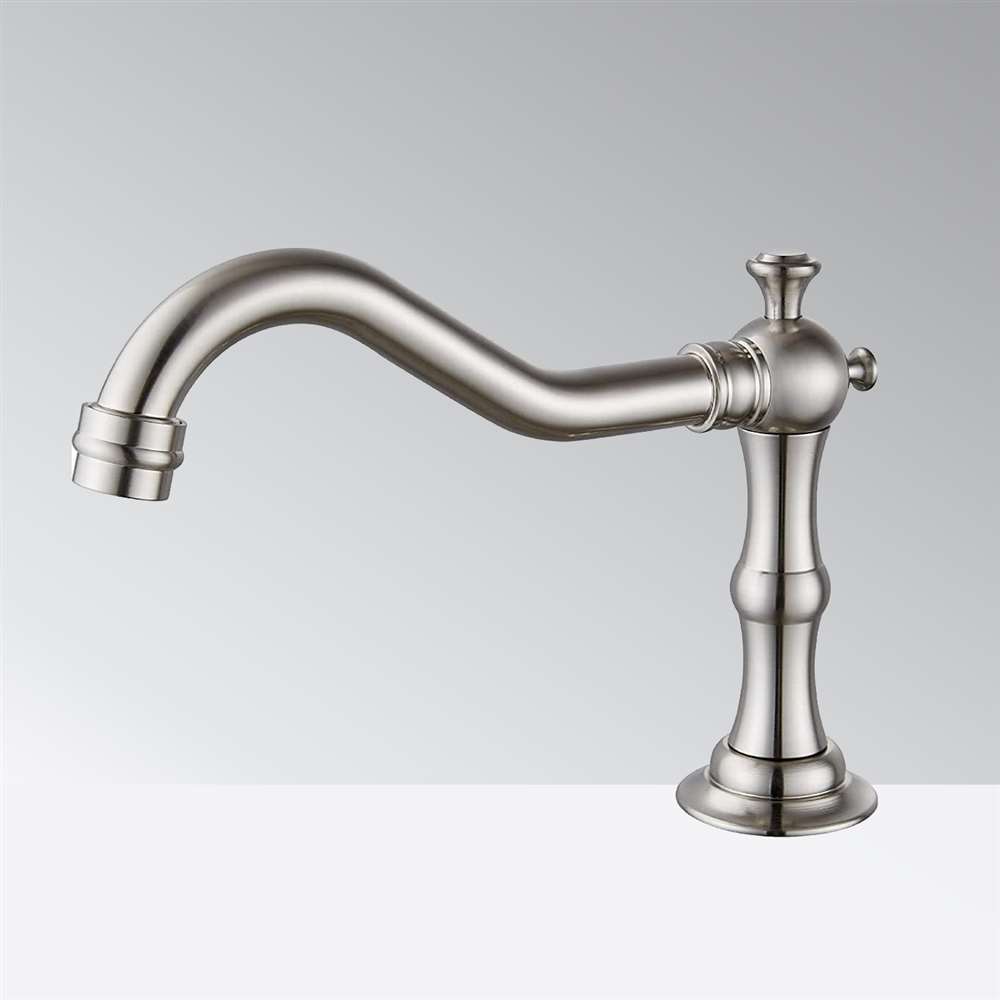
Fontana Antique Edition Brushed Nickel Commercial Bathroom Touchless Faucet
Precision Sensor Control
We specified the Fontana Brushed Nickel Commercial Automatic Sensor Faucet for a multi-floor corporate restroom project. The infrared sensor demonstrated consistent activation with no latency, even during peak usage. The solenoid valve responded cleanly, supporting controlled water delivery and efficient shutoff. The brushed nickel surface held up well under frequent sanitation protocols. Installation teams reported smooth coordination with standard rough-ins and clear technical documentation, making it a reliable choice for large commercial deployments.
High-value specification evidence for sensor latency, solenoid actuation, shutoff performance, sanitation exposure, and installation coordination.

Fontana Venice Wall-Mount Dual Sensor Faucet and Soap Dispenser
Dual Sensor Efficiency
We specified the Fontana Venice Wall-Mount Dual Sensor Faucet and Soap Dispenser for a major commercial restroom upgrade. The dual infrared modules operate independently with excellent accuracy, reducing contact points significantly. The dark oil-rubbed bronze finish maintains uniform tone even after aggressive cleaning. Installation teams noted clean wiring channels and stable mounting hardware, which simplified wall integration. A strong solution for high-traffic, hygiene-focused projects.
Strong evidence for coordinated water/soap sensing, wall integration, wiring pathways, mounting stability, and cleaning exposure.

Fontana Montlucon Chrome Single Hole Touchless Sink Faucet
Reliable Commercial Fixture
This faucet was selected for a multi-floor corporate facility due to its consistent operational reliability. The sensor activation remains stable under varied lighting conditions, and the internal solenoid valve operates quietly and efficiently. The chrome finish withstands frequent cleaning protocols without degradation. Overall, the fixture aligns well with ADA requirements and commercial performance standards for long-term facility use.
Relevant to specifiers evaluating ambient-light robustness, solenoid acoustics, cleaning durability, and accessibility-oriented commercial use.

Fontana FS-763WG Wall-Mount Commercial Automatic Sensor Faucet Family
Modern Commercial Choice
Included as part of a mixed-use commercial development project, this wall-mounted touchless faucet has delivered dependable operation over the last 7 months. Sensor detection remains accurate without false triggering issues, even during heavier traffic periods. The brushed gold finish provides a more architectural appearance compared to standard commercial fixtures, making it particularly suitable for premium restroom environments. Installation coordination was also straightforward due to the clean wall-mounted configuration and reliable plumbing integration.
Useful evidence for wall-mount coordination, false-trigger control, premium commercial finish selection, and sustained operation.
E-E-A-T Signals for Professional Readers
Experience
The evidence includes extended-use statements, peak-traffic observations, healthcare and corporate upgrades, mixed-use development, cleaning exposure, and maintenance feedback.
Expertise context
Reviewer attributions include organizations named in the source records such as Precision MEP Consultants, Axis MEP Solutions, VitalCare Engineering, Metro Facility Services, and UrbanGrid Engineering.
Traceability
Every review shows date, reviewer, city/state, rating, helpful votes, review ID, product code, organization, and a link to the product reference used for technical follow-up.
Trust controls
Personal professions are not inferred from company names. Where the source record does not state a job title, the profession field is explicitly marked “Not stated.”
Source Integrity & Specification Use
- Review source: FontanaShowers master review corpus supplied August 17, 2026. The six selected records are active and are reproduced without inventing reviewer credentials.
- Image provenance: Product imagery uses official FontanaShowers/Volusion product assets. High-resolution product endpoints are requested before official catalog fallbacks, and every image links to its product page.
- Organization attribution: An organization shown after a reviewer name is reproduced as review attribution only; it should not be read as a separate corporate endorsement.
- Editorial interpretation: “Professional evidence interpretation” summarizes the specification signal contained in the review; it is not a laboratory test, certification, or substitute for a project submittal.
- Design due diligence: Confirm current flow rate, power requirements, sensing range, accessibility, code compliance, rough-in dimensions, mixing strategy, warranty, and approved submittals before procurement or construction.