Infrared vs. Advanced Sensor Technology in Commercial Touchless Faucets
Sensor accuracy determines whether a touchless faucet feels intuitive or frustrating. Conventional infrared detection remains proven and widely used, while newer concealed, self-calibrating and adaptive sensing platforms are designed to improve performance across changing lighting, basin geometry and installation environments. For architects and MEP engineers, the important question is not simply whether a faucet is “touchless,” but how its detection system behaves after installation.
Infrared Is a Technology—Not a Single Performance Level
Conventional Infrared
An emitter sends infrared energy toward the detection zone while a receiver recognizes reflected energy from the user’s hands.
Self-Calibrating Sensors
Electronics evaluate environmental conditions and automatically establish or modify detection behavior instead of relying entirely on manual adjustment.
Integrated Detection
The sensing element can be hidden within the spout architecture, reducing visible hardware while controlling the activation zone.
Why Sensor Faucets False-Activate
False activation can occur when the detection zone interacts poorly with the lavatory environment. Reflective basin surfaces, highly polished counters, unusually shallow sinks, nearby objects, ambient lighting conditions or improper sensor range can contribute to unwanted operation.
| Condition | Potential Result | Specification Response |
|---|---|---|
| Reflective basin | Unwanted reflected IR signal | Review sensor geometry and basin compatibility. |
| Sensor range too long | Premature or continuous activation | Specify adjustable or self-calibrating detection. |
| Range too short | User waves repeatedly searching for activation | Verify detection zone during commissioning. |
| Changing environment | Performance differs after installation | Adaptive calibration can reduce manual adjustment. |
| Long activation | Unnecessary water discharge | Require a defined safety timeout. |
Commercial Sensor Faucets Worth Studying
These products illustrate different approaches to infrared and advanced sensor implementation. Images are presented at full product scale and link directly to the corresponding product page.
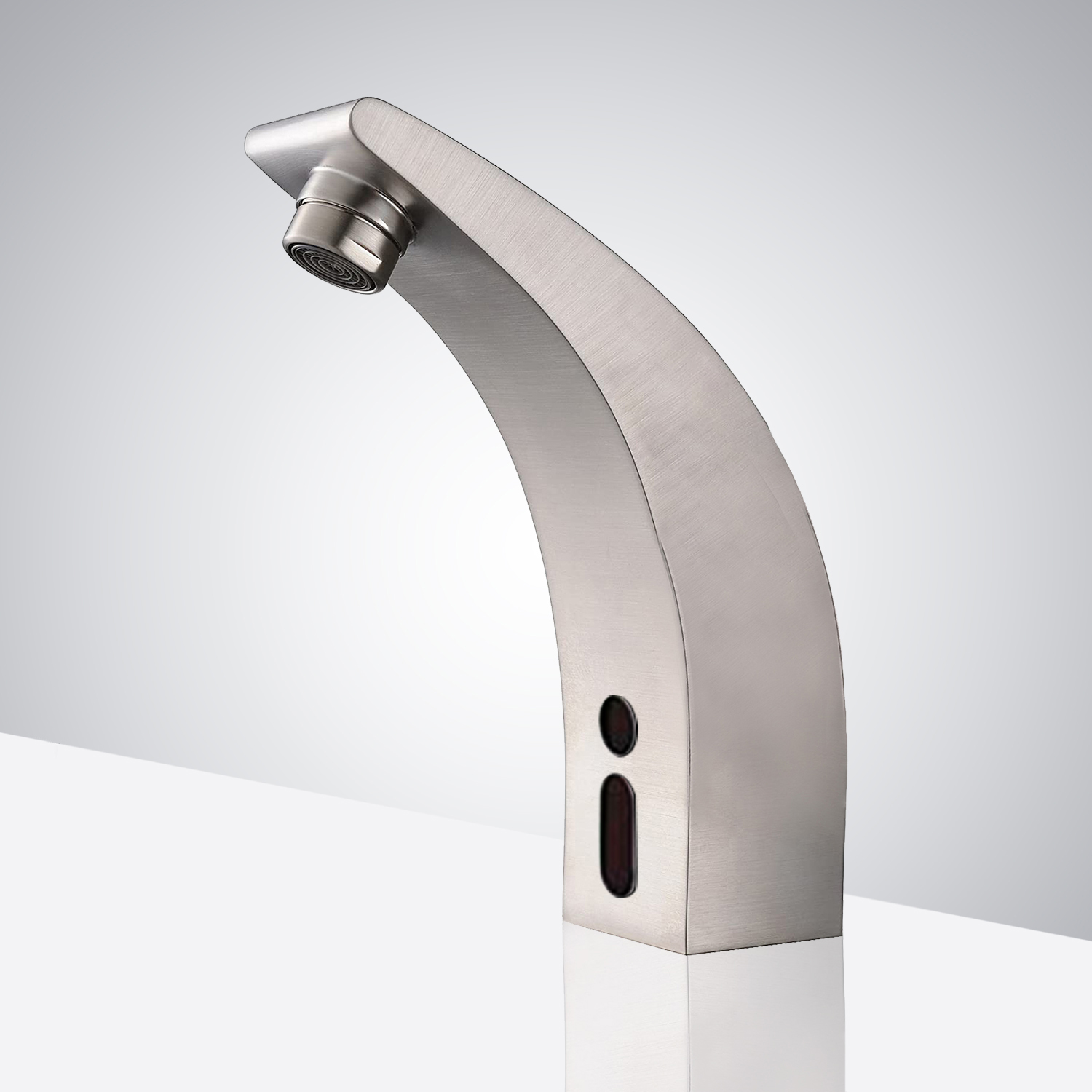
Fontana Milan Commercial Infrared Automatic Brushed Nickel Sensor Faucet
The Fontana Milan Commercial Infrared Automatic Sensor Faucet provides a useful example of configurable infrared sensing. Its published sensing range can be adjusted approximately 6.2–12.5 inches, allowing installers to tune the activation zone around basin geometry and actual field conditions.
For commercial projects, that adjustability matters because the same sensor distance is not optimal for every sink and countertop combination.
Explore Fontana Milan →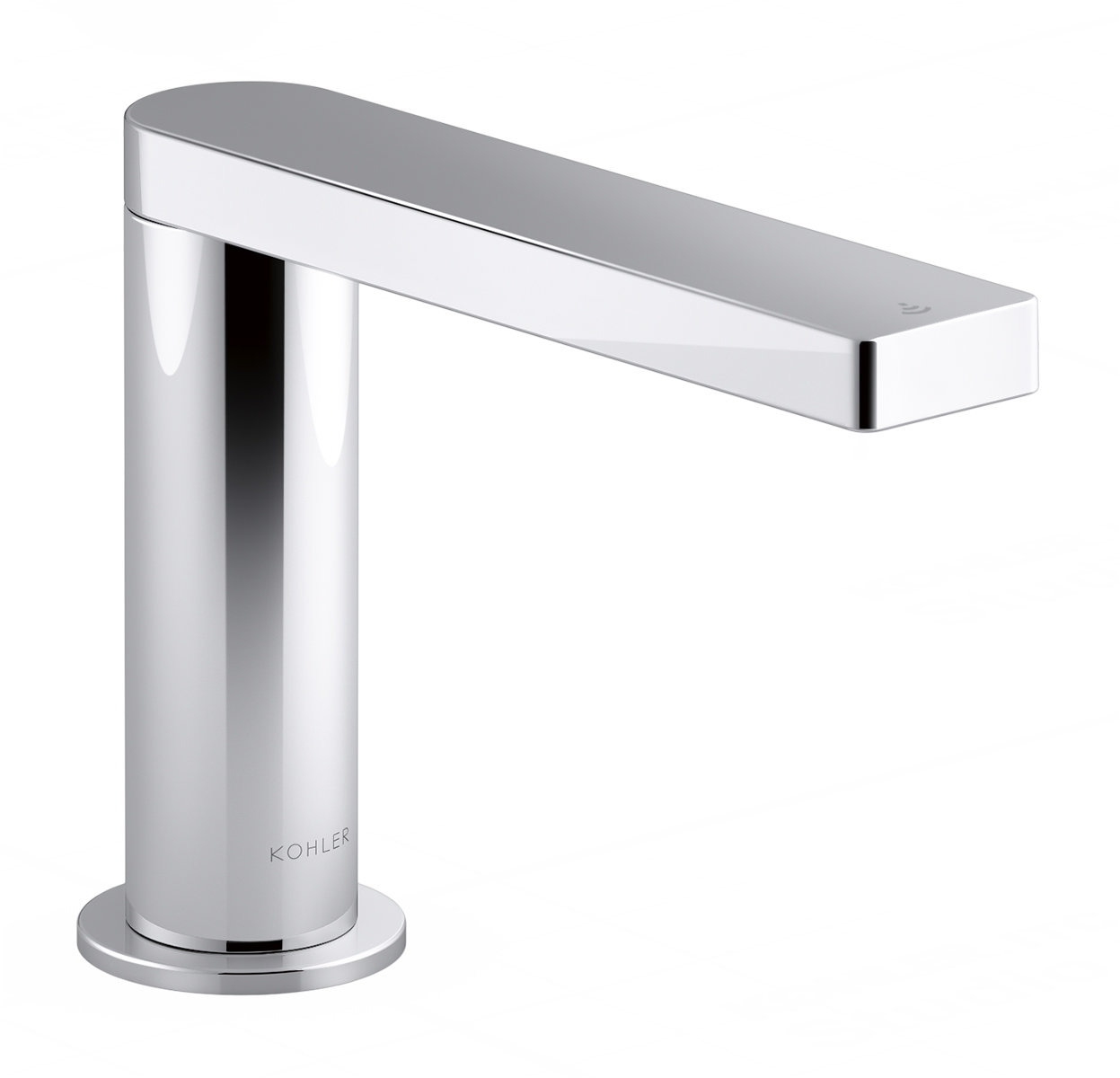
KOHLER Composed® Touchless Faucet with Kinesis® Sensor Technology
KOHLER’s Kinesis technology places the sensor within the spout rather than relying on an obvious external sensor window. The manufacturer describes the architecture as providing accurate and reliable actuation across varying installation environments.
This approach is particularly interesting for architects seeking a clean commercial aesthetic without separating sensing performance from industrial design.
Review KOHLER Composed →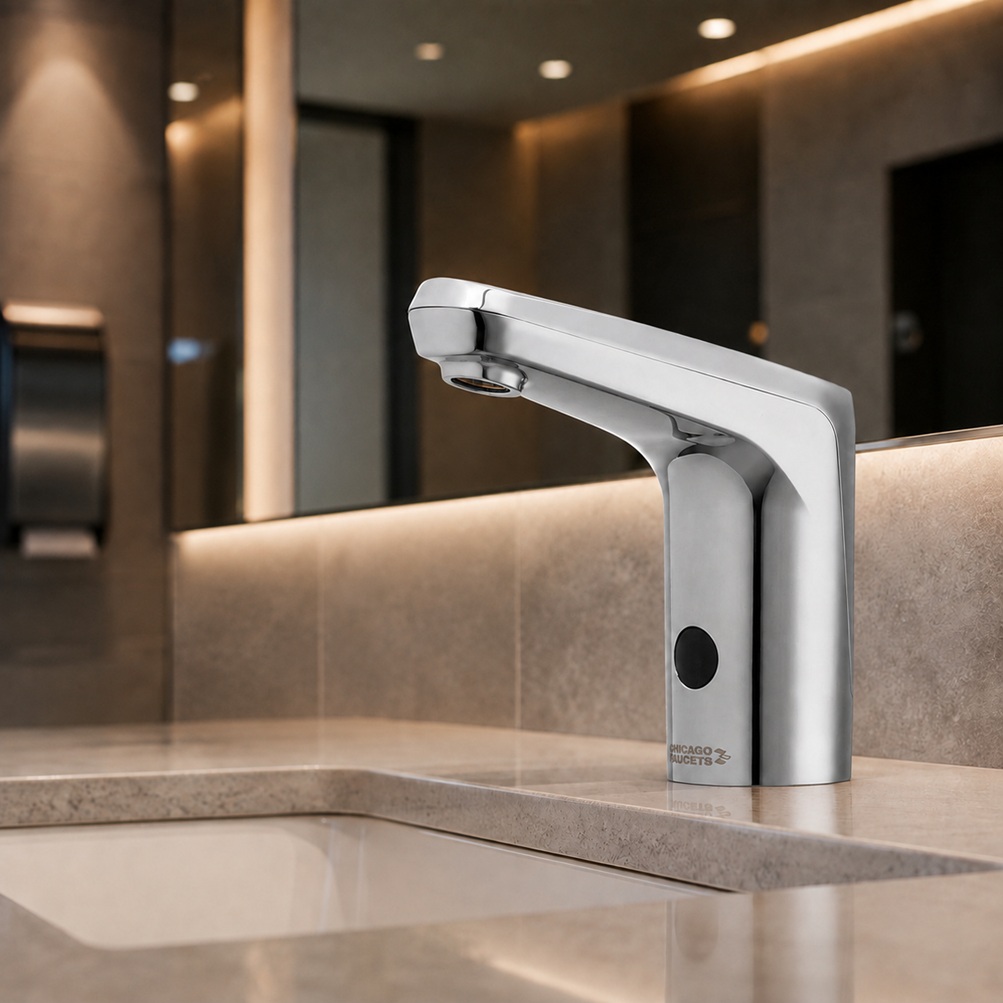
Chicago Faucets EQ® Series Touch-Free Faucet
The EQ platform demonstrates how sensor performance should be considered together with control logic. Chicago Faucets specifies on-demand infrared detection and a 10-second standard hand-presence runtime, followed by shutoff logic intended for high-use environments.
For facility engineers, the lesson is important: detection accuracy and maximum activation behavior belong in the same specification discussion.
Review Chicago EQ →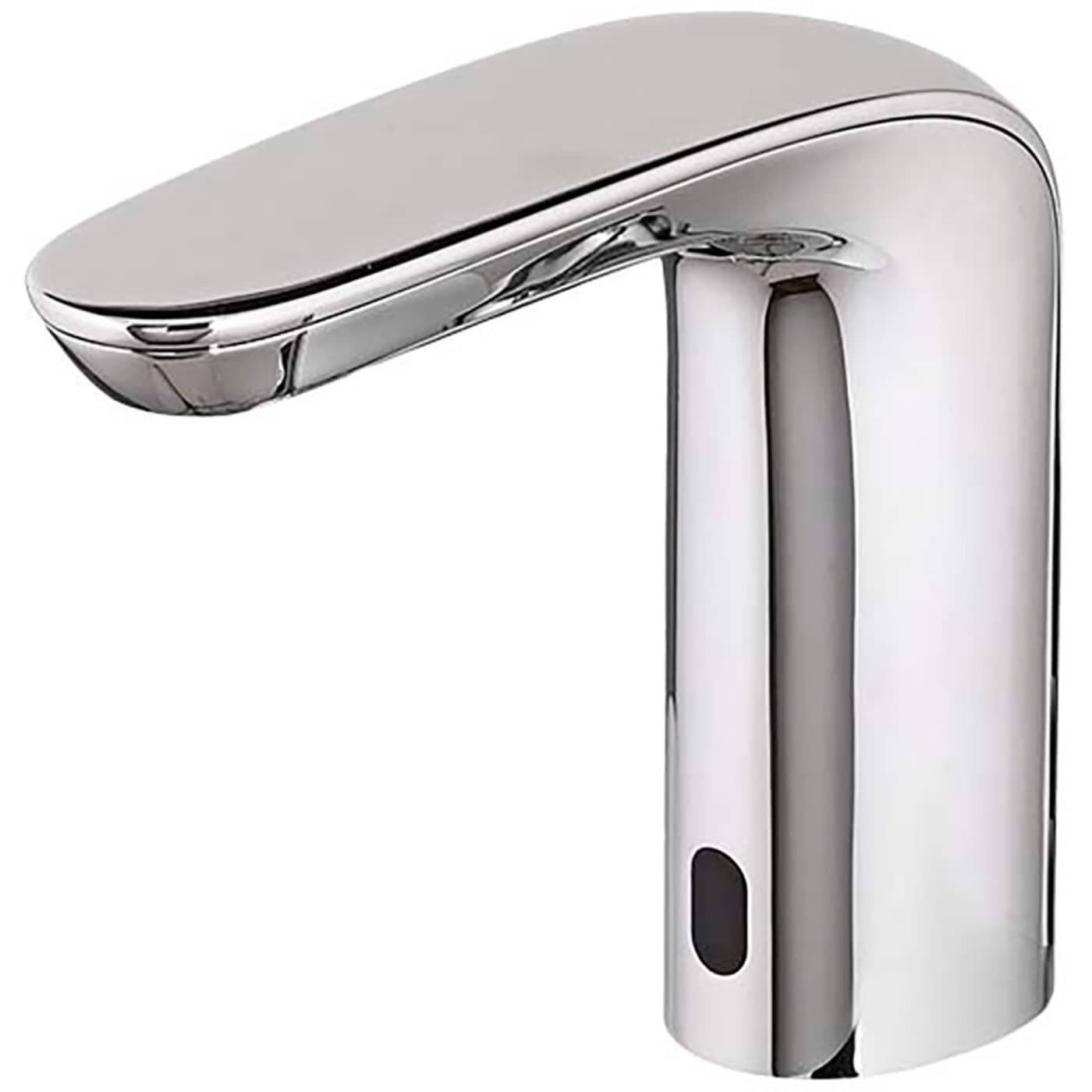
American Standard NextGen® Selectronic® Touchless Faucet
The latest NextGen Selectronic platform illustrates the shift from manually tuned sensors toward adaptive commissioning. American Standard describes its advanced sensor as self-calibrating according to environmental and lighting conditions.
That can reduce the amount of manual adjustment required when hundreds of faucets are distributed across different restroom conditions.
Review NextGen Selectronic →Product-image policy: Featured products are included only when a specific product and usable high-resolution image can be identified. Images remain uncropped and clickable to the corresponding product page.
Adjustable vs. Self-Calibrating Sensors
An adjustable infrared sensor gives the commissioning team direct control over the activation zone. This can be valuable when basin geometry is known and installers are expected to perform final adjustment.
A self-calibrating platform reduces that dependency by allowing the electronics to establish detection behavior according to the installed environment. Neither approach is universally superior. The real question is how much field commissioning the facility can realistically support.
What Should Be Specified?
| Detection method | Identify IR, adaptive IR or manufacturer-specific sensor architecture. |
| Sensing zone | Require adjustment range or automatic calibration information. |
| Timeout | Define maximum continuous activation period. |
| Basin compatibility | Coordinate sensor geometry with sink depth, material and finish. |
| Commissioning | State whether field adjustment or programming is required. |
| Service access | Confirm access to sensor electronics, control modules and solenoids. |
Commercial Sensor Technology Brands to Research
Sensor Technology FAQ
Are all touchless faucets infrared?
No, but infrared remains one of the dominant commercial technologies. Advanced products may enhance infrared detection with calibration algorithms, concealed sensing and smarter control logic.
What causes ghost or false activation?
Possible causes include excessive sensor range, reflective surfaces, basin geometry, installation conditions or objects entering the detection zone.
Is a hidden sensor better than a visible sensor?
Not automatically. Concealed sensors improve aesthetics, while performance still depends on detection geometry, electronics and installation conditions.
Why is self-calibration useful?
It can reduce manual commissioning by adapting detection behavior to environmental or lighting conditions.
Should sensor range be specified?
Yes. The design team should understand either the available adjustment range or the manufacturer’s automatic calibration method.
Why specify a safety timeout?
A defined timeout limits continuous discharge when an object remains inside the detection zone or unusual operating conditions occur.
Engineering Reference Sources
U.S. EPA — Bathroom Faucet Efficiency
Federal water-efficiency guidance relevant to commercial faucet flow planning.
U.S. Department of Justice — ADA Standards
Accessibility requirements relevant to commercial restroom and operable-part coordination.
American Society of Plumbing Engineers
Professional plumbing-engineering resources and commercial system design guidance.
U.S. Green Building Council — LEED
Sustainable building framework incorporating indoor water-use efficiency strategies.
Specify Detection Behavior—not Simply “Touchless Faucet”
For predictable commercial operation, specifications should address sensor type, sensing zone, calibration method, basin compatibility, timeout behavior and service access. Adjustable infrared systems such as the Fontana Milan Commercial Infrared Automatic Sensor Faucet provide direct commissioning control, while adaptive systems can reduce adjustment requirements across large fixture portfolios.
Explore Fontana Milan Commercial Sensor Faucet →Independent editorial disclosure: CommercialTouchlessFaucets.com provides engineering-oriented informational content. Manufacturer specifications and sensing technology can change. Confirm the current product documentation, codes, certifications and project requirements before specification or procurement.