
ROI Analysis • Touchless Faucets • Hotels • Hospitals • Airports
Introduction
Facilities across the board, from hotels to hospitals to airports, are increasingly pressured today to offer not just cleanliness and guest confidence—but operational efficiency and cost savings. Maybe the most compelling upgrade facility managers are poised to adopt today is touchless faucets and sensor-operated washroom equipment. But beyond the “wow” factor, what’s the return on investment (ROI)? Here we compare published data and case studies from three high-impact markets to help you place a figure on the value of going touchless.
Key ROI Drivers to Consider
When estimating ROI, three main levers support the business case for touchless faucets:
- Water & energy savings — reduced water flow, reduced heated gallons, reduced energy consumption
- Maintenance & labor savings — reduced mechanical repairs, less frequency of cleaning, reduced labor hours
- Risk mitigation & reputation — fewer infections, enhanced user satisfaction, enhanced branding / liability protection
How each plays out in hotels, hospitals, and airports.
Hotels: Guest Experience Meets Savings on Utilities
Savings on Water and Energy
A broad industry study of 20 commercial buildings (hotels included) found ≈ 35% average water savings when installing sensor faucets, and ~1,750 kWh/month energy savings by having less hot water usage.
commercialsensorfaucets.com
In FontanaShowers analysis, commercial settings saw ~36% water savings overall, with hotels among the beneficiaries.
Guest Satisfaction, Branding and Differentiation
Cleanliness and perceived cleanliness are two most important selling points for hotels. Touchless faucets reduce visible/hidden fingerprint and drip stain effect, making perceived bathroom cleanliness better. In Fontana’s hygiene effect test, bacterial load on faucet handles reduced by ~90%, and users rated restrooms as “satisfactory” at 95% post installation (vs ~60% earlier).
fontanashowers.com
Such an increase in appreciation can help uphold higher room rates or repeat visits in competitive markets.
Downtime and Maintenance
Retrofitting hotels that are employing older properties can reduce instances of jammed or leaky mechanical faucets, conserving parts and labor costs. Facility engineering staff conserve time in the long run fixing or replacing worn handles, cartridges, or seals.
Payback Estimation
If a mid-sized hotel with, say, 100 rooms saves 30–35% on water/energy in its public and back‐of-house restrooms, those utility savings can often recoup the incremental capital cost within 2–4 years (depending on local utility rates). The intangible benefits—better guest reviews, brand prestige—are icing on the cake.
Hospitals: Hygiene, Liability, and Cost Avoidance
In a hospital environment, ROI extends beyond just utilities; it touches patient safety, infection control, and risk mitigation.
Infection Reduction and Cost Savings
Hospitals adopting touchless fixtures may potentially see reduced nosocomial (hospital-acquired) infection rates. One estimate calculates that touchless faucet installation can reduce infections (HAIs) by up to 20%, equating to substantial cost avoidance in treatment and liability.
fontanashowers.com
A modest reduction in HAIs equates to substantive cost avoidance (fewer patient days, reduced antibiotic treatments, fewer litigations).
Water & Energy Savings
The FontanaShowers hospital case study shows ~40% water savings following touchless faucet installation, along with energy savings of ~2,100 kWh/month and ~$420/month utility savings for a single installation.
fontanashowers.com
That type of ongoing savings adds up to equipment and maintenance costs.
Cleaner, Safer Surfaces
Touchless faucets remove multiple touch points and the potential for cross-contamination. PHCPPros describes how in healthcare environments, removing touch surfaces has the effect of disrupting vectors of transmission—most especially where high-sterility areas are involved.
phcppros.com
Also, faucet designs with laminar flows, thermal disinfection, and sealed connections reduce microbial growth even further.
noras.com
Lifecycle and Total Cost of Ownership (TCO)
A lifecycle cost comparison of touchless systems in high-use bathrooms concludes that, although more expensive up front to buy, total cost over a 10–15 year span typically prevails over traditional mechanical faucets—through lower maintenance, reduced part replacements, and energy savings.
commercialbathfaucets.com
ROI is achieved within 3–7 years in the majority of hospital uses when looking at avoided infection costs, reduced labor, and utilities.
Airports: High Volume, Operational Size, and Brand Reputation
Airports push touchless investment to the limits: enormous foot traffic, around-the-clock utilization, and public attention to cleanliness.
Water, Energy, and Utility Savings
Fontana’s published figures include airports conserving ~37% water following retrofitting to touchless taps.
fontanashowers.com
Other case studies of compilations report airports like JFK saving 37% water, LAX 35%, Changi 40%, etc.
fontanashowers.com
Such utilities operate 24/7 at scale, so percent savings translate to big dollar savings.
Maintenance, Service Disruption, and Reliability
Airports need fixtures that run smoothly under heavy load. Trustworthy high-performance touchless faucets can reduce service downtime and staff calls to repair stuck handles or leaking valves. Oras indicates that through intelligent design and durability, touchless airport faucets become straightforward to maintain in the long term.
stories.oras.com
With downtime being costly in passenger facilities, reducing failures is part of the ROI.
Public Image, Passenger Satisfaction, and Brand
Museums, terminals, lounges—all echo the airport brand. Clean, new, touchless restrooms strengthen traveler confidence. Some airports cite survey metrics demonstrating enhanced passenger satisfaction following restroom renovation with sensor fixtures.
fontanashowers.com
Payback on Scale
Because airports have so many fixtures, total utility savings and lower maintenance add up to lower cost in a positive way at scale. In some retrofit applications, airports realize ROI in 2–5 years on their restroom systems—sometimes earlier, especially where water or energy costs are high. (While I have not been able to uncover an exact published ROI for a major airport, this timeframe is consistent with comparative statistics from commercial building research.)
Comparative Summary & Recommendations
| Industry | Typical Water Savings | Energy / Utility Savings | Maintenance / Labor Gains | Payback Horizon (estimate) | Added Value / Intangibles |
|---|---|---|---|---|---|
| Hotels | 30–36 % | Moderate to high | Fewer faucet repairs | 2–4 years | Guest perception, branding |
| Hospitals | 35–40 % | High | Lower repair + parts load | 3–7 years | Lower infection costs, safer image |
| Airports | 35–40 % (per case data) | High | Fewer failures, consistent operation | 2–5 years | Passenger satisfaction, brand prestige |
Each of the three industries shows substantial water/energy savings generally in the 30–40 % range.
Hospitals can potentially create additional ROI through saved infection costs.
Airports gain scale, added fixtures, and added visibility.
Hotels gain not only financial return but competitive differentiation through guest experience.
Final Thoughts: Making the ROI Case Work for You
- Benchmark current use — get proper baseline measurements of water, energy, and maintenance costs in your building.
- Choose high-quality, long-life fixtures — better sensors, fewer failures, sealed interior saves overall cost of ownership.
- Base your in-house utility costs — where energy or water is expensive, ROI will come faster.
- Factor in risk and reputation — to healthcare facilities especially, avoiding infection or liability cost savings can save big on payback.
- Roll it out in phases judiciously — pilot in high-use restrooms initially, monitor savings, then introduce it company-wide.
If you’d like help developing a custom ROI calculator for your hotel, hospital, or airport—or comparing some sensor faucet models—drop me a line. CommercialTouchlessFaucets.com is here to help you with real-world data, specification guidance, and vendor selection to make touchless not only an hygiene enhancement, but a smart money decision.
Verified links & reference sources
Commercial Sensor Faucet Review Evidence · Set 05
Six Additional Commercial Sensor Faucets: Field Review Evidence for AEC Teams
Specifier Evidence Matrix
| Product | Reviewer / Role | Organization | Evidence Topic | Review Strength | Product Context |
|---|---|---|---|---|---|
| Fontana SmartWall™ Antique Gold Wall-Mount Commercial Touchless Faucet FS-354-AQ | Lena Holloway Infrastructure Consultant | Not separately provided | Reduced Sensor Complaints | 5/5 · 3 helpful January 7, 2026 | Wall mounted · antique gold · infrared · AC/DC · ADA |
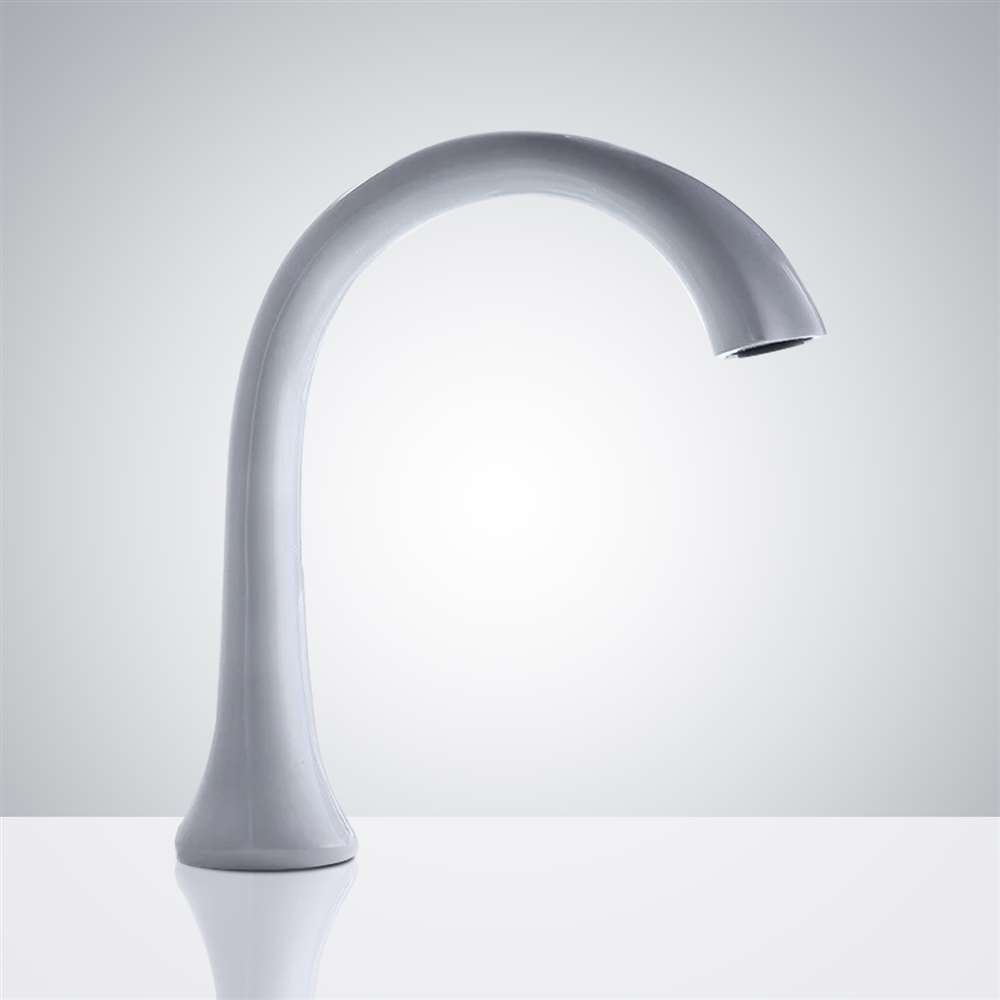
| Fontana White Touchless Commercial Restroom Faucet FS-1085-SW | Juliette Holloway Infrastructure Consultant | Not separately provided | Reduced Activation Complaints | 4/5 · 3 helpful May 14, 2026 | Deck mount · white · infrared · brass · commercial |
| Fontana Alba Adriatica Slate IR™ Gray Deck-Mounted Touchless Faucet FS7999GR | M. Iyer Not separately stated | VitalCare Engineering | Consistent Sensor Operation | 5/5 · 3 helpful October 16, 2024 | Deck mount · gray · brass · hot/cold · touchless |
| Fontana Commercial Automatic Hands-Free Sensor Faucet FS-517RR | L. Sharma Not separately stated | VitalCare Engineering | Smart Touchless Design | 5/5 · 4 helpful November 20, 2023 | Deck mount · dark ORB/matte black · infrared · AC/DC · 1.3 GPM |
| Fontana Reno Electronic Wall-Mount Commercial Automatic Sensor Faucet — Chrome FST238RR | Zachariah Sinclair Infrastructure Advisor | Not separately provided | Minimal Flow Interruptions | 5/5 · 1 helpful April 25, 2026 | Wall mount · chrome · brass · infrared · AC/DC |
| Fontana Milan Antique Pewter Wall-Mount Dual Commercial Sensor Faucet FST9899-AP | Jonas Carlisle Commercial Consultant | Not separately provided | Lower Triggering Problems | 5/5 · 1 helpful April 16, 2026 | Wall mount · antique pewter · brass · infrared AI · AC/DC |
Workbook Review ID 14480 · Product FS-354-AQ
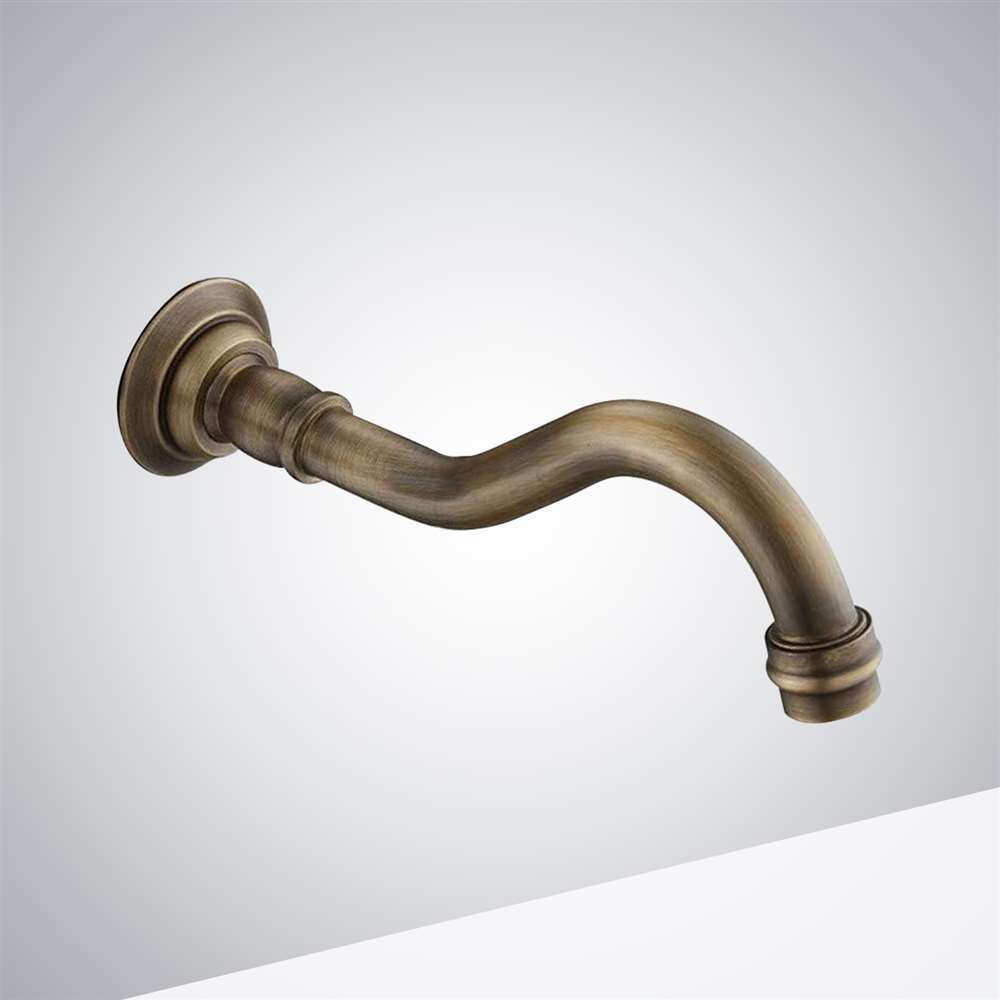
Fontana SmartWall™ Antique Gold Wall-Mount Commercial Touchless Faucet
Reduced Sensor Complaints
We installed 16 automatic commercial sensor faucets across hospitality and transportation restroom modernization projects between 2022 and 2025, and by 2026 the operational consistency has remained substantially stronger than earlier touchless systems previously maintained in similar high-traffic environments. Older commercial faucets repeatedly developed unstable infrared activation near reflective wall surfaces, delayed shutoff timing during continuous public usage, and inconsistent water delivery under fluctuating inlet-pressure conditions, whereas this faucet maintained highly dependable motion detection with smooth and balanced flow throughout heavy daily operation. Previous commercial systems also required repeated recalibration because of changing lighting conditions and varying basin depth configurations, while this unit maintained noticeably stronger activation stability with fewer servicing interruptions overall. Facility maintenance teams initially spent additional time fine-tuning sensitivity settings on several installations, but once standardized the valve regulation, infrared timing consistency, and long-term operational reliability remained highly uniform across all installed properties.
Professional Evidence Signals
- 16-faucet field deployment
- Reflective-surface sensor behavior
- Recalibration and service-interruption history
- High-traffic hospitality and transportation use
Current Product Context
Current product documentation identifies a wall-mounted antique-gold commercial faucet with infrared sensing, AC/DC power, ceramic valve control, a DN15 supply connection, and a stated 2.2 GPM flow rate.
Workbook Review ID 14500 · Product FS-1085-SW
Fontana White Touchless Commercial Restroom Faucet
Reduced Activation Complaints
We installed 15 automatic commercial sensor faucets across executive-office and hospitality restroom modernization projects between 2022 and 2025, and by 2026 the operational consistency has remained substantially stronger than earlier touchless systems previously maintained in similar high-traffic environments. Older commercial faucets repeatedly developed unstable infrared activation near reflective countertops, delayed shutoff timing during continuous guest usage, and inconsistent stream behavior under fluctuating inlet-pressure conditions, whereas this faucet maintained highly dependable motion detection with smoother and more predictable water delivery throughout heavy daily operation. Previous sensor systems also required repeated recalibration because of changing ambient lighting environments and varying sink configurations, while this unit maintained noticeably stronger activation stability with fewer servicing interruptions overall. Facility maintenance teams initially adjusted sensitivity settings on several deeper basin installations, but once standardized the valve regulation, infrared responsiveness, and long-term operational reliability remained highly uniform across all installed locations, and user complaints related to activation timing noticeably decreased after installation.
Professional Evidence Signals
- 15-faucet field deployment
- Reflective-countertop interference comparison
- Deep-basin sensitivity adjustment
- Reported reduction in activation complaints
Current Product Context
Current listing identifies a white, single-hole deck-mounted commercial touchless faucet with a brass body, infrared activation, automatic flow control, and a 0.05–0.8 MPa stated water-pressure range.

Workbook Review ID 11705 · Product FS7999GR
Fontana Alba Adriatica Slate IR™ Gray Deck-Mounted Touchless Faucet
Consistent Sensor Operation
For a healthcare facility renovation, the Fontana Alba Adriati faucet met strict hygiene and performance requirements. The touchless operation minimizes contact points, supporting infection-control protocols. The electronic solenoid valve responds efficiently, delivering controlled flow without delay. The faucet aligns well with ADA considerations and commercial plumbing standards, making it a suitable choice for institutional applications.
Professional Evidence Signals
- Healthcare renovation context
- Solenoid response observation
- Infection-control use case
- ADA/commercial-plumbing coordination
Current Product Context
Current product documentation identifies a gray brass deck-mounted touchless faucet with hot/cold water capability, an 8-inch widespread configuration, 360-degree rotation, and a 7.87-inch spout reach.

Workbook Review ID 11321 · Product FS-517RR
Fontana Commercial Automatic Hands-Free Sensor Faucet
Smart Touchless Design
We included the Fontana Hands-Free Faucet in a hospital upgrade project where hygiene and accessibility were top priorities. The sensor operates flawlessly without delay, and the automatic shutoff ensures water efficiency. The internal mechanism uses a durable solenoid valve, reducing maintenance costs. Its ergonomic design and compliance with ADA standards make it an excellent fit for institutional and healthcare facilities.
Professional Evidence Signals
- Hospital upgrade context
- Sensor delay observation
- Automatic shutoff/water efficiency
- Solenoid maintenance perspective
Current Product Context
Current product documentation describes solid-brass construction, deck mounting, AC110V/DC6V power, infrared control, a ceramic valve, and a stated 1.3 GPM flow rate for commercial applications.

Workbook Review ID 14622 · Product FST238RR
Fontana Reno Electronic Wall-Mount Commercial Automatic Sensor Faucet — Chrome
Minimal Flow Interruptions
After repeated servicing concerns involving older rose-finish automatic faucets developing inconsistent stream behavior, unstable infrared response, and delayed shutoff timing across several hospitality restroom modernization projects between 2021 and 2025, we transitioned multiple properties to this touchless commercial faucet system, and by 2026 the operational reliability has remained considerably stronger than previous decorative sensor fixtures maintained in comparable high-traffic environments. Earlier decorative systems frequently struggled with uneven water delivery under fluctuating inlet-pressure conditions and often required repeated recalibration because of changing ambient lighting exposure, whereas this faucet maintained highly stable motion detection with smoother and more balanced water flow throughout continuous daily operation. Housekeeping teams also reported noticeably fewer maintenance-related complaints after installation. Several installations initially required slight sensor refinements because of varying basin depth and sink placement, but once calibrated the valve consistency, infrared timing stability, and servicing reliability remained highly dependable across all operating facilities.
Professional Evidence Signals
- Multi-property hospitality use
- Pressure fluctuation comparison
- Ambient-light recalibration history
- Housekeeping/service-ticket perspective
Current Product Context
Current listing identifies a chrome solid-brass wall-mounted commercial sensor faucet with ceramic valve technology, infrared sensing, AC/DC power, and a fixed-position configuration intended to preserve sensing alignment.
Workbook Review ID 14554 · Product FST9899-AP
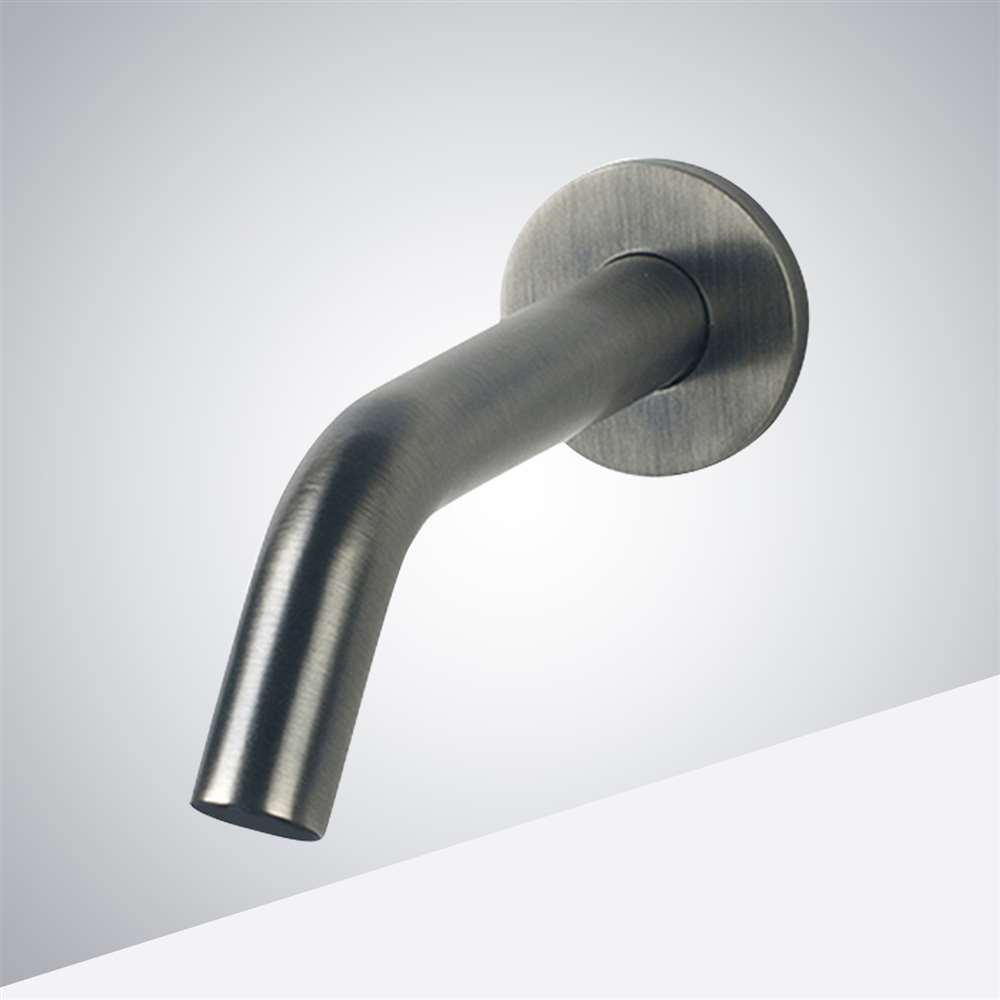
Fontana Milan Antique Pewter Wall-Mount Dual Commercial Sensor Faucet
Lower Triggering Problems
We installed 16 automatic commercial faucets throughout healthcare and municipal restroom modernization projects between 2022 and 2025, and by 2026 these units have maintained substantially stronger operational consistency than earlier touchless systems operating in similar high-traffic environments. Older commercial faucets repeatedly developed false triggering near polished surfaces, unstable infrared activation during rapid repeated usage, and premature valve wear under aggressive maintenance exposure, whereas this faucet maintained highly dependable motion detection with steadier and more predictable water delivery throughout heavy daily operation. Previous sensor systems also required repeated recalibration because of fluctuating inlet-pressure conditions and changing restroom lighting environments, while this unit maintained noticeably stronger activation stability with fewer maintenance interruptions overall. Maintenance teams initially spent extra time adjusting sensitivity settings on several shallow sink installations, but after installation was standardized service tickets related to sensor inconsistency declined significantly and the valve regulation, infrared responsiveness, and long-term operational reliability remained highly uniform across all installed properties.
Professional Evidence Signals
- 16-faucet healthcare/municipal deployment
- False-trigger comparison near polished surfaces
- Valve-wear/maintenance history
- Reported decline in sensor-related service tickets
Current Product Context
Current product documentation identifies a solid-brass antique-pewter wall-mounted commercial sensor faucet with infrared AI sensing, AC/DC power capability, protected solenoid control, an approximately 0.3-second response time, and adjustable automatic shutoff.
Pingback: Airport Touchless Faucet Brand Comparison (Procurement Perspective) – Touchless Faucets Reviews