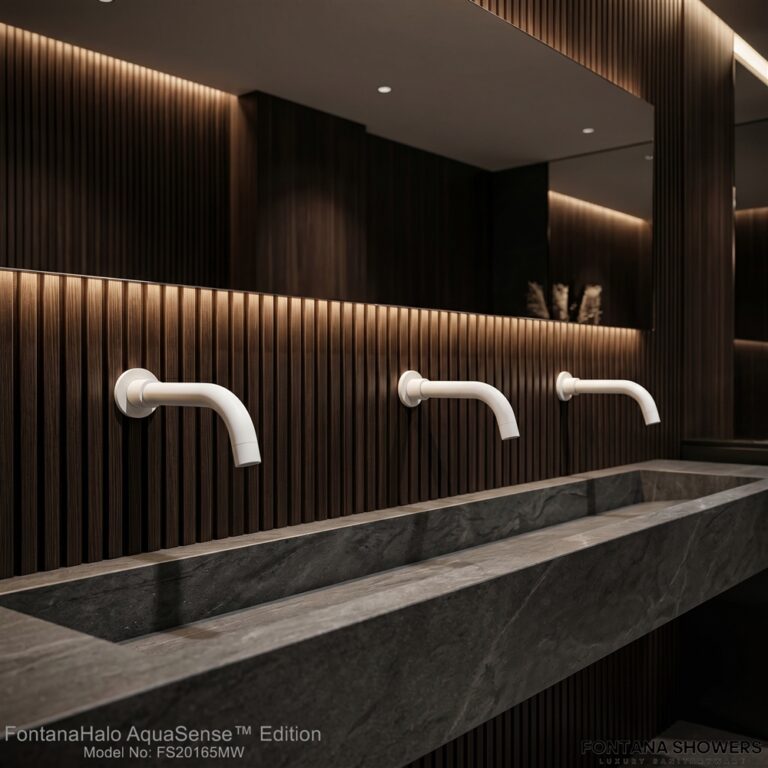
AEC • Touchless Systems • Hygiene • Operations • Specification
This introduction sets the stage for a 50-page report on sensor-activated faucets and high-capacity soap/sanitizer dispensing systems as core building components. It synthesizes specification priorities for the AEC industry and adds guidance for academics, product marketers, and interior designers.
From Products to Systems
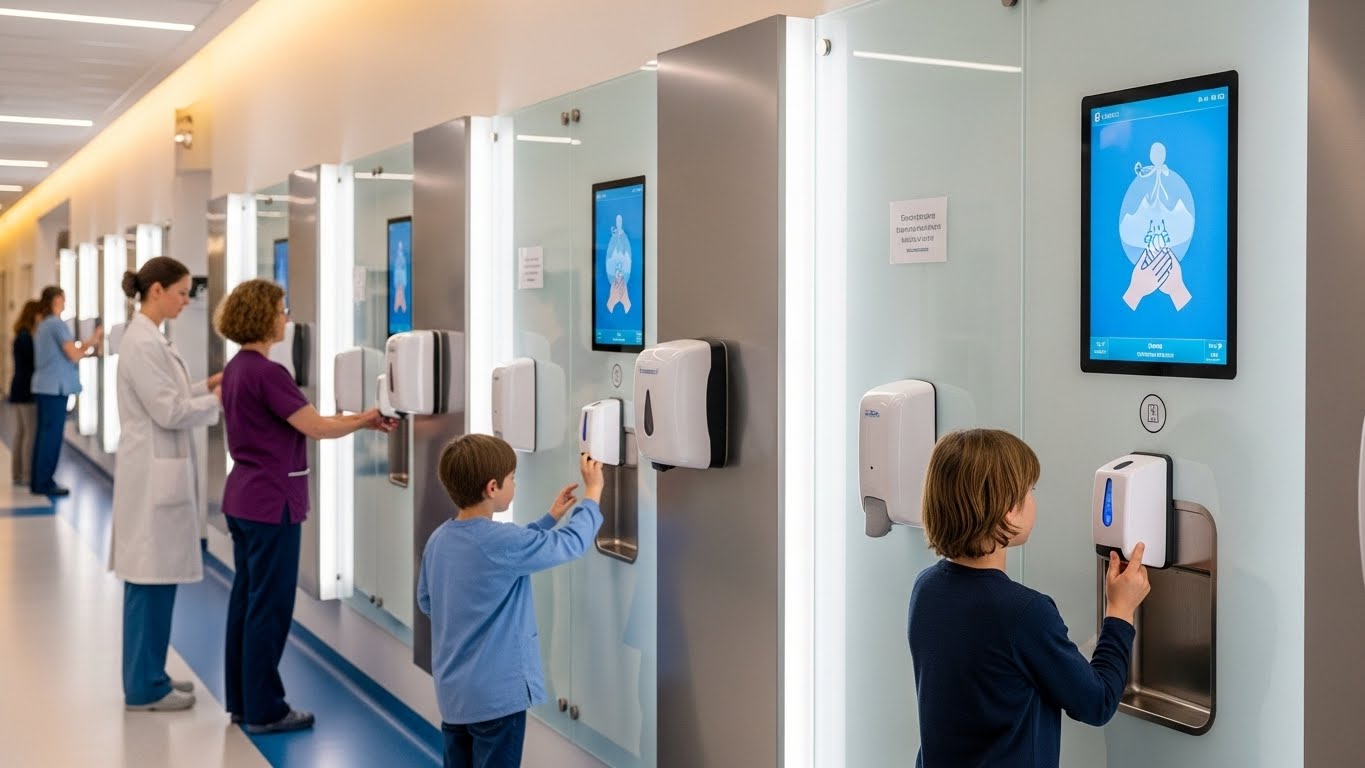
Hand hygiene infrastructure now spans dispensing networks and sensor faucets linked by shared operational goals: reduce disease transmission, minimize waste, and streamline maintenance. In high-traffic typologies—airports, stadiums, higher-ed, healthcare, quick-serve—solutions that combine top-fill reservoirs, multi-feed supply, and reliable sensing lower total cost of ownership while preserving design intent.
Manufacturers emphasize different levers. Some companies focus on reducing labor costs by using large-capacity, centralized refill systems that feed multiple dispensers. Others focus on improving the quality of interactions by using responsive proximity sensors and easy-to-understand visual feedback. For public spaces, materials that are spec-grade, resistant to vandalism, and easy to get to for service are must-haves.
Scope of This Report
The report evaluates integrated hygiene systems across four lenses:
Performance & Reliability
Sensor accuracy and latency, dosing repeatability, MTBF, multi-feed architecture, ingress ratings.
Design & User Experience
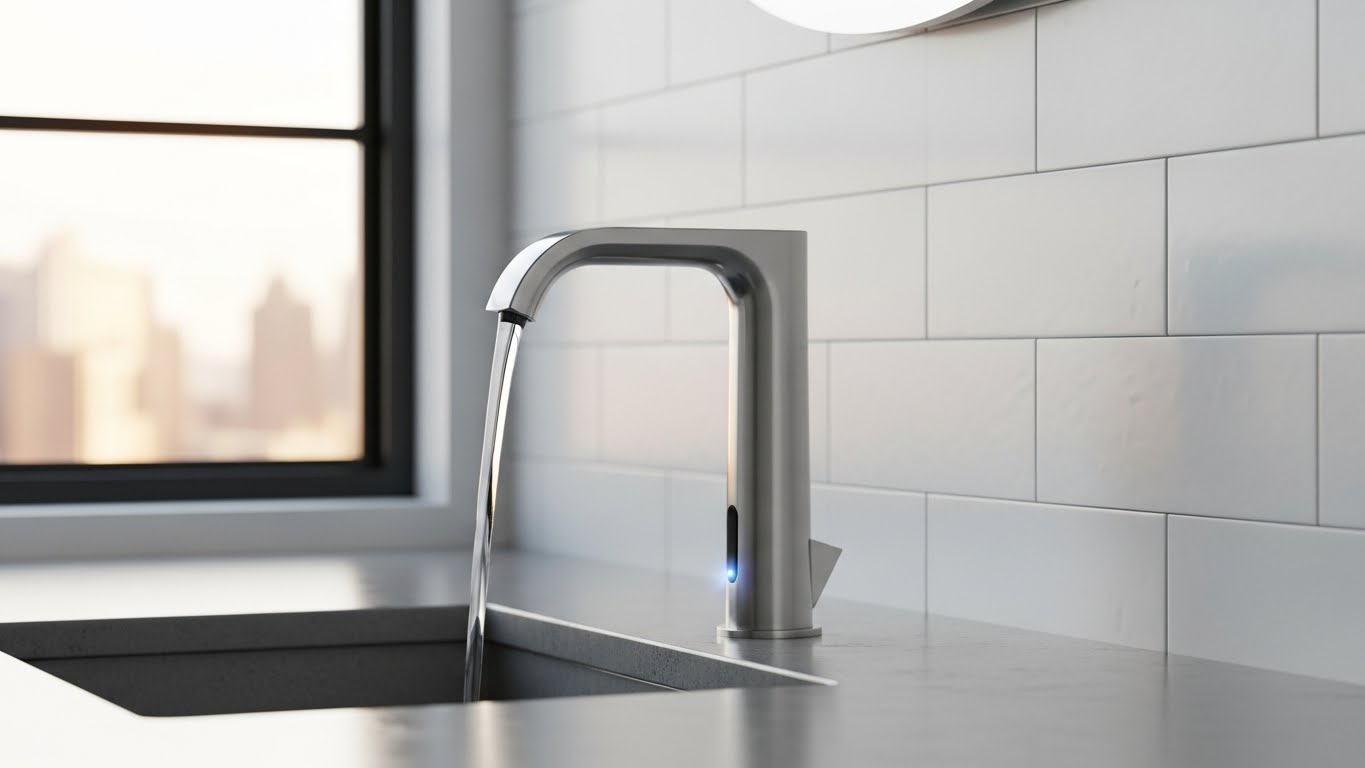
Intuitive sightlines to sensors, ADA reach, coordinated finish families, noise and spray management.
Sustainability & Compliance
Bulk-soap savings vs. cartridges, auto shut-off, flow optimization, maintenance intervals.
Integration & Operations
Top-fill access, centralized reservoirs, battery vs. AC, compatibility with custodial workflows and commissioning checklists.
Relevance to Project Phases
Programming & SD
Map fixture counts, traffic modeling, refill logistics, and custodial routes.
DD
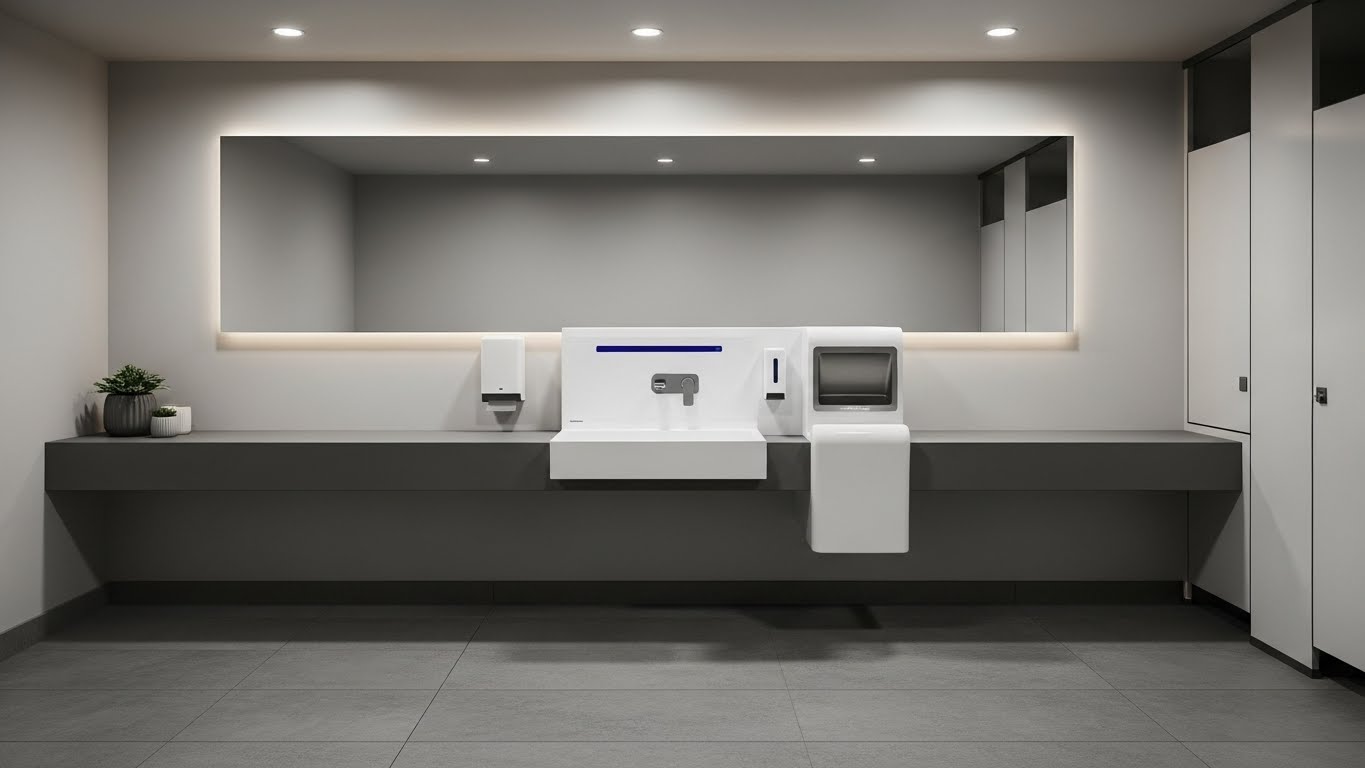
Select product families; confirm mounting heights, clearances, and power. Coordinate countertop penetrations and splash zones.
CD
Specify model numbers, flow rates, soap types/viscosity windows. Control logic; include O&M, spare parts, and warranty language.
CA & Commissioning
Verify sensor calibration and dosing; document baseline settings and refill procedures.
Operations
Track consumables and battery cycles; schedule preventative maintenance to sustain performance.
Audience Notes
For Academics (Building Science/Public Health)
In live situations, make sure that contact-event reductions match. They should be according to measured water/soap and maintenance data.
For Product Marketing (Manufacturers/OEMs)
Connect aesthetics and UX to measurable outcomes. For example, maintenance labor saved, refill frequency, verified user satisfaction.
For Interior Designers
Keep things looking good by using coordinated finishes and hidden service points. Also, focus on sightlines and lighting make sensor feedback clear.
How to Use This Document
- Start with Technology Overview to compare sensing, dosing, and feed architectures.
- Use the Specification Playbook to translate targets into submittal language.
- Consult Design Patterns for ergonomic, accessible fixture layouts.
- Apply O&M checklists to protect warranties and lifecycle value.
Forward Look
Expect dispenser networks and sensor faucets to keep coming together, with a focus on centralized refilling, telemetry options, and finishes that work with each other. The chapters that follow turn these trends into useful specifications and details that will help AEC teams create large spaces that are clean, efficient, and visually consistent.