How Reliable Touchless Systems Protect Venue Reputation
Restroom reliability directly shapes guest perception, public reviews, operational confidence, and the quality of the overall visitor experience. For high-capacity venues, dependable touchless systems are part of the reputation infrastructure—not simply a fixture upgrade.
A restroom problem can become a venue problem in minutes
In stadiums, arenas, theaters, convention centers, universities, transportation hubs, and other large public venues, restroom performance is highly visible. Guests may never see the mechanical room, service chase, control module, isolation valve, or maintenance inventory behind a wash station. They do, however, immediately notice whether water activates, whether soap is available, whether the counter is dry, whether the fixture looks clean, and whether the restroom line moves at a reasonable pace. These small interactions influence how visitors describe the facility after the event.
A reliable touchless system helps the venue deliver a consistent, low-friction experience. The guest approaches the sink, receives water without repeated hand waving, completes the handwashing sequence, and leaves without touching a handle. When that sequence works across many stations, the restroom feels organized and professionally managed. When it fails, the result can be hesitation, crowding, wet counters, negative comments, and visible maintenance intervention during the busiest part of the event.
For AEC teams, this makes reliability a design, engineering, procurement, commissioning, and facility-management issue. The faucet cannot be evaluated in isolation. Sensor range, basin geometry, spout reach, water pressure, power source, soap coordination, drainage, finish durability, cleaning compatibility, service access, and parts standardization all contribute to the public-facing result. A venue protects its reputation when those decisions are coordinated before the first guest arrives.
Reliability is judged during the hardest operating window
A large venue may appear to operate normally for much of the day, but its restroom systems are truly tested during compressed demand. Halftime, intermission, inning breaks, concert pauses, weather delays, and final exit periods can send thousands of users toward limited restroom zones. During these windows, a slow sensor or unavailable station does more than inconvenience one person. It removes capacity from the wash line and transfers pressure to adjacent fixtures.
The effect compounds quickly. One inactive faucet can cause users to step sideways, interrupt the next station, or wait for an opening. A sensor that false-triggers can waste water and create splash. A weak stream can extend rinse time. A dispenser that requires several attempts can hold the user in place. Each delay is small, but repeated across a crowded restroom it affects queue length, circulation, cleaning workload, and guest confidence.
Reliable touchless design reduces this operational friction. Commercial-grade sensors should respond within a clear, repeatable activation zone. Water should land inside the basin without excessive splash. Automatic shutoff should end the cycle predictably. Soap and drying components should be positioned to support forward movement rather than cross-traffic. When the system behaves consistently, the restroom processes users quietly and the venue avoids becoming known for long lines or poorly maintained facilities.
Restroom quality becomes part of the overall event review
Visitors do not separate restroom performance from the rest of the venue experience. A premium lobby, dramatic seating bowl, high-quality food program, or carefully designed hospitality suite can lose credibility when the restroom feels unreliable. Guests interpret visible fixture failures as evidence of weak maintenance, deferred investment, or poor operational control. This perception can influence word-of-mouth discussions, online reviews, social posts, post-event surveys, and the willingness to return.
Touchless fixtures contribute to a sense of modernity and care, but only when they operate predictably. A fixture that looks advanced yet fails to activate can be more frustrating than a familiar manual faucet. The user expects automation to be immediate and intuitive. For this reason, the specification objective should not be “install touchless technology.” It should be “deliver a dependable hands-free handwashing sequence under real venue conditions.”
Lighting, reflective surfaces, dark basins, deep counters, mirror placement, sleeve movement, standing water, and adjacent traffic can all affect the sensor environment. AEC teams should review these conditions in a physical mockup and test the complete station before repeating it throughout the building. Successful mockups protect the design from a common reputation risk: a visually attractive restroom that becomes confusing or unreliable after opening.
Consistency also matters across venue zones. General concourses, premium clubs, suites, locker rooms, staff areas, and family restrooms may use different finishes or mounting styles, but the interaction should remain familiar. Standardized behavior reduces user hesitation and gives facility teams a repeatable maintenance strategy.

Technical decisions that protect public image
| Specification Area | Reputation Risk | AEC Coordination Requirement | Operational Benefit |
|---|---|---|---|
| Sensor accuracy | Repeated hand waving, false activation, and visible user frustration. | Coordinate sensor field with basin depth, spout reach, lighting, finishes, mirrors, and user approach. | Fast, intuitive activation and smoother restroom throughput. |
| Power continuity | Inactive fixtures and unexpected wash-station closures. | Define AC, DC, or hybrid power; protect wiring; document transformer and battery access. | Reduced downtime and faster service response. |
| Water delivery | Weak flow, splash, wet counters, and extended handwashing time. | Review pressure, flow rate, aerator pattern, spout projection, basin shape, and shutoff timing. | Controlled water use with a comfortable, clean wash sequence. |
| Service access | Long closures and visible repair work during public hours. | Provide reachable valves, filters, solenoids, control modules, access panels, and soap reservoirs. | Quicker inspection, repair, and return to service. |
| Fixture standardization | Inconsistent behavior, complex parts inventory, and uneven appearance. | Repeat compatible product families, power methods, rough-ins, and replacement components. | Simpler staff training and more consistent venue presentation. |
| Cleaning durability | Premature finish wear, cloudy sensor windows, and a neglected appearance. | Confirm approved cleaning methods, chemical compatibility, seam detailing, and finish care. | Longer visual service life and a cleaner public image. |
| Commissioning | Problems discovered only after the venue is occupied. | Test sensor response, temperature, flow, splash, drainage, soap delivery, access, and shutdown zones. | Fewer opening-day failures and stronger owner confidence. |
Facility response time determines whether a small issue becomes public
Every component eventually requires inspection, cleaning, adjustment, or replacement. The reputation difference is created by how quickly the facility team can isolate the issue and restore the station. When shutoffs, solenoids, filters, batteries, transformers, control modules, and soap reservoirs are accessible, staff can resolve common problems without dismantling counters or closing a large restroom bank.
Poor access turns routine maintenance into a public disruption. A difficult battery replacement may keep a faucet inactive for an entire event. An inaccessible strainer can produce weak flow until a major service visit is scheduled. A hidden valve can require a larger shutdown than necessary. Guests then encounter cones, taped fixtures, wet counters, or closed restroom zones—visual signals that directly affect the perceived quality of the venue.
AEC documents should make maintenance intent explicit. Enlarged restroom plans, fixture schedules, power diagrams, access-panel details, valve zoning, spare-parts lists, and owner training requirements should align with the actual selected products. Standardization further protects uptime because staff can learn one system and stock a disciplined parts inventory. Premium areas may use elevated finishes, but internal service logic should remain consistent wherever practical.
Reliability therefore extends beyond product construction. It includes the complete ownership pathway: procurement, installation, commissioning, cleaning, refill, inspection, isolation, repair, replacement, and documentation. The strongest venue reputation is supported by systems that remain easy to operate long after the opening photographs are taken.
Large-venue and architectural applications
These project references connect restroom reliability to stadium, university, architectural, and performing-arts environments. Each venue type has a different design identity, but all depend on public wash stations that remain dependable during concentrated visitor demand.

New Las Vegas MLB Stadium
Large-venue reference for touchless restroom reliability, repeated fixture banks, lifecycle planning, and guest-flow performance.
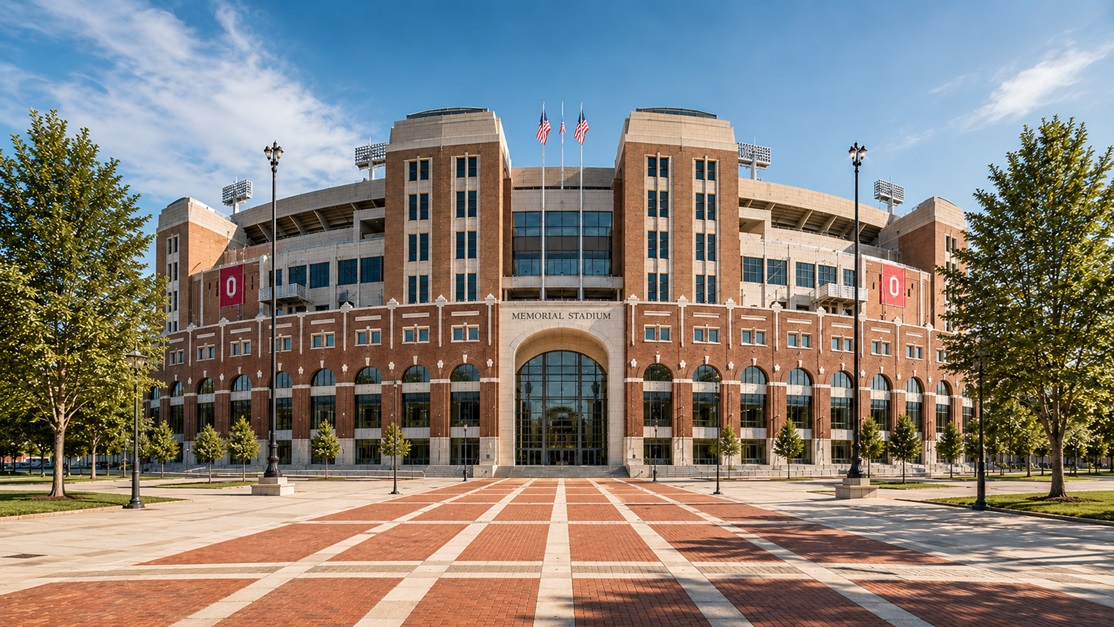
Memorial Stadium
Game-day reference connecting chrome touchless faucets with concentrated demand, durable public-use finishes, and facility operations.

Virginia Architectural Faucets
Performance-venue context for touchless fixture coordination, compressed intermission traffic, architectural integration, and service continuity.
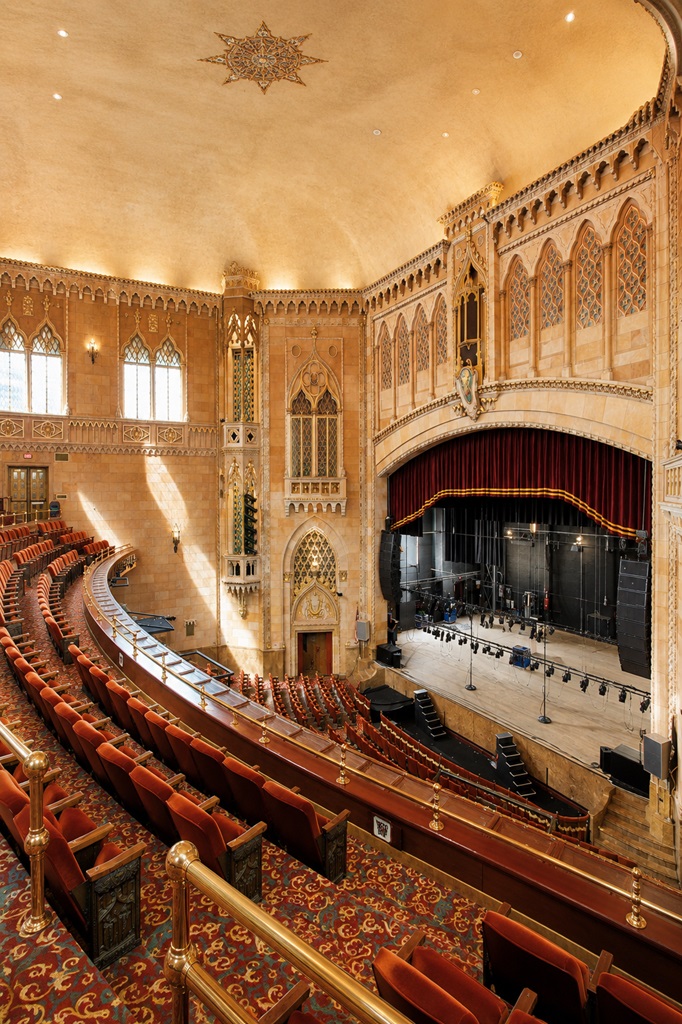
Hershey Theater, Pennsylvania
Historic entertainment-venue reference showing how modern touchless systems can support visitor comfort, hygiene, and reduced downtime.
Reliability must be proven before it protects the brand
Product selection alone cannot guarantee the visitor experience. Commissioning verifies that the installed system performs as a coordinated public wash station. The review should include sensor range, activation speed, automatic shutoff, flow pattern, water temperature, basin splash, drainage, soap delivery, power access, isolation, cleaning reach, and user circulation. Testing should occur under the lighting and finish conditions that will exist during operation.
A physical mockup is particularly valuable when a station will be repeated across many restrooms. The team can observe whether users know where to place their hands, whether the water stream lands correctly, whether the dispenser is easy to find, and whether adjacent users interfere with one another. Small corrections made at the mockup stage can prevent hundreds of repeated problems and protect the owner from expensive post-opening changes.
Post-occupancy review completes the reliability loop. Facility teams should document false activations, weak-flow reports, battery intervals, soap refill frequency, finish wear, cleaning conflicts, and common service calls. This information allows the owner to refine sensor settings, maintenance intervals, staff training, and spare-parts inventory before the next major event cycle.
The operational objective is not a restroom that merely passes inspection. It is a restroom that remains available, intuitive, clean, and easy to maintain through repeated public use. When this result is achieved, the touchless system quietly reinforces the venue’s image as organized, modern, and attentive to guest needs.
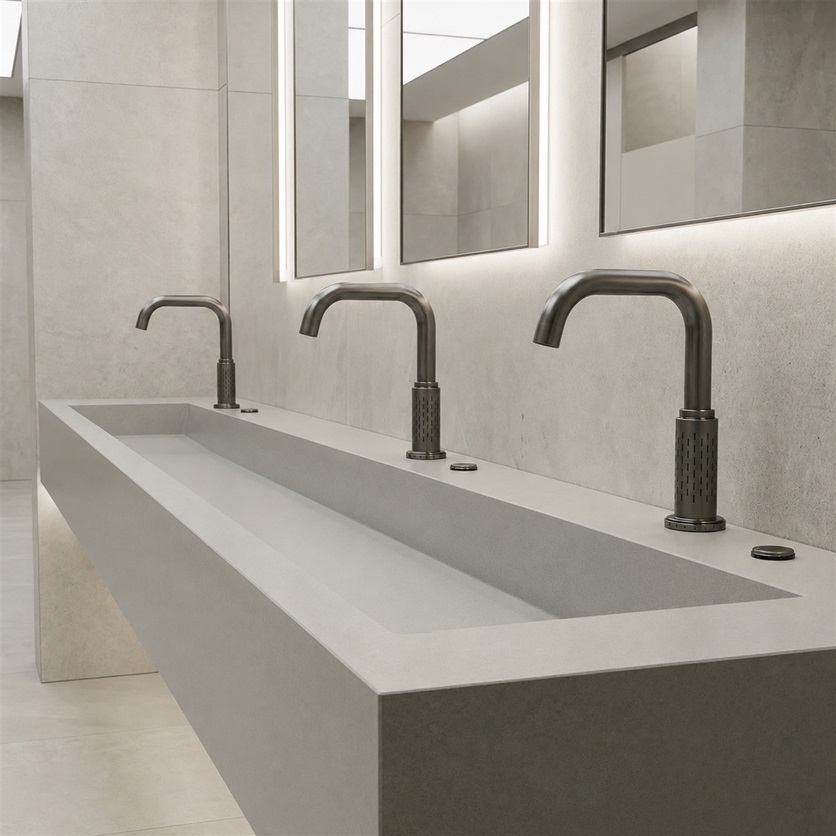
Commercial touchless fixture references for AEC planning
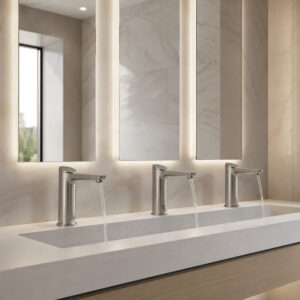
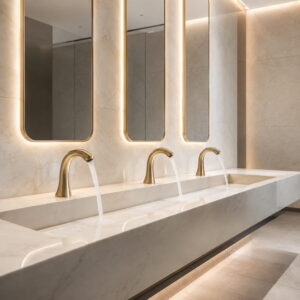
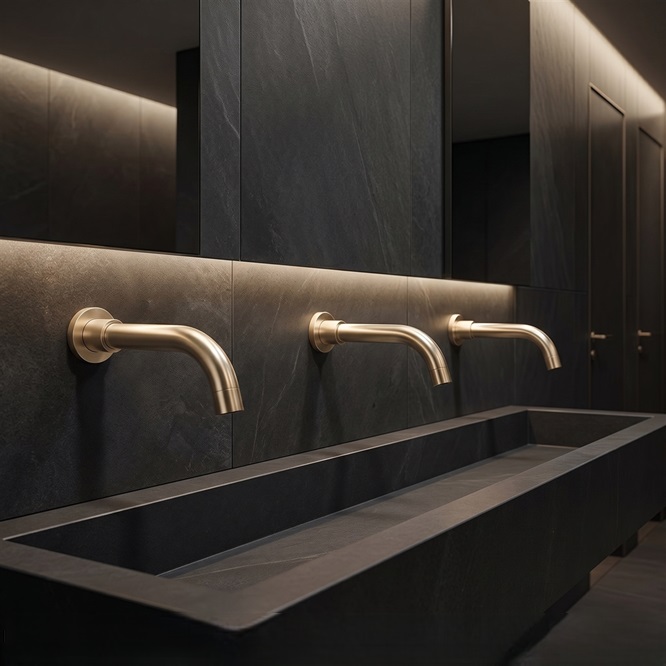
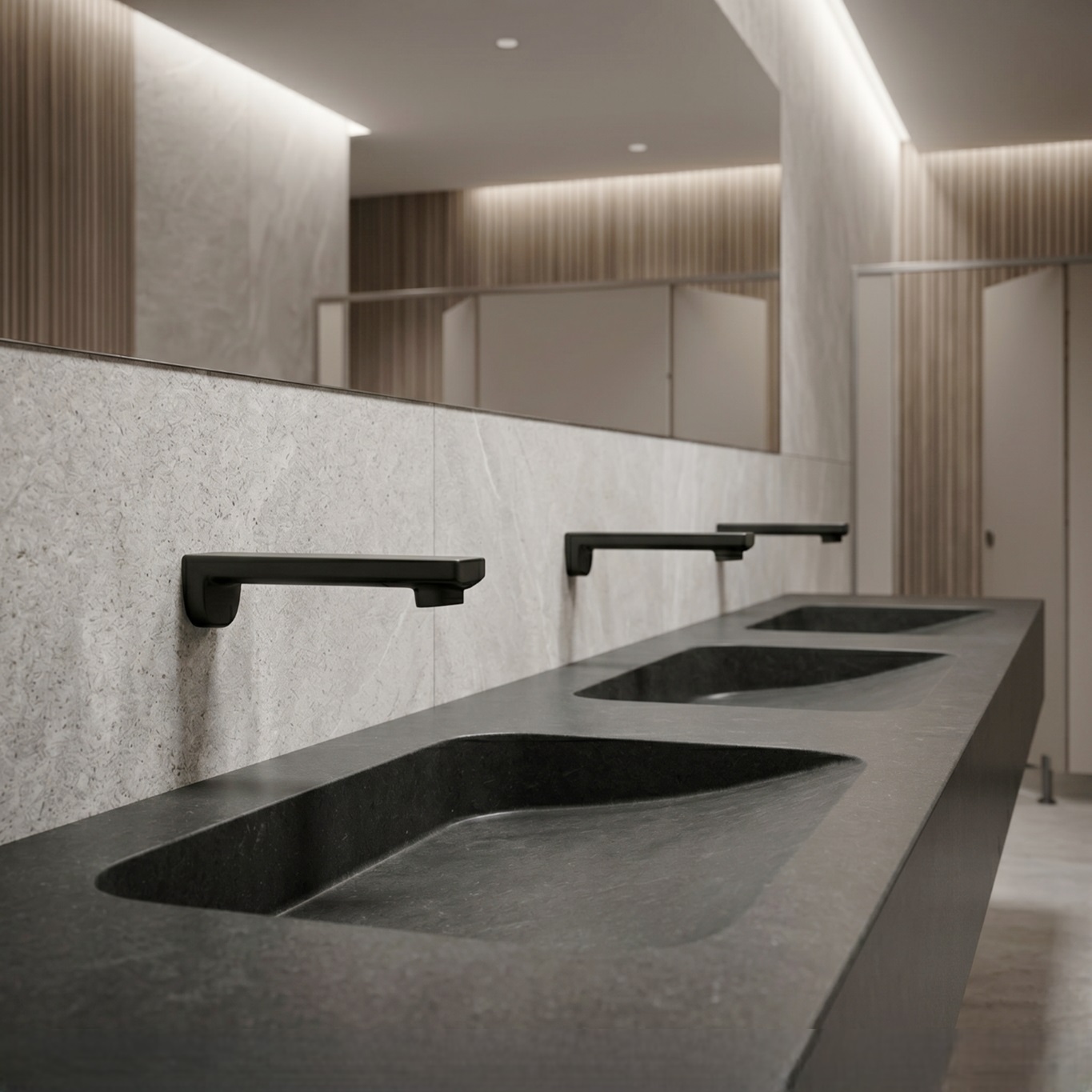
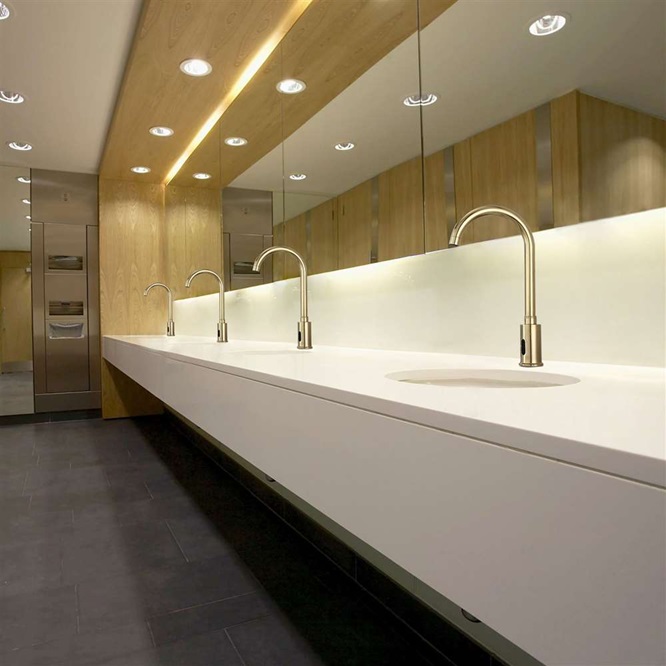
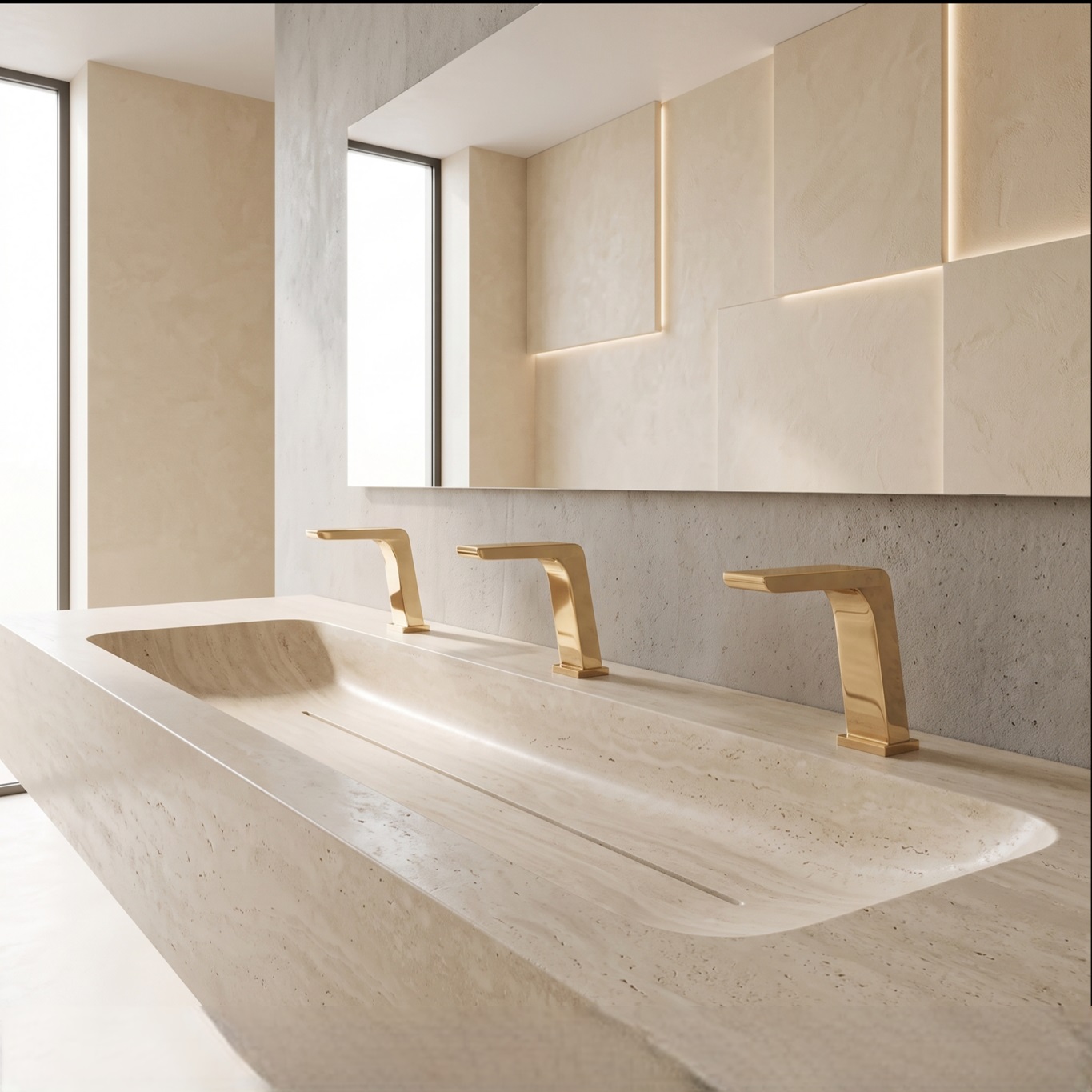
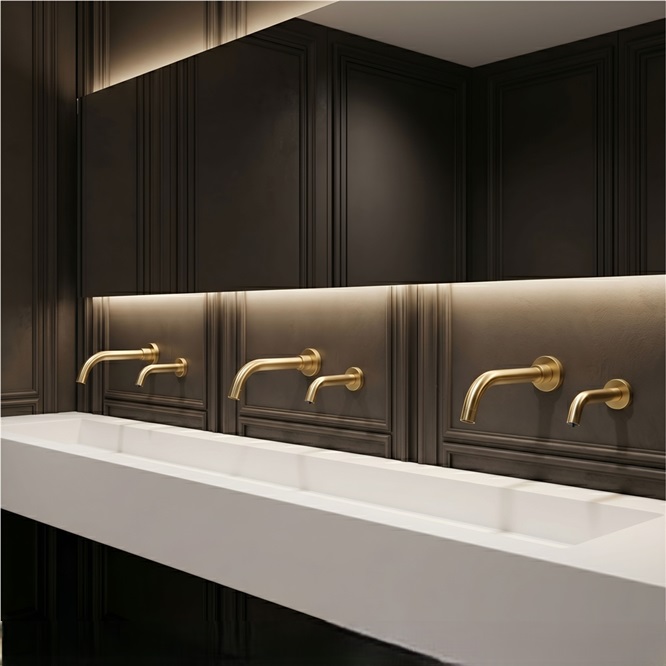
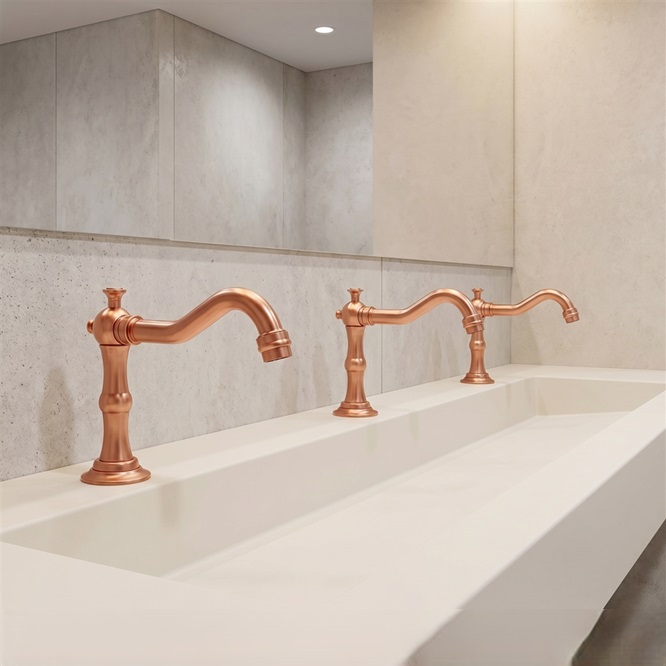
The following image library incorporates the requested commercial touchless faucet visuals and supports evaluation of sensing reliability, finish selection, trough-sink coordination, repeated wash-station planning, and high-traffic restroom presentation. These references can help architects, engineers, specifiers, and facility stakeholders compare how different touchless configurations influence service access, user throughput, and the perceived quality of the venue.
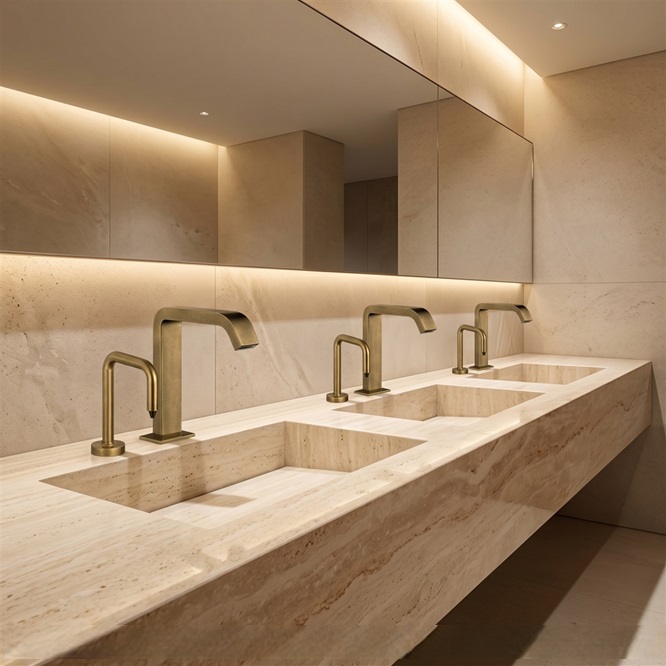

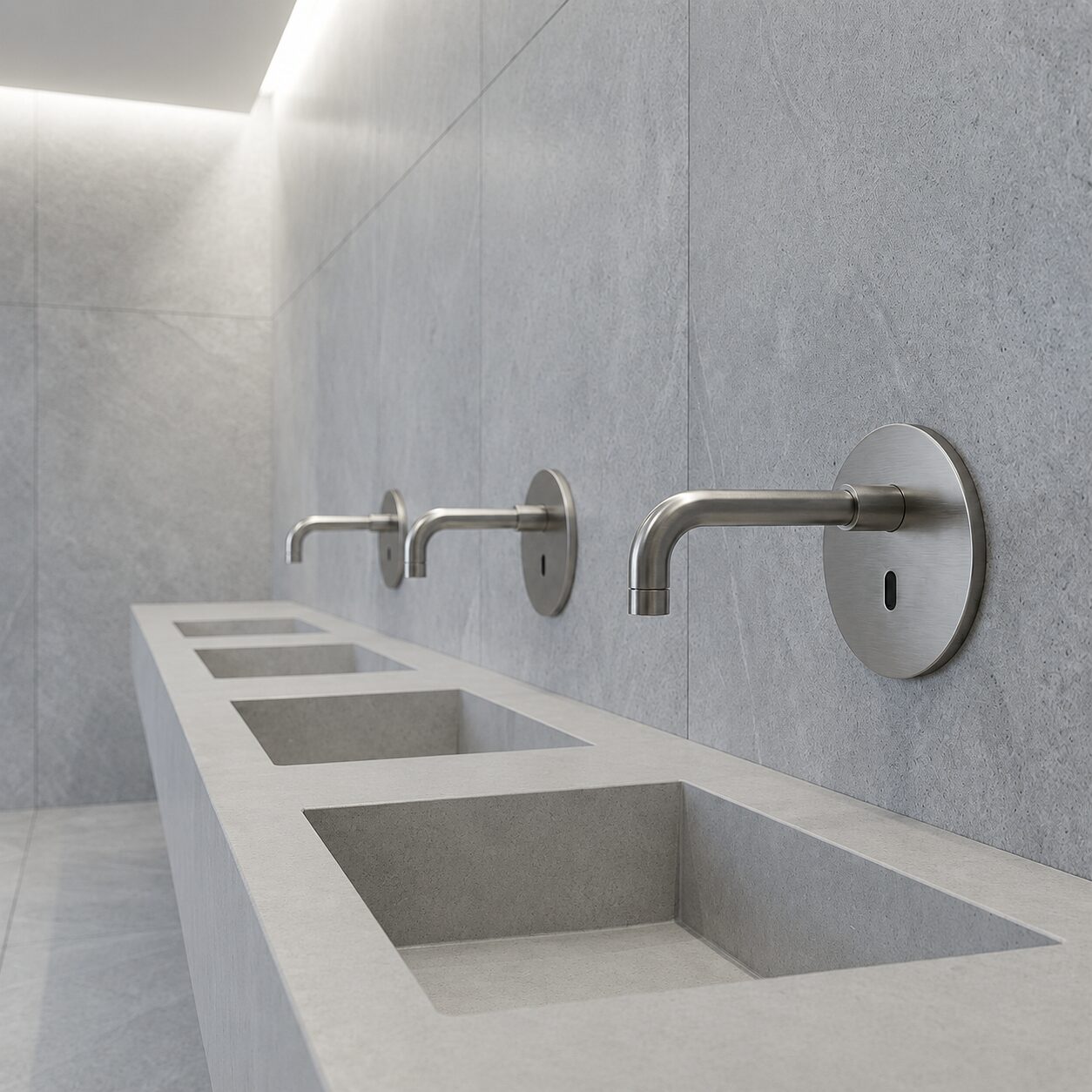
Reliable touchless systems protect more than the restroom
The public judges a venue through repeated moments of use. A dependable restroom tells guests that the building is maintained, the operations team is prepared, and the owner has invested in the details that affect comfort. A failing wash station communicates the opposite. Because public reviews and social commentary can amplify these experiences, restroom reliability has become a genuine reputation-management concern.
Architects protect that reputation by designing intuitive wash zones and coordinating accessibility, circulation, finishes, basins, mirrors, and fixture placement. MEP engineers protect it by resolving pressure, temperature, power, shutoff, sensor, drainage, and service requirements. Contractors protect it through accurate rough-in, installation, testing, and documentation. Facility teams protect it through cleaning, inspection, refill, parts planning, and rapid response.
Reliable touchless systems unify these responsibilities. They support low-contact operation, controlled water delivery, repeatable user behavior, and more disciplined maintenance. Their value becomes most visible during the busiest event, when every station is needed and the venue has little time to recover from failure.
For stadiums, arenas, theaters, university venues, transportation facilities, and other high-capacity buildings, the correct specification question is not simply whether a restroom should be touchless. The better question is whether the complete touchless system has been designed, powered, installed, accessed, commissioned, and maintained to protect the guest experience for the life of the venue.