
The Importance of Sensor Accuracy in Stadium Restroom Operations
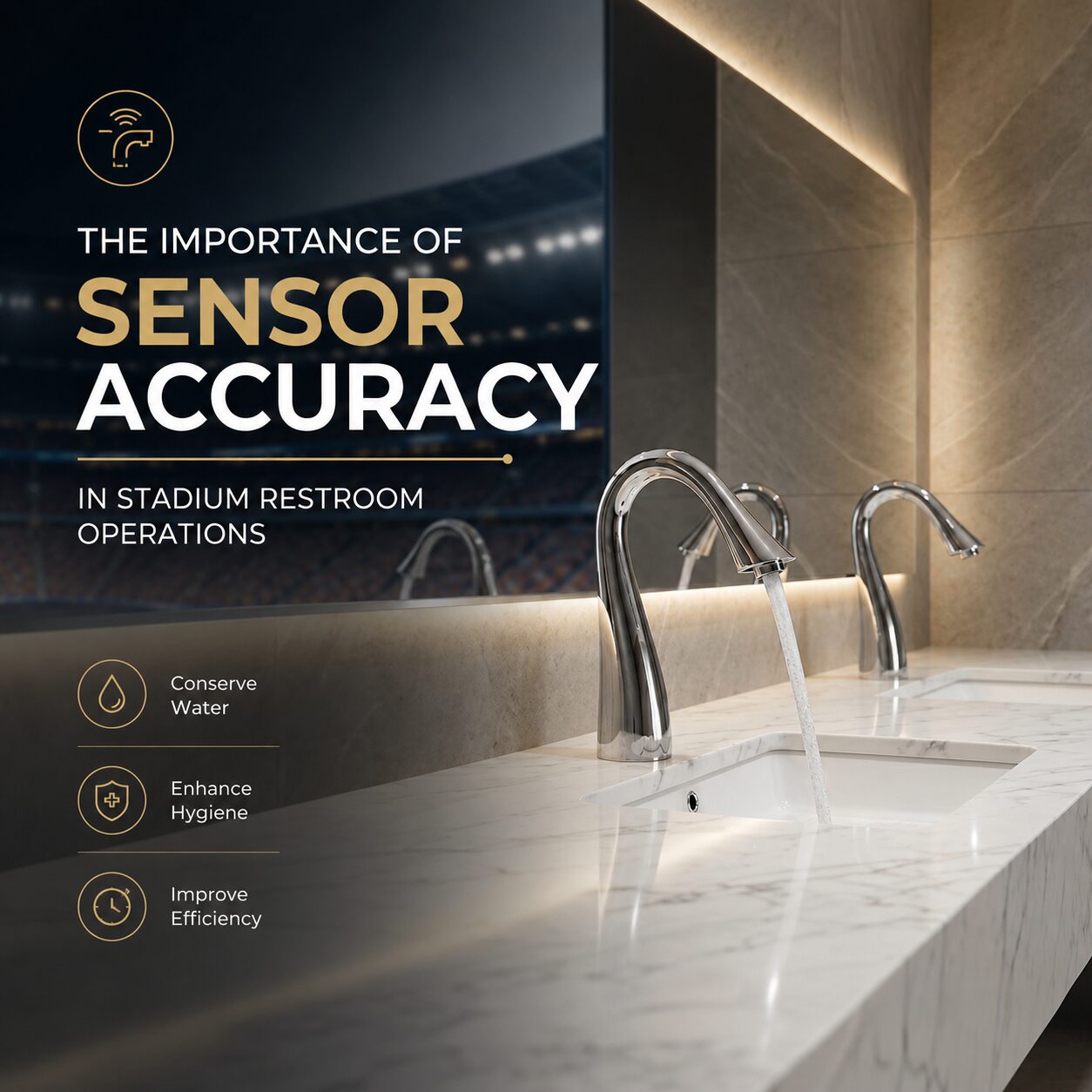
Responsive sensor performance is not a small fixture detail in a stadium. It affects hygiene confidence, handwashing speed, water control, maintenance planning, and the way visitors judge the overall venue experience during high-volume event use.
Why Sensor Accuracy Becomes a Stadium Operations Issue
In a normal office restroom, a slow faucet sensor is a minor inconvenience. In a stadium, it can become a crowd-flow problem. Stadium restrooms are used in waves, not in a steady daily pattern. Large numbers of guests enter before the event, at halftime, between periods, during weather breaks, after concerts, and immediately after the final whistle. During those compressed windows, every second at the sink matters. A faucet that activates late, stops too soon, or continues running after a user leaves can slow the line and make the room feel less controlled.
Accurate sensor performance helps the sink area behave predictably. The user places hands under the spout, water starts quickly, the flow remains available long enough for proper rinsing, and it stops when the hands move away. That simple sequence supports hygiene because visitors do not have to touch handles after washing. It supports satisfaction because the fixture feels intuitive. It also supports operations because water is not wasted by abandoned running faucets, stuck handles, or repeated manual adjustments.
For architects, plumbing engineers, facility directors, and contractors, the lesson is clear: the sensor is part of the building system, not just an electronic accessory. In high-capacity venues, sensor accuracy should be reviewed alongside fixture durability, power strategy, vandal resistance, ADA reach, counter layout, soap dispenser coordination, trap access, mixing valves, shutoff planning, and maintenance workflows.
Stadium-Ready Touchless Restroom Environments
The image set below uses verified project and fixture visuals that fit the topic of stadium restroom operations, touchless performance, large-venue planning, and coordinated commercial wash stations.


Sensor Faucets for Stadium Restroom Planning
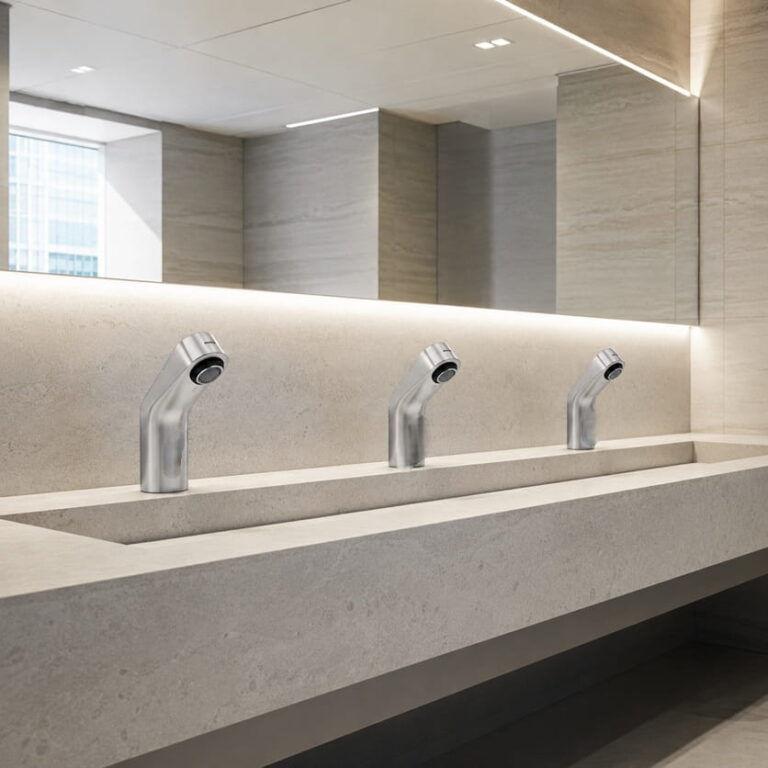
The product image set below has been incorporated into the previous AEC blog layout so the page keeps the original professional structure while using the specific faucet and sensor-system visuals supplied for this revision. Each image is linked to its product page and supports the article theme: accurate, responsive touchless fixtures selected for demanding public restrooms, concourses, suites, theaters, campus facilities, and high-volume stadium wash areas.
For AEC teams, these visuals are useful because finish, spout form, deck clearance, soap coordination, and sensor placement all affect how a restroom performs when hundreds of visitors pass through the sink counter in a short interval. Chrome, brushed nickel, brushed gold, champagne, matte white, antique brass, rose gold, and coordinated faucet-and-dispenser sets can all serve different zones while the operational goal stays the same: reliable activation, clean shutoff, easy maintenance, and user confidence.

Verified product image for sensor faucet specification review.

Verified product image for sensor faucet specification review.

Verified product image for sensor faucet specification review.

Verified product image for sensor faucet specification review.

Verified product image for sensor faucet specification review.

Verified product image for sensor faucet specification review.

Verified product image for sensor faucet specification review.

Verified product image for sensor faucet specification review.

Verified product image for sensor faucet specification review.

Verified product image for sensor faucet specification review.

Verified product image for sensor faucet specification review.

Verified product image for sensor faucet specification review.

Verified product image for sensor faucet specification review.

Verified product image for sensor faucet specification review.

Verified product image for sensor faucet specification review.
How Accurate Sensors Improve Hygiene
Hygiene in a stadium restroom is both real and perceived. Real hygiene depends on reducing unnecessary contact points and making handwashing easy. Perceived hygiene depends on how the space feels to guests during the busiest moments. When users see fixtures activate without touching handles, they understand the restroom has been planned for cleanliness. When the sensor responds immediately and consistently, that trust increases.
Inaccurate sensors create the opposite message. A guest may wave repeatedly under the spout, touch the faucet body to find a control, or leave without rinsing properly. If the water shuts off too quickly, users may repeat the activation cycle several times, slowing the sink line. If the water continues running after use, the fixture looks wasteful and poorly managed. Each problem is small in isolation, but in a 40,000-seat, 60,000-seat, or 80,000-seat venue, those issues multiply across thousands of uses.
For this reason, touchless fixtures for stadiums should use a sensor range that fits the sink geometry. The sensor should read hands inside the basin zone, not random movement in the walking path. It should be protected from splash patterns, mirror reflections, dark countertop glare, strong lighting changes, and cleaning activity. The best result is not simply automatic operation; it is controlled automatic operation that feels natural to every user.
How Sensor Accuracy Improves User Satisfaction
Restroom satisfaction is often shaped by speed. Fans and guests do not want a restroom visit to interrupt the event. If a faucet responds instantly, the handwashing step feels simple. If soap and water both activate cleanly, the guest can move from entry to sink to exit without confusion. That smooth movement is especially important during halftime, intermission, or concert breaks, when every restroom bank is under pressure.
Accurate sensors also help with accessibility and inclusivity. Users with limited hand strength, mobility restrictions, or temporary injuries do not need to twist knobs or grip handles. Children, older guests, staff, and visitors carrying food, merchandise, or bags can operate the fixture with less physical effort. In AEC planning, this matters because public restrooms must work for a broad mix of users, not only the average adult visitor.
Facility reputation is also affected. A stadium may invest heavily in seating, lighting, concessions, scoreboards, premium clubs, and fan zones, but a poor restroom experience can still damage the visit. Reliable touchless fixtures give the wash area a more modern and professional feel. The result is not only cleaner hands; it is a stronger impression that the operator cares about guest comfort and venue quality.
Water Misuse: The Hidden Cost of Poor Sensor Control
Water misuse is one of the most practical reasons to focus on sensor accuracy. Manual faucets may be left running. Poorly tuned automatic faucets may activate when no hands are present. Over-sensitive sensors can detect clothing, bags, reflections, or nearby movement. Under-sensitive sensors can force users to keep moving their hands, extending the total time at the sink. Either way, the plumbing system works harder than necessary.
In a stadium, water demand already rises sharply during peak restroom use. If many faucets run longer than needed, the effect can increase water consumption, stress drain systems, increase splash at counters, and make cleaning harder. Accurate activation helps reduce unnecessary flow while still giving guests enough water for proper rinsing. The target is not the shortest possible run time; it is the correct run time for the handwashing task.
Sensor accuracy should therefore be coordinated with aerator flow rate, mixing valve settings, power supply reliability, commissioning procedures, and maintenance checks. A well-designed fixture package should include the ability to inspect and adjust sensor performance when the restroom opens, after major cleaning cycles, after battery changes if battery-powered units are used, and during routine preventive maintenance.
AEC Specification Checklist for Stadium Sensor Faucets
| Specification Area | Why It Matters in Stadiums | Design / Operations Recommendation |
|---|---|---|
| Sensor range | Incorrect range causes missed activation or false activation. | Match range to basin depth, spout reach, counter material, and user approach angle. |
| Response time | Slow activation increases sink-line friction during peak periods. | Specify responsive activation and verify performance during commissioning. |
| Shutoff behavior | Late shutoff wastes water and creates splash risk. | Use controlled automatic shutoff that supports rinsing without overrun. |
| Power strategy | Battery failure or poor wiring access can take fixtures offline. | Coordinate battery, hardwired, or hybrid strategy with maintenance access plans. |
| Soap coordination | Handwashing fails if soap and water do not perform together. | Plan faucet and automatic dispenser placement as one user sequence. |
| Maintenance access | Stadium teams need quick service before and after events. | Keep sensors, batteries, mixing components, and shutoffs accessible. |
Project References for Stadium and High-Traffic Fixture Planning
These verified FontanaShowers references connect the sensor accuracy topic to high-volume stadiums, campus athletic facilities, performance venues, and architectural restroom fixture planning.
Sensor Accuracy Across Different Stadium Zones
General concourse restrooms
These areas carry the heaviest traffic and need the most predictable sensor behavior. The focus should be fast activation, durable finishes, easy cleaning, and enough sink positions to prevent bottlenecks. Fixtures should be standardized where possible so maintenance teams can service them quickly.
Premium clubs and suites
Premium areas still need commercial-grade reliability, but they also place more emphasis on finish coordination and guest perception. Accurate sensors help the restroom feel refined because the touchless sequence is smooth, quiet, and intuitive.
Operations takeaway
Sensor accuracy supports three stadium goals at the same time: cleaner handwashing, faster turnover at the sink, and better water control. A fixture that performs well during peak intervals reduces complaints and helps staff keep restrooms open, stocked, and presentable.
Team, staff, and back-of-house areas
Back-of-house restrooms may not receive the same design attention as public concourses, but they still require dependable performance. Event staff, operations teams, security personnel, concessions staff, and cleaning crews rely on these spaces during long shifts. Accurate touchless fixtures reduce wear from repeated handling and keep support areas aligned with the same hygiene standards expected in guest-facing zones.
Related Stadium Restroom Planning Links
Use these related references to support internal linking for stadium restroom infrastructure, touchless systems, smart restroom design, and architectural planning.
Conclusion: Accurate Sensors Protect the Stadium Experience
Sensor accuracy is one of the most important details in stadium restroom operations because it affects every major stakeholder. Guests receive a cleaner and faster handwashing experience. Facility teams gain better water control and easier fixture management. Architects and engineers support a restroom strategy that matches the traffic profile of the building. Owners protect the venue image by reducing avoidable friction in one of the most heavily used public spaces.
In high-volume venues, responsive sensor performance should be treated as a measurable operating requirement. The faucet must respond when hands are present, ignore false triggers, shut off cleanly, coordinate with soap delivery, and remain serviceable over years of repeated use. When those details are handled well, the restroom becomes less of a bottleneck and more of a quiet contributor to the overall stadium experience.
Pingback: Sensor Technology Performance Standards for Commercial MEP Projects – Commercial Touchless Solutions
Pingback: Recommended Fontana Touchless Faucet and Soap Dispenser Sets – Commercial Touchless Solutions
Pingback: How Touchless Faucet Sensor Technology Works: An Engineering Puzzle – Commercial Touchless Solutions
Pingback: Sensor Reliability Standards for High-Traffic Public Restrooms - Commercial Toilet faucets
Pingback: Maintenance-Friendly Touchless Fixtures for Facility Management Teams – Bathroom Sink Faucet
Pingback: Flow-Rate Compliance Requirements in Commercial Restroom Engineering – ArchDaily Blog
Pingback: Plumbing Infrastructure Compatibility in Large Venue Restroom Projects – Daily Architectural
Pingback: Electrical Integration Advantages of Fontana Touchless Faucets – Design Concept
Pingback: Building Management System Integration for Smart Restroom Operations – Architectural Daily
Pingback: Lifecycle Cost Advantages of Commercial Touchless Faucet Systems – Arch Faucets
Pingback: Battery Performance Expectations in Commercial Touchless Fixtures – Bath Touchless Faucets
Pingback: AEC Design & Engineering | Public Venue Restroom Infrastructure – HospitalityBath
Pingback: AEC procurement intelligence / Commercial restroom specifications – Commercial Restroom Design
Pingback: Sustainability Goals Driving Touchless Fixture Selection in Stadiums – Touchless Faucets Reviews
Pingback: Benefits of Advanced Touchless Restroom Technology – commercial touchless faucet reviews