
Sensor Technology Performance Standards for Commercial MEP Projects
Responsive touchless fixtures are not merely a convenience feature in stadiums, theaters, transportation hubs, healthcare buildings, universities, and other mission-critical public facilities. They are part of an operating system that must detect users predictably, resist false activation, shut off correctly, coordinate with basin geometry, and remain serviceable under heavy use. For MEP engineers, the specification challenge is therefore not simply choosing “a sensor faucet,” but defining measurable performance expectations that can be commissioned and verified before turnover.

High-traffic venues make sensor reliability an engineering requirement
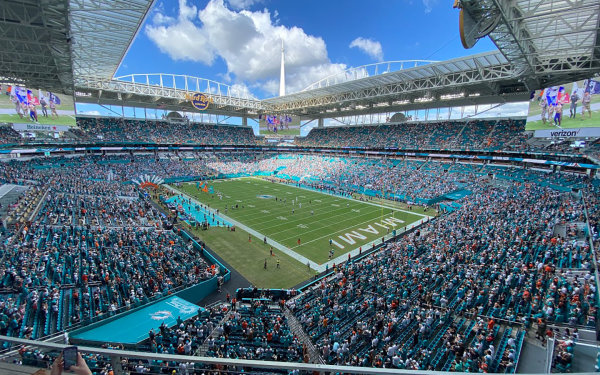
Large public venues compress thousands of fixture uses into short operating windows. A faucet that activates inconsistently in a low-traffic office can become a visible operational problem in a stadium concourse at halftime or a theater during intermission. That is why commercial MEP specifications should address sensor behavior as a commissioning issue rather than leaving it as an undefined manufacturer feature.
Turn “sensor reliability” into measurable acceptance criteria
A phrase such as “provide reliable infrared sensor operation” is too vague for a critical project. A stronger MEP specification defines the intended activation zone, first-pass response, nuisance-activation tolerance, shutoff behavior, power condition, and basin relationship.
Read More
The specification should also tell the contractor how successful operation will be checked and what conditions trigger corrective action. Those criteria can then be validated during mockup review, final commissioning, and facility turnover, giving the engineer a repeatable acceptance process instead of relying on subjective observations after occupancy.
| Performance Criterion | Engineering Intent | Example Project Acceptance Target* | Field Verification |
|---|---|---|---|
| Activation response | Water should start promptly after hands enter the intended detection zone. | Target response within approximately 0.5 second where supported by the selected product. | Repeat hand approaches from normal user positions and record delayed or missed activations. |
| First-pass detection | Users should not need to wave repeatedly or search for the sensor. | Project team may require at least 95% successful first-pass activation in a defined sample test. | Run repeated cycles with different hand sizes, skin tones, approach angles and realistic lighting. |
| False activation resistance | Prevent wasted water and nuisance cycling when the basin is unoccupied. | No unintended activation during a defined empty-basin observation period. | Test with lights on/off, wet basin surfaces, reflective objects and adjacent faucet operation. |
| Shutoff response | Water should stop quickly after hands leave the sensing field. | Project target commonly set at approximately 1 second or manufacturer-defined behavior. | Time multiple hand-removal cycles and verify no sustained flow. |
| Timeout protection | Limit continuous flow if an object remains in the detection zone. | Verify the manufacturer’s programmed safety timeout and reset behavior. | Hold a test object in the sensing field through the full timeout sequence. |
| Optical stability | Keep the sensor stable around glossy stone, stainless basins, mirrors and changing illumination. | No repeated nuisance cycling after final finishes and lighting are installed. | Commission in the completed room, not only on a bench or temporary mockup. |
| Power reliability | Sensor and solenoid performance should remain predictable at the specified power source. | Verify correct voltage, transformer/battery condition and service access. | Check operating voltage, connections, battery status indicators and failure recovery. |
| Solenoid actuation | Detection must translate into clean valve opening and closure without chatter. | Consistent actuation with no intermittent sticking or repeated clicking. | Cycle the faucet repeatedly while observing valve response and flow consistency. |
Sensor performance changes when the restroom is fully built
Sensor calibration cannot be evaluated in isolation from the finished environment. Reflective basins, dark countertops, polished stone, mirrors, soap dispensers, splash patterns, adjacent faucets, lighting angles, and even standing water can alter how an optical sensor sees the user. A commercial restroom should therefore be commissioned in its final architectural condition.


A practical calibration workflow for MEP teams
The best time to discover sensor conflicts is before the restroom enters public service. A repeatable commissioning sequence gives the contractor, manufacturer representative, engineer, and facilities team a shared method for evaluating performance.
Confirm basin and spout geometry
Verify that the water stream lands inside the intended wash zone without striking the drain, rear wall, or shallow edge. Sensor performance and splash control should be assessed together.
Verify power and control architecture
Confirm transformer location, battery pack accessibility, low-voltage routing, polarity where applicable, connectors, control box position, and protection from standing water.
Establish the intended detection zone
Use the manufacturer’s allowable adjustment range and set the sensor so normal hand placement activates the faucet while surrounding movement does not.
Test finished-material interference
Run the faucet with lights at normal operating levels and with the final basin, mirror, countertop, soap dispenser, and neighboring fixtures installed.
Stress-test repeated cycles
Perform rapid successive activations that represent peak public use. Watch for missed detection, delayed response, solenoid chatter, unstable flow, or unintended timeout behavior.
Document the final settings
Record sensor settings, power source, replacement battery type, timeout configuration, model number, access points, and corrective procedures in turnover documentation.
Detection range is only useful when it matches handwashing geometry
A long detection range is not automatically better. If the sensor field extends too far beyond the intended handwashing zone, the faucet can activate as users approach the counter, reach for soap, clean the basin, or pass an adjacent station. If the range is too short, users may have to move their hands unnaturally close to the sensor before water starts.
MEP drawings should coordinate spout reach, stream landing, basin depth, drain location, backsplash, and sensor field. The field mockup should include realistic hand approach paths from accessible and non-accessible positions.
Read More
In multi-station troughs, the team should also verify that one user’s movement does not trigger a neighboring faucet. Optical infrared sensors rely on emitted and reflected energy, so highly reflective stainless steel, polished stone, standing water, or a glossy drain assembly can change the return signal seen by the sensor. Evaluate final geometry, sensor angle, range setting, and environmental conditions together, especially after basin or countertop substitutions.

Electrical coordination is part of sensor performance
A sensor can only be as dependable as its power and control path. New construction may favor hardwired low-voltage power to reduce battery service, while retrofit areas may benefit from battery-powered or hybrid arrangements. The MEP engineer should define the strategy by restroom zone instead of allowing a mixture of undocumented power approaches to develop during procurement.
Read More
Hardwired installations require coordinated transformer locations, accessible junctions, low-voltage cable routing, separation from wet areas, and sufficient access for replacement. Battery-powered fixtures require a defined battery type, expected service procedure, accessible battery compartment, and facility inspection routine. In either case, commissioning should verify that low power does not produce slow, intermittent, or erratic valve behavior that could be misdiagnosed as a sensor-range problem.


Commercial sensor fixture references extracted from the supplied image set
The supplied source included a large product-image group. The gallery below keeps the commercial touchless fixtures that best support this MEP discussion, uses larger uncropped product views, and links each model name rather than displaying the URL.
Read More
For specification work, these images are most useful for visual coordination: wall-versus-deck mounting, sensor location, spout projection, finish selection, and the relationship between the faucet body and serviceable below-deck or concealed components. Final engineering decisions should still be based on the selected model’s current technical data and project requirements.
Chrome Wall-Mounted Commercial Automatic Sensor Faucet
Useful for reviewing wall penetration, sensor-to-basin geometry and concealed service access in repetitive commercial lavatory banks.

Oil Rubbed Bronze Wall-Mounted Automatic Sensor Faucet
The same wall-mounted planning logic can be carried into finish-sensitive hospitality and public interiors without changing the core MEP coordination questions.

Matte Black & Gold Wall-Mounted Automatic Sensor Faucet
A larger product view makes sensor placement, spout reach and finish transitions easier to assess during architectural fixture coordination.

Matte Black Wall-Mounted Automatic Sensor Faucet
MEP review should confirm sensing behavior against the final basin, backsplash and surrounding dark or reflective finishes rather than finish appearance alone.

Antique Brass Wall-Mounted Automatic Sensor Faucet
Historic or hospitality interiors still require the same commissioning discipline: stable activation zone, clean shutoff and accessible controls.

Alba Adriatica Black Deck-Mounted Touchless Faucet
Deck mounting shifts the coordination focus toward countertop drilling, below-deck clearance, sensor field, hoses and control-box service space.
Mission-critical restrooms need bank-level resilience, not just a durable faucet
For stadiums, theaters, airports, healthcare facilities, and 24/7 public buildings, sensor reliability should be considered at the level of the entire restroom bank. One failed faucet should not force multiple stations out of service. The specification should therefore coordinate local isolation, accessible filters, replaceable solenoids, serviceable control modules, clear access panels, and standardized components that maintenance staff can identify quickly.
Read More
Standardization reduces diagnostic complexity. When dozens of faucets use the same sensor logic, power arrangement, shutoff location, and service procedure, technicians do not have to relearn the system at every lavatory. This is particularly valuable during event operations when repair time is limited.
Facilities teams should also receive the final sensor settings and model schedule as part of closeout. Where sensitivity, delay, or timeout functions are adjustable, document the commissioned value rather than providing only a generic installation manual.
Separate code compliance from project-specific sensor performance
Commercial faucet specifications commonly reference plumbing supply-fitting standards such as ASME A112.18.1/CSA B125.1, applicable accessibility requirements, and material or drinking-water-contact requirements such as NSF/ANSI/CAN 61 and NSF/ANSI/CAN 372 where required by the project. Water-efficiency criteria may also be governed by the adopted plumbing code, local water-conservation rules, owner standards, or a selected sustainability program.
Read More
Those requirements do not replace a project-specific commissioning plan for sensor behavior. An automatic faucet can be compliant as a plumbing fitting and still be poorly calibrated for a particular basin. Likewise, an accessible restroom can include a touchless faucet while still failing accessibility coordination elsewhere in the lavatory assembly. MEP documents should distinguish between product certification, code compliance, and operational acceptance testing.
Four commercial contexts for sensor-performance planning
The operating pattern is consistent across stadiums and performing arts venues: traffic arrives in compressed surges, fixture failures are visible, and service windows are limited. These verified Fontana project references provide useful AEC context for that performance discussion.

New Las Vegas MLB Stadium
Large restroom banks must support rapid turnover, consistent activation and maintainable fixture modules during event-driven peaks.
View Project Reference
UNL Memorial Stadium
Game-day demand makes predictable faucet response, durable finishes and rapid maintenance access operational priorities.
View Project Reference
Virginia Architectural Faucets
Performance venues require reliable touchless operation around concentrated arrival, intermission and exit periods.
View Project Reference
Hershey Theater
High-attendance events demonstrate why sensor calibration, maintenance access and uninterrupted restroom service must be coordinated together.
View Project ReferenceSensor, stadium, reliability and MEP planning references
The following supporting pages expand the engineering discussion into stadium restroom planning, sensor accuracy, electrical integration, fixture lifecycle, water efficiency and downtime reduction.